CAAT: Only Two of Seven Main Thai Airlines Affected by Amadeus Booking Data Breach
Thailand's civil aviation regulator has narrowed an Amadeus reservation-system incident to Thai Airways and Bangkok Airways after checking seven main Thai-nationality carriers. Passengers should treat unexpected booking emails with caution while PDPC and CAAT reviews continue.
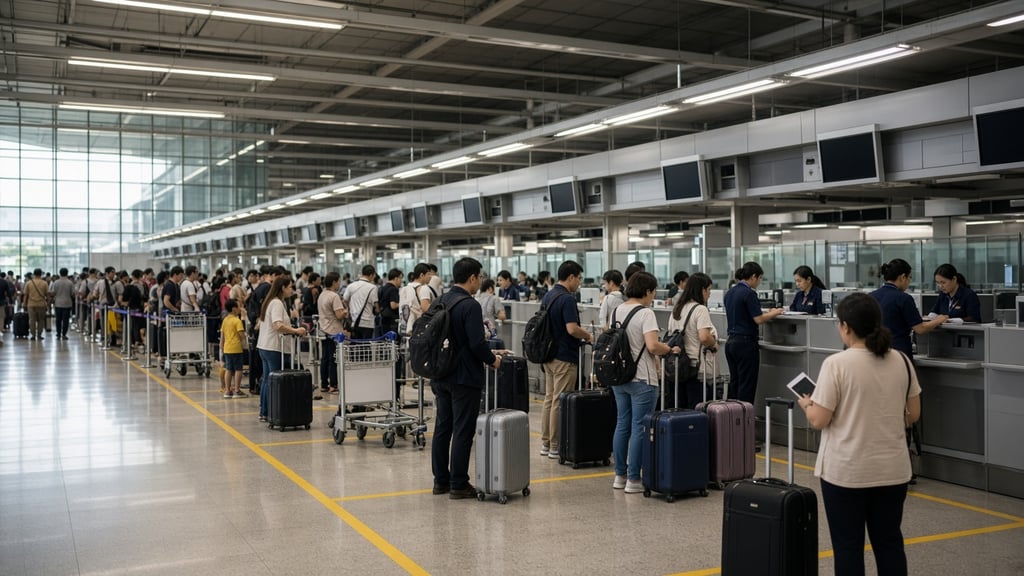
Thailand's Civil Aviation Authority (CAAT) has narrowed an Amadeus reservation-system incident to two of the country's seven main Thai-nationality airlines: Thai Airways International and Bangkok Airways. Only those two carriers used the affected Amadeus passenger-service services, so the other five main Thai airlines sit outside the exposed booking pool.
CAAT's first public note on 10 November 2026 tied the event to Amadeus IT Group S.A., a global passenger-service-system vendor, and said the access path did not run through Thai Airways' own systems. The later seven-airline review now limits the local footprint to those two carriers.
What Thai Airways says was accessed
Thai Airways, on 9 November 2026, said Amadeus had reported unauthorized access to booking data stored on Amadeus systems between 10 August 2023 and 23 September 2026. The airline put its own slice at about 60,529 passenger records. Fields that may have been viewed include passenger names, booking references (PNR), travel dates, flight routing, and cabin class.
About 376 records may also include email addresses, telephone numbers, passport numbers, nationality, frequent-flyer numbers, flight numbers, ticket numbers, and seat numbers. Thai Airways said credit-card data was not in the accessed set. Amadeus has revoked the login used in the incident and reset affected passwords. Airline operations were not disrupted. Affected passengers are to be notified individually once the vendor extract is verified.
CAAT's seven-airline check and Bangkok Airways
CAAT's 10 November statement used the same 60,529 figure and said the travel records reach back to Buddhist Era 2566 (2023). The regulator instructed Thai Airways to contact affected data owners individually. CAAT also said there was no effect on flight safety or passenger service.
Bangkok Airways later confirmed it too sits on the affected Amadeus stack. The carrier has not published a passenger-record count. It said it had found no evidence that financial information was accessed, and that passengers should treat unexpected messages asking for personal or payment details with caution and contact the airline directly if a note looks wrong. Bangkok Airways lists 02 270 6699 as a public contact number.
Only the two Amadeus customers among the seven main Thai-nationality airlines were in the affected service set. The same vendor also serves large Asian network carriers outside Thailand, including Japan Airlines, Cathay Pacific, and Malaysia Airlines, so the incident has a regional aviation-IT shape rather than a single-airline failure.
PDPC opens a PDPA file, and the two passenger counts
The Office of the Personal Data Protection Committee (PDPC) opened a parallel track on 11 November 2026. Thai Airways, as data controller under the Personal Data Protection Act B.E. 2562 (PDPA), had already notified the PDPC within the statutory 72-hour window. The PDPC notice cites an Amadeus finding of unauthorized account access to booking data for 65,029 passengers, a figure that does not match the 60,529 records used by Thai Airways and CAAT. Neither office has publicly reconciled the two counts.
PDPC has ordered Thai Airways to file an electronic forensic report on root cause, evidence of how affected data subjects will be notified, and a review of upgraded security measures. Section 37(4) of the PDPA requires a controller to notify the PDPC without delay and, where feasible, within 72 hours of becoming aware of a personal-data breach. If residual risk is high, data subjects must also be notified without delay.
As of this report, CAAT said it had no evidence that passenger information had been used for unlawful purposes. Individual notices will go out once the vendor data is fully checked. Until then, the practical risk for travelers is phishing: a fake note that pretends to be Thai Airways or Bangkok Airways booking support and uses a real name, route, or PNR format to harvest passwords, passport scans, or card numbers that the actual incident did not expose.
What This Means for Expats and Travelers in Thailand
If you flew or held a booking on Thai Airways or Bangkok Airways between August 2023 and September 2026, watch the inbox and SMS channels you used at booking. Official contact should come from the airline after it finishes verifying the Amadeus extract, not from a rushed link that asks you to confirm a passport or pay a fee. Do not send passport biodata, one-time passcodes, or card details in reply to an unexpected booking email. Credit-card data is not in the accessed set according to both carriers, but a follow-on scam can still ask for it.
Royal Orchid Plus and FlyerBonus members should change frequent-flyer passwords from the airline's own logged-in site if they wish, and ignore unsolicited reset mail. If you mainly fly other main Thai carriers that CAAT placed outside the affected Amadeus services, you are not in this particular vendor extract, though phishing that name-drops the incident can still arrive. Keep booking emails and PNR codes from that period, and use published airline contact channels rather than a number inside a surprise message.


Comment verification
Step 1 of 3
Verify your email once to publish your comment. Your email is never shown publicly.
Enter the 6-digit code sent to .
Choose the display name shown next to your comments.