Foreign tourist arrivals jump 7.31% as Thailand high season begins
Preliminary MOTS figures show 538,661 foreign arrivals in the last week of October, a 7.31% weekly lift led by long-haul markets, even as the January-October total remains 4.59% behind 2025.
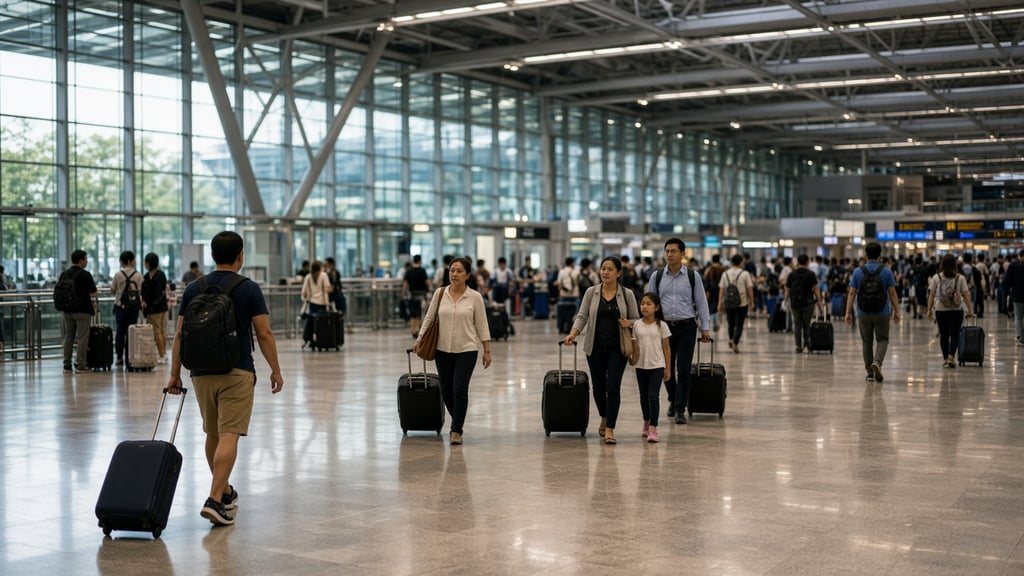
Thailand's high season arrived as a spreadsheet before it arrived as a traffic jam. In the seven days from 25 to 31 October, 538,661 foreign visitors entered the country, 36,696 more than the previous week and a 7.31% lift that put daily arrivals at 76,952. Tourism and Sports Minister Surasak Phancharoenworakul presented those preliminary figures on 2 November.
Long-haul markets did the heavy lifting. Arrivals from outside the region rose 13.60% week on week to 227,153, the fifth consecutive weekly gain as calendars in Russia, Europe, and the United States tilt toward tropical holidays. Short-haul traffic recovered more slowly, up 3.14% to 311,508. China, Russia, and the United States all sent more people than the week before. Malaysia and India did not.
That is the seasonal story. The yearly story is still a shortfall. From 1 January to 31 October, Thailand recorded 25,464,306 international arrivals, 4.59% below the same stretch of 2025. Foreign visitor spending over those ten months reached 1,241,067 million baht. A weekly bounce of 7.31% is real. It does not, by itself, close a year that is still running behind.
A weekly lift that does not yet rewrite the year
If late October's run rate simply held through November and December, the remaining eight to nine weeks would add roughly 4.7 million visitors and land 2026 near 30 million. The Tourism Authority of Thailand was still carrying a 33 million full-year forecast in mid-October after counting 23.4 million arrivals through 30 September. October then added about two million more. The last two months would need a surge that one strong week has not yet proven.
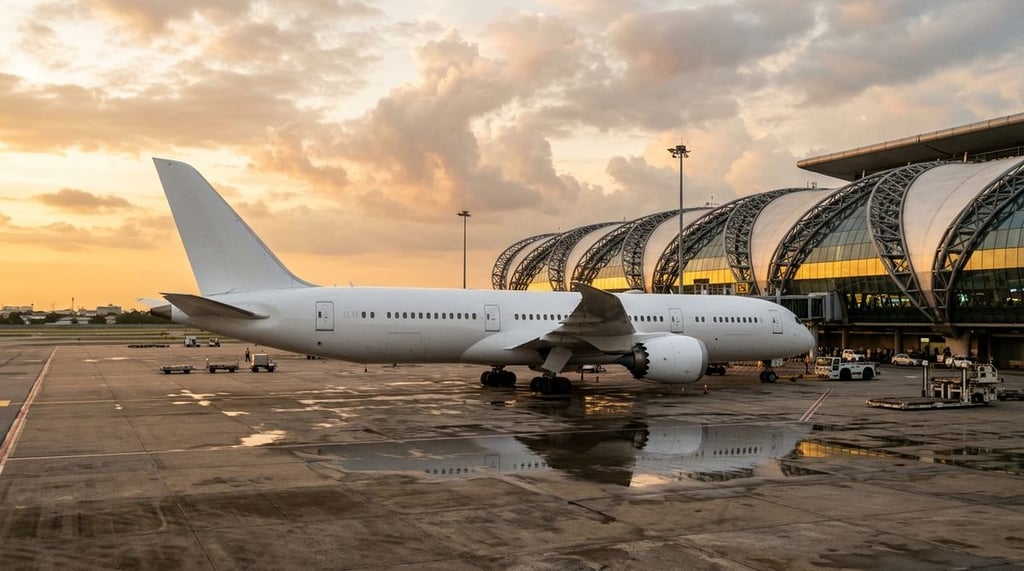
The longer record makes the gap easier to see. Thailand hosted 39.8 million international tourists in 2019, then 35.55 million in 2024. High season can still pack beaches and malls while the annual tally stays below last year. That combination is when hotel desks raise rates and Suvarnabhumi looks busy, even if the ministry is not celebrating a record.
Who came last week, and who stayed home
Malaysia supplied the largest weekly contingent at 61,842 arrivals, even with a 1.41% year-on-year dip for that seven-day window. China followed at 51,479, up 4.0% year on year. Russia sent 44,499, India 40,884, and the United States 21,261. Over ten months the ranking looks different: China leads on 4,244,376 arrivals, then Malaysia on 3,226,484, India on 1,924,417, Russia on 1,414,341, and South Korea on 932,066.
Russia posted a 27.19% weekly jump and the United States 5.42%. France moved the other way, falling 18.68% and dropping from 11th to 16th in the weekly ranking after domestic protests disrupted departures. India fell 14.98% week on week once Maha Navami and Navaratri had passed, a calendar fade rather than a sudden loss of interest in Thailand.
The ministry expects long-haul numbers to keep rising in the first week of November. Two risks sit on the same note. Protests in parts of Europe can still cancel trips. Flight cuts on some routes, particularly from Russia, can cap the market that just delivered the sharpest weekly gain. A strong Russia week and thinner Russia capacity can coexist.
Open islands and a safety pitch
TAT has spent 2026 talking about value over volume, pairing shopping privileges for ASEAN and Indian visitors with a push to reopen Andaman marine parks after the monsoon. The Similan Islands returned on 15 October and Maya Bay on 1 October. In late October, Minister Surasak also used a Government House briefing to publicise the Tourist Police 1155 hotline in eight languages, including Chinese, Russian, Hindi, and English. China is still the largest year-to-date market even when Malaysia wins a given week.
What This Means for Expats and Travelers in Thailand
Expect immigration halls, BTS crush loads, and beach-town traffic to thicken from this week through Chinese New Year. Travellers on r/ThailandTourism have already been arguing that late October and early November are the last window for decent weather without December prices. Hotel and flight quotes for Christmas typically reprice first in Phuket, Pattaya, Chiang Mai Old Town, and the islands. If you live in those places, lock in domestic seats and restaurant bookings now.
Complete the Thailand Digital Arrival Card before you land. Queue reports from Suvarnabhumi this year have ranged from 15 minutes to well over an hour, with the worst banks around 6-10am for European long-hauls, 1-3pm for North Asia, and 10pm-1am for India, Russia, and some Middle East arrivals. Fast-track is mainly useful if you skipped checked bags. Grab still runs after midnight. Residents who want the country without the high-season surcharge still have a calendar argument: May-June shoulder, August rain, or late September. The ministry chart says that argument is now closing.

Comment verification
Step 1 of 3
Verify your email once to publish your comment. Your email is never shown publicly.
Enter the 6-digit code sent to .
Choose the display name shown next to your comments.