Anutin tells Israeli ambassador Thailand will enforce its laws on all foreigners
PM Anutin told Israel's new envoy Thailand welcomes every nationality but will apply the law to foreign visitors without exception.
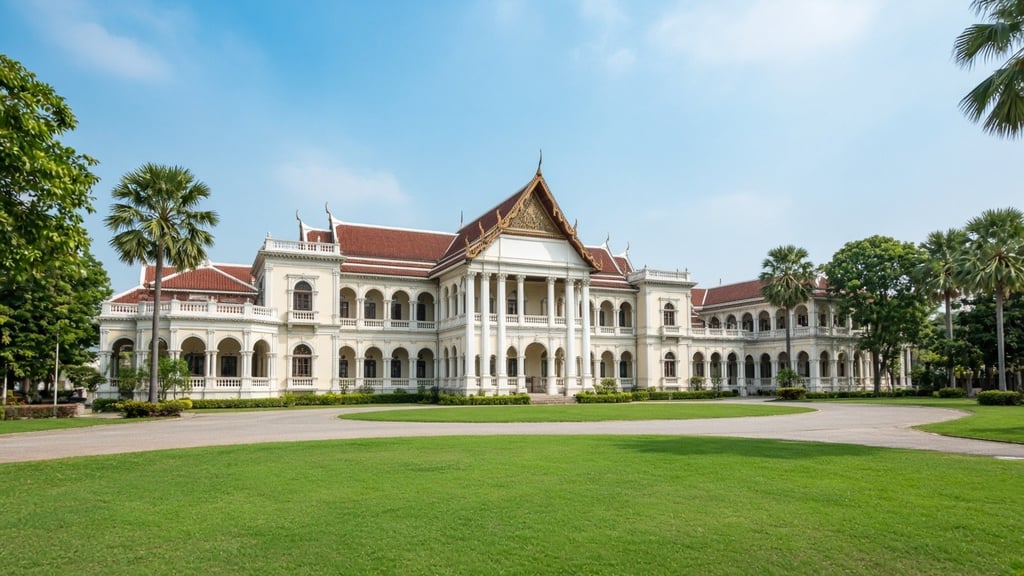
Prime Minister Anutin Charnvirakul told Israel's new ambassador at Government House on Monday that Thailand welcomes visitors of every nationality and will apply Thai law to foreign visitors without exception.
The courtesy call began at 9.30am on 9 November 2026 in Reception Room 2 of the Thai Khu Fa Building. Government spokesman Ekkapop Pienphiset briefed the press afterward. Ambassador Alona Fisher-Kamm attended with deputy chief of mission Rami Teplitskiy. Anutin, who also holds the Interior portfolio, used the session to pair an open-door tourism message with a public reminder that nationality is not a shield against Thai statutes.
Anutin said Thailand remains a popular stop for Israeli travellers. He said the government would not discriminate by race, religion, or passport, and that visitor safety stays a priority. He also said Bangkok would not permit any foreign national to break Thai law, and that enforcement would be equal across nationalities, with no special carve-out.
Labour, technology, and a tourist-conduct brief
Both sides marked 72 years of diplomatic relations, which began in 1954. They discussed agriculture, labour, cybersecurity, medicine, and technology. Anutin thanked Israel for support given to more than 70,000 Thai workers in Israel and said their rights, welfare, and safety remain a Thai government priority. He also pointed to Israeli research in semiconductors, software, cybersecurity, and emergency trauma care, noting that the two countries already run joint training for Thai medical staff.
Fisher-Kamm said her embassy was ready to work with Thai agencies so Israeli travellers better understand Thai laws, regulations, and local culture. The embassy's own statement, posted the same day, said the two sides exchanged views on recent developments involving Israeli tourists in Thailand and restated a commitment to cooperation based on mutual respect.
The same line, months in the making
The 9 November message follows a quieter diplomatic sequence this year. On 8 September, Deputy Prime Minister and Foreign Minister Sihasak Phuangketkeow met Fisher-Kamm at the Ministry of Foreign Affairs. The MFA said both sides discussed issues that could affect people-to-people ties and tourism, and underlined the need to improve understanding of Thai laws, customs, and way of life.
On 2 September, the Department of Consular Affairs hosted the ambassador and cited 410,125 Israeli arrivals in 2025, plus about 75,325 Thais living in Israel. Consular officials said they had discussed encouraging Israeli visitors to respect Thai law, local custom, and culture, alongside welfare issues for Thai workers in Israel. Fisher-Kamm presented her credentials to Their Majesties the King and Queen on 10 February 2026.
None of that creates a new immigration category. It restates a standing rule. Foreign visitors, workers, and residents are subject to the Immigration Act B.E. 2522 and the rest of the Thai criminal and administrative code, regardless of nationality. Overstay, illegal work, public-order offences, and visa conditions are enforced by Immigration, police, and labour inspectors. Consular help from an embassy is not immunity.
What This Means for Expats and Travelers in Thailand
If you live here on a retirement, marriage, education, or work visa, the practical takeaway is blunt. Thai police, immigration, and labour officers are being told, in public, to treat foreign offenders by the statute, not by the passport. That cuts both ways. It is not a licence for informal targeting, and it is not a promise that an embassy phone call will pause a charge sheet.
Tourists should treat briefing materials from airlines, tour desks, or an embassy as a courtesy, not a substitute for the rules on overstay, work, motorbike licences, drugs, and public conduct. A visa exemption or tourist stamp is permission to stay, not permission to work. Residents in Pattaya, Phuket, Chiang Mai, and Bangkok who have watched nationality-specific complaints cycle through social media should assume the government's published standard is equal enforcement, then keep their own paperwork and behaviour inside the law.
For Israeli visitors in particular, the embassy has now told the prime minister it will help explain Thai rules. That does not change the fine table at immigration, the work-permit requirement at the Department of Employment, or a police report filed by a Thai neighbour. For everyone else holding a foreign passport, the same sentence applies: welcome is not a waiver.



Comment verification
Step 1 of 3
Verify your email once to publish your comment. Your email is never shown publicly.
Enter the 6-digit code sent to .
Choose the display name shown next to your comments.