Phuket Inspects 10 Cannabis Shops in One Network Over Foreign Capital and Nominees
Phuket authorities on 10 November 2026 inspected 10 cannabis outlets under one company network across three districts, hunting foreign capital and nominee shareholding rather than a single badly labelled jar.
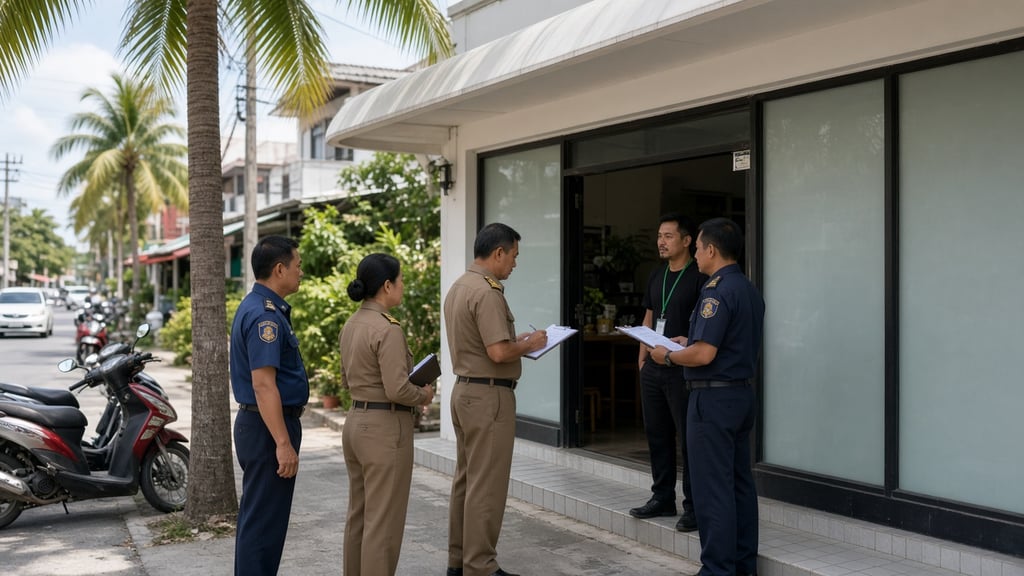
Phuket's tourist cannabis trade met a share-register inspection on 10 November 2026. Acting on a directive from Deputy Interior Minister Pol. Gen. Peeru Suwannachawi, provincial teams entered 10 cannabis retail outlets under the same company network across Mueang Phuket, Kathu, and Thalang. The questions that mattered were who put the capital in, who signs the cheques, and whether Thai names on the company books are standing in for foreign control.
Cannabis shops on Bangla, Kata, and Rawai look like a health-and-tourism problem. The statute they brought is older: the Foreign Business Act B.E. 2542, which keeps retail and services on List 3 and makes nominee shareholding a criminal offence. Thai cannabis rules separately keep foreign companies, and foreign-majority Thai companies, out of producing, selling, importing, exporting, or processing the plant. On a tourism island those two files now sit on the same counter.
One network, ten doors, three districts
Five shops were inspected in Mueang Phuket district, three in Thalang, and two in Kathu. District officers joined the provincial administration, public health, commercial affairs, and a special operations unit from the Department of Provincial Administration. The map is the visitor map: Kata and Karon, Rawai, Bangla and Sai Nam Yen in Patong, Cherng Talay and Laguna.
Teams reviewed shareholding patterns, sources of investment, decision-making authority, ultimate beneficial owners, and financial flows. They also checked sales records, purchase volumes, licence conditions, and whether outlets whose licences had been suspended or revoked were still selling. High-turnover tourist shops were a priority.
Provincial officials said early findings raised questions rather than closing a case. Contracts resembling share-option or hire-purchase deals appeared in the file. Shareholders listed at about 15 percent of equity were entitled to fixed dividends and interest that did not move with monthly profits. Investigators are also looking at foreign nationals who enter Thailand on tourist visas while remaining tied to shareholding and operations, including Thai minority shareholders connected to overseas parent companies, in some cases as employees of those firms. Governor Chotinarin Kerdsom instructed agencies to work thoroughly and without discriminating between Thai and foreign operators. No legal breach has been announced. The inquiry is open.
Health rollback and nominee enforcement, same season
The ownership probe lands on a health-policy reset that already shrunk the 2022 boom. Cannabis flower left the narcotics list in June 2022. From 26 June 2025, a Ministry of Public Health notification published in the Royal Gazette the day before classified the flower as a controlled herb. Recreational advertising is banned. Selling flower for on-site smoking is banned except for specified medical professionals treating their own patients. Online and vending-machine sales are banned. Sales to the public generally require a prescription. The plant is still off Category 5, so possession is not a narcotics charge, but the walk-in holiday dispensary is no longer the legal baseline. Public smoking can still draw a Public Health Act fine of up to 25,000 baht.
Ownership enforcement is moving nationally. The Department of Business Development's 2025 inspections screened 777 high-risk entities in tourism, property, hotels, and related sectors. Six showed signs of nominee arrangements in which Thai shareholders had not paid for their shares. Commerce officials have said more than 80 percent of 118,016 Thai companies with foreign shareholding below 50 percent may involve nominee structures. Order No. 2/2025, in force from 1 January 2026, requires bank-statement evidence of who paid for shares when foreigners invest or hold signing authority. Section 36 of the Foreign Business Act reaches Thai nationals who hold shares to let a foreigner evade the Act, and the foreigner who consents. Penalties run to three years in prison, a fine of 100,000 to 1 million baht, or both, plus a court order to unwind the shareholding.
Phuket is now applying those tools to a cannabis chain that faces tourists every afternoon.
What This Means for Expats and Travelers in Thailand
If you are a customer, this inspection does not turn a tourist with a valid prescription into a defendant. It does put tourist-facing shops in Patong, Kata, Karon, and Rawai inside a provincial ownership probe. Ask whether the shop's licence is current. Do not consume on the premises. Buying for anyone under 20 remains prohibited.
If you work in or around these businesses, a tourist visa is not a work permit and is not a licence to manage a Thai company. Side letters that pay a 15 percent Thai shareholder a fixed return regardless of profits are exactly the pattern officials described.
If you hold a Thai company in any List 3 sector, not only cannabis, the same tests now travel: who paid for the shares, who signs, and who takes the economic benefit. Cannabis is the headline this week. The Foreign Business Act is the statute.



Comment verification
Step 1 of 3
Verify your email once to publish your comment. Your email is never shown publicly.
Enter the 6-digit code sent to .
Choose the display name shown next to your comments.