Chiang Dao Dark Skies Become the Test for Chiang Mai's Astronomy Capital Bid
Provincial officials, NARIT and TAT met in Mae Rim on 10 November to back Chiang Dao as a dark-sky tourism district, with a free Geminid meteor night set for 13 December. The plan ties community income to stricter light control as Chiang Mai courts a national astronomy title.
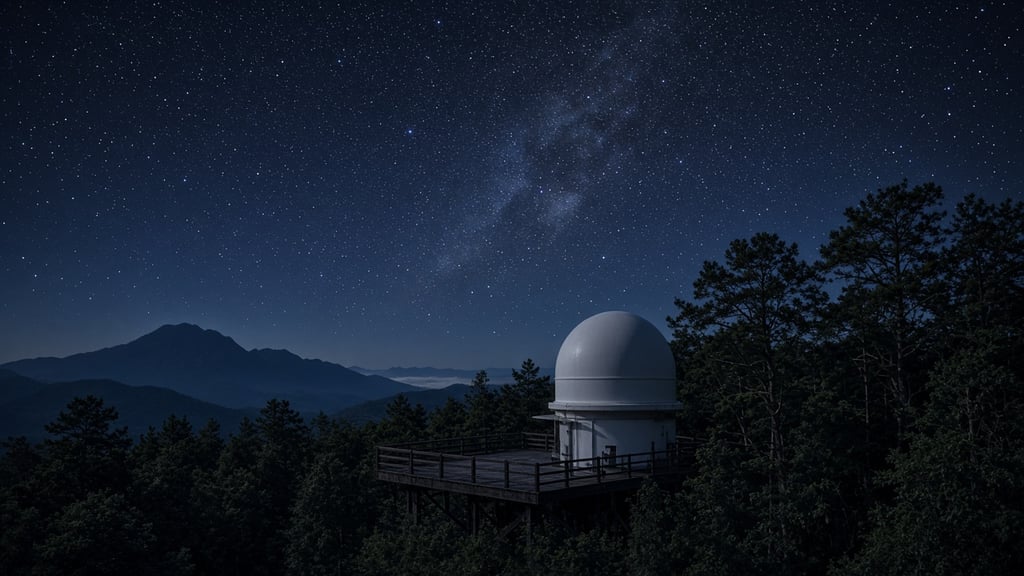
Chiang Mai's pitch to become Thailand's astronomy capital is no longer a slogan hanging over Mae Rim. On 10 November, provincial officials sat down with the National Astronomical Research Institute of Thailand (NARIT) and the Tourism Authority of Thailand (TAT) at Princess Sirindhorn AstroPark and put a rural district on the map: Chiang Dao, already stacked with registered dark-sky sites, is to be treated as the working model for astrotourism that pays communities without bleaching the night.
Deputy Governor Bunlue Thammatharanurak chaired the session, according to official briefings later circulated by NARIT and provincial partners. Chiang Mai Provincial Administrative Organisation staff, the provincial tourism and sports office, TAT's Chiang Mai office, the Chiang Dao Tourism Business Association, local district offices and the district dark-sky conservation network were all in the room. The brief was practical rather than ceremonial: how to move visitors north of the city, how to keep lighting under control, and how to stage a public meteor-shower night that does not flatten the very darkness the district is selling.
A Capital Bid That Starts 90 Minutes From Nimman
NARIT's headquarters have sat in Mae Rim since Princess Sirindhorn AstroPark opened in 2020 across 83,200 square metres, with a 0.7-metre public telescope under a 5.4-metre clamshell dome. Saturday public nights already run through the cool season from November to May. The 10 November meeting, however, pushed the story out of the campus and into Chiang Dao, a limestone district about one hour 30 minutes from Chiang Mai city, where NARIT's own dark-sky register already lists private properties with sky-quality readings around 20 magnitudes per square arcsecond.
Chiang Dao Farmstay, the site named for the December event, is logged as a private dark-sky conservation area of more than 30 rai, with Doi Luang Chiang Dao as the western backdrop. NARIT's listing shows registration covering 2023 to 2025 and a renewal for 2026 to 2028. Neighbouring Chiang Dao listings on the same register, including sites with readings near 21 mpsas, are part of the argument officials used: the district already meets the darkness threshold TAT and NARIT set when they launched Amazing Dark Sky in Thailand.
The Chiang Dao Model and a Free Geminid Night
Officials framed the work as the Chiang Dao Model: community income first, dark-sky rules as the product, not an afterthought. TAT has partnered with NARIT on Amazing Dark Sky since 2020. The first 12 conservation sites were listed in 2022, and TAT's later travel guidance has put the national tally at 64 registered parks, communities, private properties and suburban sites. Chiang Dao's cluster is now being asked to behave like a destination, not a scatter of farmstays with red-light rules.
The public test arrives on Sunday, 13 December 2026. NARIT, TAT and Chiang Dao district have scheduled Dark Sky Star Party 2026, billed as Chiang Dao Lights Out, Stars On, Geminid Meteor Shower Night, from 17:00 to 23:00 at Chiang Dao Farmstay. Entry is free. A NARIT briefing dated 11 November said a telescope caravan of more than 50 instruments would be on site, along with the institute's NAPA Star Map app, smartphone astrophotography through eyepieces, a local Kad Sum Mued market, and a photography workshop inside the conservation area.
Under ideal conditions, NARIT's briefing put the Geminid peak at about 150 meteors per hour. Visitors are told to watch with the naked eye from a reclining position, to bring mats, blankets and warm layers, and to leave white flashlights and camera flashes at home. Alcohol, smoking, vaping and cannabis are barred across the event ground. Parking and shuttle plans were still being coordinated at the time of the briefing, and registration details had not yet been posted. NARIT directed the public to its Geminids 2026 page and official Facebook channel for updates.
What This Means for Expats and Travelers in Thailand
For foreign residents in Chiang Mai, this is a same-province night out rather than a flight. Highway 107 north through Mae Taeng is the usual corridor. Winter nights in Chiang Dao regularly drop into the low teens Celsius, so a fleece, hat and closed shoes matter more than a telescope. The event is billed as family-friendly and dry: no alcohol, no vapes, no cannabis, which is a useful filter if you are bringing children or simply want a quiet sky.
If you are visiting from Bangkok, Phuket or overseas, treat 13 December as a two-night trip. Farmstay and homestay beds in Chiang Dao fill quickly around cool-season weekends, and officials have not yet published a shuttle map. Check NARIT's event page before you drive. Red-light headlamps, a picnic mat and a thermos are the kit that actually helps. White phone torches ruin night vision for everyone on the field.
The astronomy capital label will stick only if Chiang Mai can keep its dark pockets dark while the visitor numbers rise. That is the test Chiang Dao has been handed, and the Geminid night is the first public exam.



Comment verification
Step 1 of 3
Verify your email once to publish your comment. Your email is never shown publicly.
Enter the 6-digit code sent to .
Choose the display name shown next to your comments.