Chinese visitor alleges fellow nationals ran a 400,000-baht cash-and-phone scheme in Bangkok
A 28-year-old tourist from China told Huai Khwang police she lost more than 400,000 baht after two men she met on Xiaohongshu allegedly steered her through cash swaps and smartphone purchases. Investigators questioned one suspect, who denied the claims. The case remains under review.
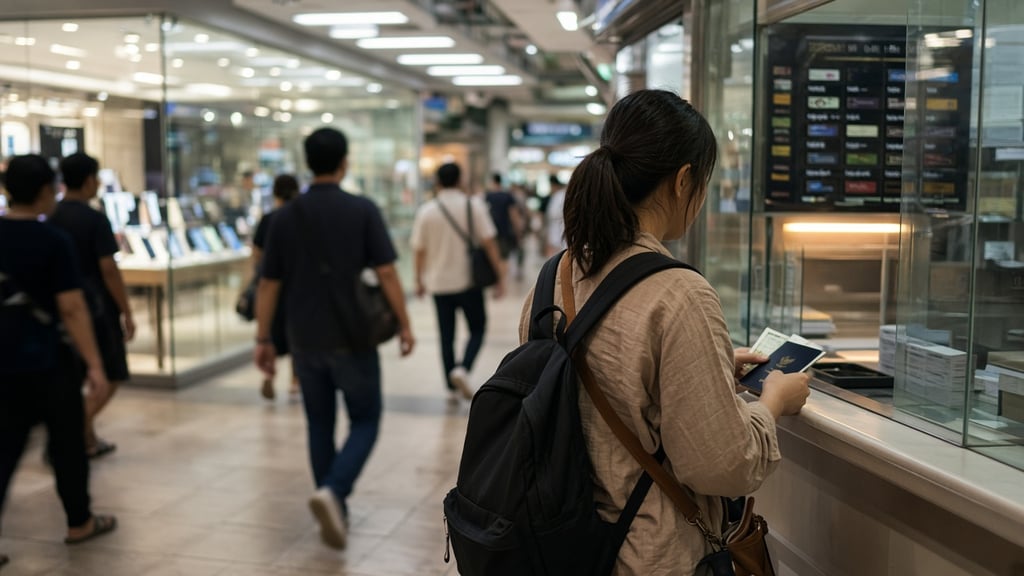
A 28-year-old tourist from China, Meng Linghui, walked into Huai Khwang Police Station with her younger brother shortly before 11pm on 11 November 2026 and asked officers to open a fraud file. She said two fellow nationals she first contacted on Xiaohongshu had allegedly talked her into handing over Thai cash and paying for smartphones during a late-October holiday. She put the combined loss at more than 400,000 baht. Police have opened an investigation. The allegations have not been tested in court.
The complaint describes a familiar pattern: social trust first, then favours that grow into large transfers. Meng said she arrived around 26 October and met the men in Din Daeng on 1 November, where a second man was introduced over a meal, then moved toward the Nana Plaza area.
How the alleged cash and phone sequence unfolded
Meng told officers the men said they needed Thai baht and offered to send Chinese yuan into her mainland bank account in return. She said she withdrew cash and completed exchanges that together approached 200,000 baht, including a midnight money-changer visit near Soi Prachasongkroh 1. Later, she said, they took her to phone shops at Central Rama 9 and Central Pattaya. Their story, she alleged, was that their banking apps had failed, so she should pay first. She listed a purchase of about 32,000 yuan (roughly 160,000 baht) in Bangkok and a further handset billed at about 1,784 US dollars in Pattaya.
When she returned to Bangkok on 3 November and asked to be repaid, she said the men stalled. She then found her Chinese bank account frozen. Bank staff, she told police, said funds linked to other alleged victims had been routed into the same account. Investigators invited one male suspect for questioning. He denied the allegations and said he had a recent injury and needed a wheelchair. Officers asked Meng for receipts, chat logs, and transfer records before they consider arrest warrants. No charges have been confirmed.
Same-nationality grooming is a different problem from street touts
Classic visitor traps in Bangkok, from gem-shop detours to tailor pitches, still rely on a local-looking stranger and a tuk-tuk that happens to know a government sale. Wikipedia's overview of the confidence trick describes a slower method: the operator wins trust, then creates a sudden hurdle, a frozen card or a failed transfer, that pushes the mark to act. Same-nationality fraud against Chinese visitors sits closer to that longer con. A shared language and a familiar app can lower the caution travellers apply to Thai touts.
The US Embassy in Thailand still advises visitors who lose money to call Tourist Police on 1155 and, if they want a criminal file, to work with local police on a formal report. TAT's visitor pages point to the same number, the Tourist Police app, and TAT's 1672 line. On 22 October 2026, Tourist Police Bureau commissioner Pol. Lt. Gen. Pongsiam Meekanthong restated that the bureau can help Chinese and other foreign visitors around the clock, in eight languages. Those channels cannot unwind a completed cash handover, but they can create a paper trail.
Beijing's embassy in Bangkok issued a mid-October 2026 notice on fake job offers and transport arranged by strangers. That advisory sits beside this kind of in-country social engineering. A visitor who would refuse a roadside gem pitch may still advance money to a new friend who speaks the same dialect and claims a bank glitch at a mall. Licensed malls and Trusted Thailand merchants that accept Alipay and WeChat Pay are not the problem. The risk is cash for yuan outside a registered exchanger, or a phone paid for on someone else's behalf.
What This Means for Expats and Travelers in Thailand
If you live here, you already know 191 reaches the Royal Thai Police and 1155 reaches Tourist Police. Tell guests the same. For Chinese family visiting Bangkok, add three rules. Do not meet travel-app strangers in private rooms on a first meeting. Do not swap ATM cash for yuan paid into a personal mainland account. Do not pay for phones, gold, or hotel bills because someone's banking app failed. If a new acquaintance needs baht, they can use a bank, a licensed booth, or a payment QR at the shop.
Anyone already pulled into this pattern should stop sending money, keep the chat history, photograph receipts, and report the same day. Huai Khwang, Din Daeng, Rama 9, and Pattaya stations can take a complaint. Tourist Police can help with language. Recovery is not guaranteed after cash has left the country, but a dated report is the starting point for Thai investigators and a home-country bank. This file is still an allegation. Treat it as a warning about method, not a verdict.



Comment verification
Step 1 of 3
Verify your email once to publish your comment. Your email is never shown publicly.
Enter the 6-digit code sent to .
Choose the display name shown next to your comments.