Doi Inthanon drops to 9 C as foreign visitors crowd Thailand's highest peak
TMD logged 9.0 C at Kew Mae Pan on 14 November, the coldest station in Thailand that morning, while park staff counted 3,024 visitors, 1,672 of them foreign.
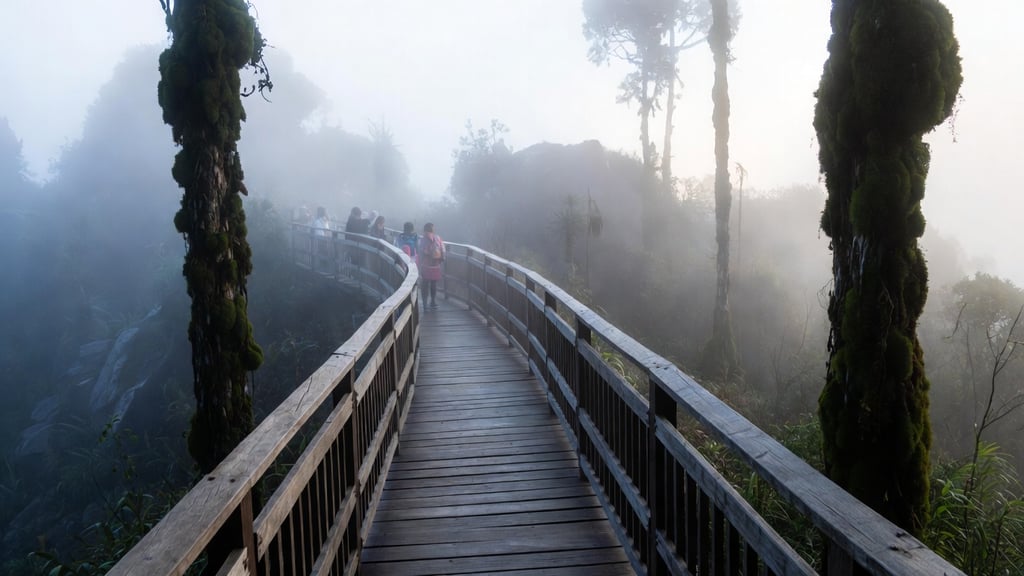
Chiang Mai city woke on Saturday, 14 November 2026, to a 19.3 C low. Ninety minutes southwest on Rural Road 1009, Thailand's highest mountain was a different country. Doi Inthanon National Park recorded 9 C at the 2,565 metre summit and 9 C at Kew Mae Pan. The Thai Meteorological Department station list put 9.0 C at Kew Mae Pan as the coldest reading in the country that morning.
It was the first weekend after TMD declared the cool season on 9 November, later than the usual October start. Park staff counted 3,024 visitors in 743 vehicles. Foreign arrivals outnumbered Thais, 1,672 to 1,352, a 55 percent foreign share on a mountain that still sells those two groups different tickets.
The park office, lower on the slope, read 12 C. Friday, 13 November, had already delivered a single-digit summit: 9 C at the peak, 12 C at Kew Mae Pan, 15 C at headquarters. Saturday matched the summit low and pulled Kew Mae Pan down to 9 C, with clear air and a sea of mist over the ridges.
A late cool season on the roof of Thailand
TMD said on 9 November that upper Thailand had crossed into cool-season winds, with northern lows holding below 23 C. In 2025 the season began on 23 October. Lingering rain delayed the switch this year. The department still expects the coldest stretch from late December into early February, with possible morning frost on mountaintops then. Saturday's 9 C is cold for a picnic. It is not frost.
Wikipedia's Doi Inthanon page lists the peak at 2,565 metres in Chom Thong district. January's summit average is about 6 C, and readings can fall below 0 C, including minus 5 C at kilometre 44.4 on 21 December 2017. TMD also flags January as the likely coldest month. Frost has not been verified on this mountain yet this season.
Crowds on a reopened ridge
Kew Mae Pan, the ridge trail near kilometre 42, reopened on 1 November after its June to October closure. A local Hmong guide is mandatory, at 200 baht per group of up to ten, cash at the trailhead. Park gates run from about 5:30 to 18:30.
Foreign adults pay 300 baht at the checkpoint, children 150. Thai adults pay 60, children 30. A car adds 30 baht, a motorcycle 20. The twin royal chedis sell a separate 100 baht ticket. The dual price is the Department of National Parks rate in force since June 2022, and it is what 1,672 foreigners paid on Saturday.
Park staff told drivers to use low gear on the steep descent of Road 1009. The climb from Highway 108 is paved. It is also slow when 743 vehicles are hunting the same sunrise. Songthaews from Chiang Mai exist, but most people who want the 6:00 mist hire a car. Motorbikes are legal. Dawn fog and a 9 C wind on an unlit hairpin are not a good first ride in Thailand.
What This Means for Expats and Travelers in Thailand
Pack layers, not a beach outfit. A 19 C city morning becomes 9 C at 2,565 metres, and the boardwalk wind is wet. Long pants, a fleece, and a windproof shell cover dawn at Kew Mae Pan. Cotton shorts fail at 6:00. If you live in Chiang Mai on a retirement, DTV, or exemption stamp, this is a same-day trip, not a visa event. You still pay the foreign park rate unless you hold a Thai ID.
Bring cash. The checkpoint and the Kew Mae Pan kiosk want baht notes. Keep the park receipt. The 300 baht foreign adult ticket is the published DNP rate, not a surcharge invented this weekend. Children aged 3 to 14 are 150. The chedis are extra. If a tour quote includes the park, ask whether it also includes the guide fee and the 100 baht chedi ticket.
Leave Chiang Mai before 4:30 if you want parking near Kew Mae Pan, or accept a later walk. Drive Road 1009 in daylight on the way down if you can. Use low gear, not riding the brakes. If you have never ridden a mountain road in fog, hire a driver. Grab does not cover the summit.
Do not go looking for frost this week. TMD has not verified ice on the grass in this first cool-season pulse. The department's winter note points to late December through early February, and to January in particular, for frost on peaks. Saturday was jackets and cameras, not ice.



Comment verification
Step 1 of 3
Verify your email once to publish your comment. Your email is never shown publicly.
Enter the 6-digit code sent to .
Choose the display name shown next to your comments.