Phuket Police Open Rawai Nominee Files on School and Brokerage Networks
Chalong police searched five Rawai sites tied to six companies after Phuket court warrants. A Russian and a French national face arrest warrants, an Estonian faces FBA proceedings, and four Thai names sit in the brokerage file.
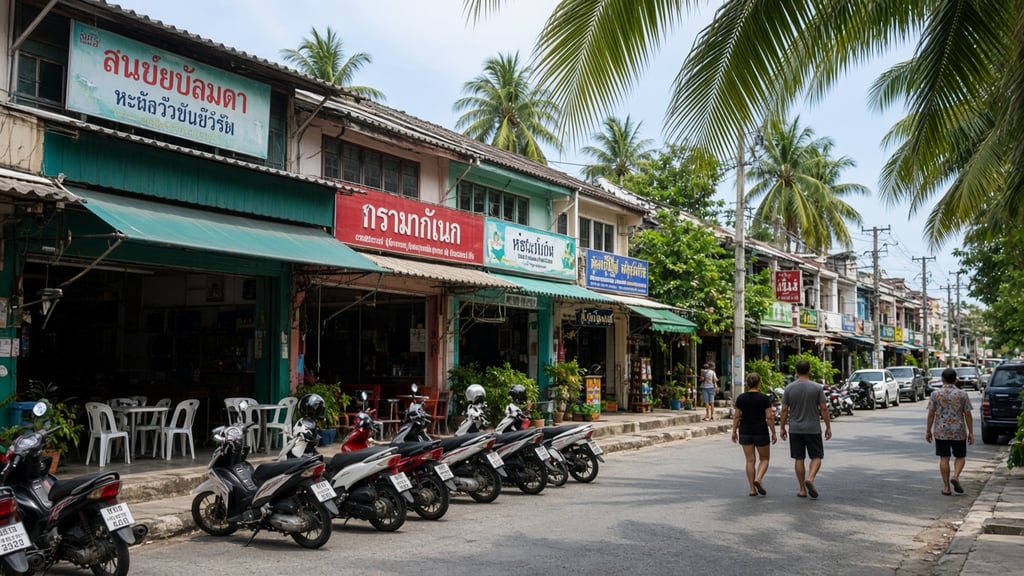
Phuket Provincial Police opened two nominee files in Rawai on 1 November 2026 after Chalong officers used Phuket Provincial Court search warrants at five addresses linked to six companies. Investigators put the combined case value above 100 million baht. The sites sit in tambon Rawai, a southern sub-district of Mueang Phuket with seven villages and a population of 13,623.
Pol Maj Gen Surachai Suksai, commander of Phuket Provincial Police, framed the work as a standing island campaign against Thai shareholders who hold stock for foreigners so restricted businesses look Thai on paper. Chalong Police Station, under superintendent Pol Col Surasak Jaidee, executed the warrants, seized documents, and said officers would keep tracing who paid for the shares and who gave the orders.
Two networks, six companies
The first file covers an international school business and two linked companies. Police searched three locations after assembling evidence that the shareholding had been arranged to hide foreign control. An arrest warrant was issued for one Russian national. Proceedings were opened against one Estonian national under the Foreign Business Act B.E. 2542 (1999) and related statutes.
The second file covers a real estate brokerage tied to a French national. Investigators said four Thai individuals were suspected of holding shares or incorporating companies without putting in real capital or exercising real management power. Two further searches covered four companies. An arrest warrant was issued for the French national.
Both files remain investigations. Arrest warrants are not convictions. Suspects can still produce bank trails, work permits, Foreign Business Licences, or Board of Investment certificates that show lawful investment. Police asked the public to report Thai nationals holding shares for foreigners.
What the Foreign Business Act actually forbids
Thailand does not ban all foreign business. It bans foreigners from running listed activities without a licence, and it bans the disguise. The official Board of Investment English translation of the Foreign Business Act, Section 36, makes a Thai national or Thai juristic person liable for acting as a foreigner's nominee shareholder, aiding a restricted foreign business, or holding a joint operation out as a Thai-only firm. The foreigner who allows that structure is liable on the same section. The penalty is imprisonment not exceeding three years, a fine of 100,000 to 1,000,000 baht, or both. The court must order the shareholding to stop. Defying that order attracts a daily fine of 10,000 to 50,000 baht. Section 37 hits a foreigner who operates without the permissions in sections 6, 7, or 8, with the same prison and fine range plus an order to cease the business.
A THAILAND.GO.TH explainer records that in 2021-2022 the Department of Business Development already flagged 148 suspected nominee businesses, 140 of them in Phuket. On 1 August 2026, DBD Order No. 2/2026 took effect. Director-General Poonpong Naiyanapakorn said that where a foreign national is a co-investor or has signing authority, applicants must file an investment explanation letter and three-month bank statements for Thai investors who paid capital and for the receiving account. Nationally, 119,116 companies still show foreign holdings between 0.01 percent and 49.99 percent, keeping Thai juristic-person status. Phuket is on the department's high-risk list with Chon Buri, Rayong, Chiang Mai, Chiang Rai, Surat Thani, and Krabi.
What This Means for Expats and Travelers in Thailand
If you own or manage a company in Phuket, the affidavit is no longer the whole file. Officers said they would look past the 51 percent Thai line to who funded the shares and who actually ran the school or the brokerage. A Thai friend, driver, or spouse listed as majority shareholder without paying capital, receiving dividends, or sitting in management meetings is the pattern Section 36 describes. Ask a licensed Thai lawyer, not a Facebook fixer, to map your share register against bank statements, BOI or FBL papers, and who holds the company stamps.
If you are a parent at a Rawai or Chalong international school, a warrant against a shareholder is not an order to close the classroom. Keep tuition receipts and the school's licence number. Ask in writing whether the school holds a Foreign Business Licence or other lawful foreign-participation approval. If you are buying or selling a villa through a Rawai brokerage, treat a "Thai partner holds the company, I run it" pitch as a legal risk. Real estate and brokerage sit on Foreign Business Act lists that require a licence or a genuine Thai majority with real capital. A 30-year lease can be lawful. A Thai name on a share certificate funded from a foreigner's account, with the foreigner keeping the stamps, is the structure this raid is built to test. Keep your own lawyer.



Comment verification
Step 1 of 3
Verify your email once to publish your comment. Your email is never shown publicly.
Enter the 6-digit code sent to .
Choose the display name shown next to your comments.