Immigration Detains Two Chinese Nationals in Bangkok Over Alleged 3,200 Million Baht Crypto Pyramid
Officers in Bangkok's Rama IX area revoked the stay of Mr Xu, 52, and Ms Ni, 28, after matching them to Changde warrants tied to an alleged cryptocurrency pyramid with reported losses of more than 3,200 million baht.
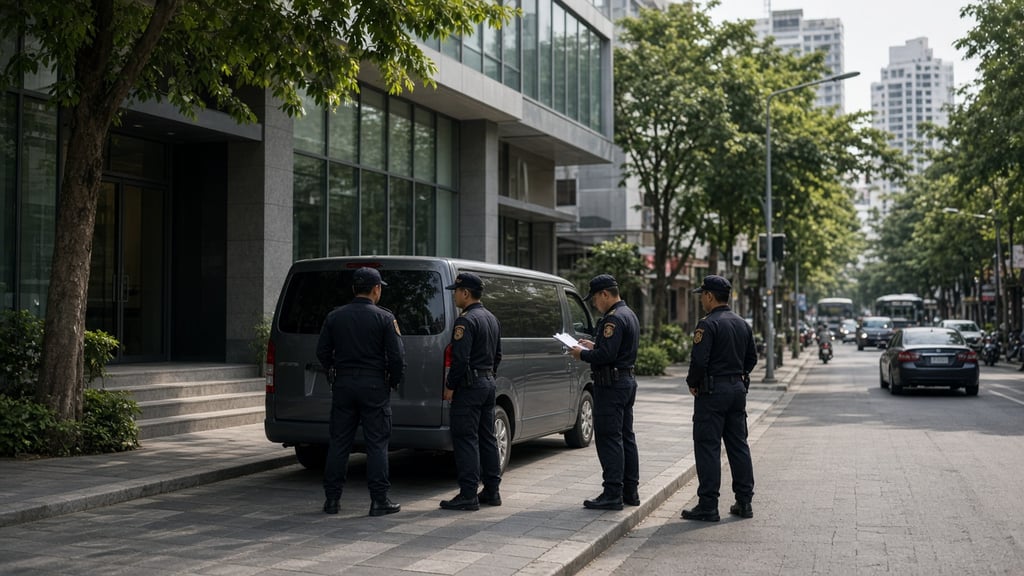
Royal Thai Immigration Bureau officers detained two Chinese nationals in Bangkok's Rama IX corridor on 12 November 2026 after matching them to public-security warrants from Changde, Hunan province. Chinese investigators allege the pair took part in a cryptocurrency pyramid that pulled in the public with promised investment returns, with reported losses put at more than 3,200 million baht. The suspects remain alleged offenders. No Thai court has tested the pyramid claim, and officers have not named a token, wallet, or trading platform.
Police identified the pair only as Mr Xu, 52, and Ms Ni, 28. Warrants dated 18 December 2025 were issued by public-security authorities in Changde, a Hunan city of about 5.28 million people. Chinese law has banned pyramid selling, known as chuanxiao, since the State Council's Regulation on the Prohibition of Pyramid Selling took effect in 2005. 2017 notices from Chinese financial regulators treat unauthorized token fundraising as illegal finance. Thai officers are not prosecuting that case on the merits.
The Chinese Embassy in Thailand had contacted the Immigration Bureau with warrant details, travel history, and accommodation traces. Investigators then placed a luxury condominium in Hua Mak, Bang Kapi, under watch. On 12 November, at about 12:10, the two suspects walked out of the building. Officers stopped them, checked passports with a Chinese interpreter, and confirmed the identities. Records showed both had entered the kingdom through Suvarnabhumi Airport.
Officials then cancelled permission to remain under Section 12(7) of the Immigration Act B.E. 2522 (1979). That clause treats a foreign arrest warrant as a ground to exclude an alien from the kingdom. The pair were told of their rights and taken to Division 3 of the Immigration Bureau's Investigation Division. Return to China is being coordinated. The path is an immigration removal after a stay revocation, not a full Thai extradition trial of the alleged pyramid.
The operation sat inside a national police push, directed by national police chief Pol Gen Samran Nuanma, to locate foreign nationals wanted abroad and to keep Thailand from becoming a refuge. Immigration Bureau Commissioner Pol Lt Gen Nopasin Poolsawat has described close work with overseas agencies. Briefings have not said whether any of the alleged 3,200 million baht will be recovered for victims, or whether assets in Thailand were frozen.
Thai investor alerts and what this file is not
Thailand's Securities and Exchange Commission has warned that unlicensed trading desks, brokers, and investment chats can double as fraud pipes. In August 2025 the Securities and Exchange Commission cautioned the public and pointed investors to the SEC Check First app and the investor-alert list. Operating a digital-asset business without a licence can bring two to five years in prison under Section 66 of the Emergency Decree on Digital Asset Businesses B.E. 2561 (2018). In April 2026 the SEC listed scams as a national agenda, tightening checks through licensed securities firms and digital-asset businesses, including reports to the Anti-Money Laundering Office. Special investigators have separately moved P Miner crypto-pyramid assets toward victims. None of those Thai tools were used to try Xu and Ni for fraud in a Thai courtroom. The live facts are two wanted persons, a midday stop, a cancelled stay, and a planned handover to Chinese process.
What This Means for Expats and Travelers in Thailand
A foreign warrant can end a stay even when Thai prosecutors have not opened a matching fraud case. Section 12(7) is an immigration filter, not a substitute for a Thai trial. Anyone living here on a tourist stamp, retirement visa, destination visa, or work permit should treat an overseas arrest notice as a live risk to status, not a problem that only starts after a Bangkok court date.
A condominium in a busy Chinese-speaking pocket of the city is not a hideout. Officers used embassy files, travel history, and accommodation traces, then waited outside. Lodging reports and passport scans at Suvarnabhumi already sit in government systems. Long-stay renters who skip landlord notifications, or who let a friend just stay without being named on the lease, create paper trails they do not control.
Crypto pitches that promise club-like returns or recruitment bonuses remain a staple of pyramid design. Check any Thai-facing platform against the SEC's licensed-operator list and the Check First app before sending funds. Report suspicious solicitations to the SEC Complaint Center on hotline 1207. High promised yields, pressure to recruit friends, and requests to move coins off a licensed exchange are classic warning signs in English, Thai, or Chinese.
Travelers passing through Bangkok still have a stake. Keep passports consistent with airline bookings, avoid carrying papers for someone else's investment club, and do not treat an entry stamp as a shield if a home-country warrant already exists. The Xu and Ni detention is a Chinese pyramid allegation handled through Thai immigration law. It is not a verdict on every Chinese resident of Rama IX.



Comment verification
Step 1 of 3
Verify your email once to publish your comment. Your email is never shown publicly.
Enter the 6-digit code sent to .
Choose the display name shown next to your comments.