Laem Panwa Bloom Is a 150-Meter Local Strip, Not a Phuket Beach Shutdown
A 150-meter brownish-red Alexandrium bloom off Phuket's Laem Panwa prompted a local stay-out-of-the-water warning on 14 November 2026. West-coast beaches are not covered. Skip wild shellfish from the stained shoreline until the lab work is in.
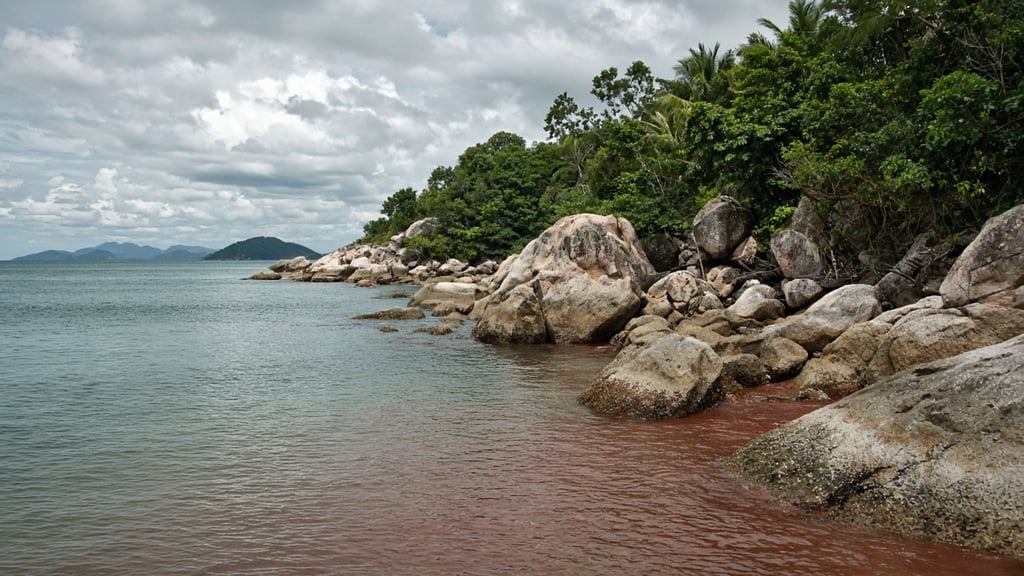
PHUKET: A brownish-red band of seawater appeared along a short stretch of Laem Panwa, the rocky cape on Phuket's south-east coast, on 14 November 2026. The island's own marine laboratory, the Marine and Coastal Resources Research Center for the Upper Andaman Sea, surveyed the water after residents flagged the color change. The strip ran about 150 meters parallel to the shore. Officers told the public and visitors not to swim or touch the affected water while monitoring continues.
Preliminary identification pointed to a dense bloom of phytoplankton in the genus Alexandrium, microscopic dinoflagellates that can stain coastal water reddish-brown in high numbers. Field readings put water temperature at 32.4 to 32.9 degrees Celsius, salinity at 30 to 31 parts per thousand, pH at 8.24 to 8.36, and dissolved oxygen at 9.7 to 12.5 milligrams per litre. No dead fish or other obvious harm to marine animals was recorded on site. Nutrient samples went to a laboratory for further analysis.
Why this cape, and why the warning is narrow
Laem Panwa is not Patong, Karon, or Kata. It is a granite headland in Vichit, Mueang Phuket, better known for the Phuket Marine Biological Center campus, Phuket Aquarium at the tip of the cape, and a quieter rocky shoreline than the west-coast swimming beaches. The research centre that answered the call sits on the same cape. That proximity matters: this was a local survey of a local strip, not a blanket advisory for Phuket's tourist beaches.
The stay-out-of-the-water advice applies to the discolored water in front of Laem Panwa beach. It does not extend to the main west-coast strand. Visitors still heading to Patong, Kamala, or Nai Harn for a swim are not covered by this particular warning. The centre said it will keep watching the site for changes in water quality.
Alexandrium, red water, and what the chemistry does not settle
Alexandrium is a globally distributed genus of bloom-forming dinoflagellates, with more than 30 recognized species. About half of known species can produce saxitoxins, the neurotoxins behind paralytic shellfish poisoning when filter-feeding bivalves accumulate the compounds. Cooking does not destroy those toxins. The main documented human risk is eating contaminated shellfish, not casual contact, though dense blooms elsewhere have been linked to mild, temporary skin irritation.
That is why the Thai field team treated contact as a precaution. Skin irritation is the stated reason to stay out. It is not a declaration that this bloom is producing saxitoxin. Species-level identification and toxin tests were not part of the first public readout. Nutrient results are still in the lab. High dissolved oxygen, well above the 4 milligrams per litre floor in the National Environment Board's 28 October 2021 marine water quality announcement, is consistent with a photosynthetic bloom pumping oxygen into the water during daylight. pH also sat inside the 7.0 to 8.5 band used for conservation and recreation classes. Color and transparency are separate criteria. A rusty band of plankton can fail the look of the water even when the meter readings look ordinary.
DMCR's 2024 status paper recorded 49 phytoplankton color-change events nationwide that fiscal year, with Phuket among the Andaman provinces that saw repeat episodes. Laem Panwa, Patong, and Bang Tao all appeared on that list. Nutrient enrichment from rainfall runoff, community wastewater, and disturbed coastal catchments is the usual coastal explanation for rapid plankton growth.
What This Means for Expats and Travelers in Thailand
If you are staying at Cape Panwa this week, treat the discolored strip as closed for swimming, paddling, and letting children or dogs into the water. Rinse with fresh water if you do get wet. The rest of Phuket's beaches are not under this advisory. Do not harvest or eat wild mussels, oysters, or other filter-feeding shellfish from the affected shoreline until authorities say otherwise. Hotel pools, boat trips outside the stained band, and west-coast swimming remain a separate question. Watch for updates from the Upper Andaman Sea research centre rather than assuming an island-wide shutdown, or assuming the color is harmless because the oxygen numbers look high.
Long-stay residents who snorkel the south-east coves should give Laem Panwa a few days and follow the monitoring. Blooms often fade when winds, tides, or nutrients shift, but cysts of Alexandrium can rest in sediment and seed later events. That is a reason this cape keeps showing up in DMCR color-change logs, not a reason to cancel a Phuket holiday.



Comment verification
Step 1 of 3
Verify your email once to publish your comment. Your email is never shown publicly.
Enter the 6-digit code sent to .
Choose the display name shown next to your comments.