Visa cancelled first: Taiwanese suspect held in Pattaya over 15 alleged warrants
Tourist Police and Chon Buri Immigration detained a 50-year-old Taiwanese man outside a Nong Prue home on 12 November after Taiwanese investigators asked Thailand to locate him. Briefings list 15 outstanding warrants, including alleged fraud above 70 million baht. The murder file remains unproven in any Thai court.
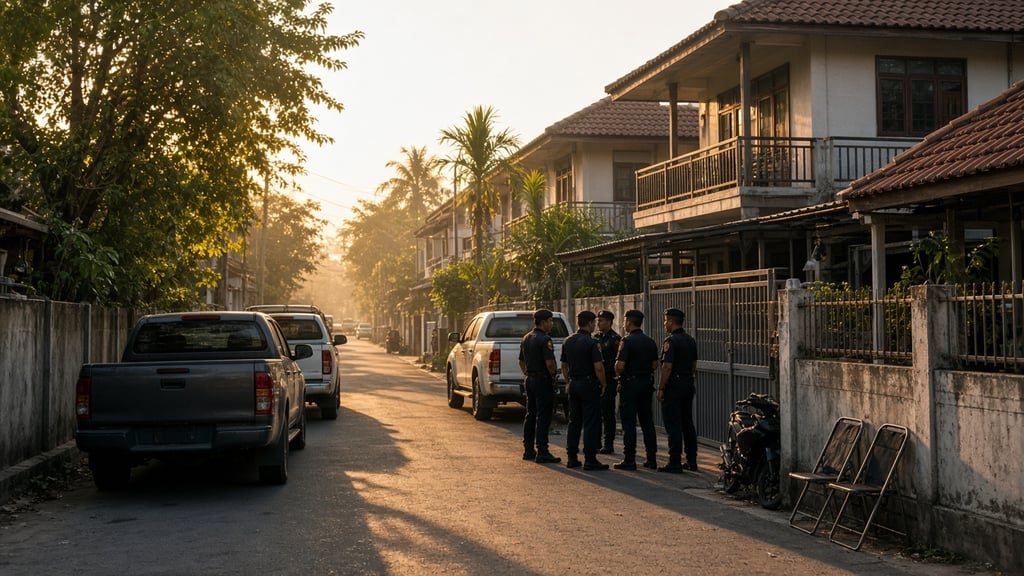
Late on 12 November, a 50-year-old Taiwanese man walked out of a house in Nong Prue, Bang Lamung district, and was taken into custody at the gate. Tourist Police officers working with Chon Buri Immigration had already cancelled his permission to stay. The arrest, around 5pm, was the end of a watch, not a street chase.
Thai briefings identified the suspect as Teng, a transliteration that also appears as Deng in some English reports. Taiwanese investigators say he is wanted on 15 arrest warrants: 13 fraud files with claimed losses above 70 million baht, one money-laundering file, and one murder file. Thai officers have not treated those origin-country papers as a local conviction, and they have not released facts about the homicide allegation.
Intelligence first, then the visa stamp
The request did not arrive as a public INTERPOL Red Notice. Taiwan's criminal investigation channel, working through the Taipei Economic and Cultural Office in Thailand, told Thai counterparts that the man was believed to be living around Pattaya and asked for help finding him. Tourist Police Sub-Division 2 of Division 1 then worked the ground with Chon Buri Immigration until they had a house.
Once the address was confirmed, immigration officers revoked his visa. That step is the quiet hinge in cases like this. A cancelled stay turns a long-term foreign resident into someone who can be detained and prepared for removal, even before a Thai prosecutor files a criminal charge. Officers waited. When Teng stepped outside to smoke, they identified themselves and detained him without a reported struggle. Marcus Chen, who heads crime coordination at the Taipei office in Thailand, watched the operation as an observer.
The job was ordered at bureau level by Tourist Police commissioner Pol Lt Gen Pongsayam Meekhanthong and Immigration Bureau commissioner Pol Lt Gen Noppasin Poolsawat.
From tourist entry to a jewellery shop
Police said Teng first entered Thailand on a tourist visa and later changed status to a retirement visa, a route many older foreigners use to settle in Chon Buri. He was also listed as a director of a jewellery sales company formed with two Thai partners. Officers have not accused those partners of a crime. They have opened the company's bank records and transaction history to see whether money moved through Thai accounts in ways that line up with the Taiwanese files.
If investigators find evidence of offences committed inside Thailand, extra Thai charges can follow. If they do not, the likely path is removal to Taiwan so courts there can deal with the 15 warrants. Either way, the shop is now a financial file, not only a Pattaya storefront. Taiwanese briefings have also alleged that Teng helped move money for Chinese-language online gambling operators. That claim, like the murder file, remains untested in a Thai court.
What a foreign warrant can and cannot do here
An origin-country warrant is not a Thai guilty verdict. A murder allegation stays an allegation until a court hears it. The same is true of the fraud and money-laundering files. Readers should keep that line clear, because Pattaya crime stories often collapse the difference between wanted and convicted.
Thailand and Taiwan do not keep formal embassy-level diplomatic relations, so police work often runs through the Taipei Economic and Cultural Office rather than a classic treaty extradition packet. INTERPOL Red Notices, when they exist at all, are requests for cooperation. They are not self-executing arrest orders. In this case, officers described a direct intelligence handoff, a visa cancellation, and a planned detention. That sequence is faster than a full extradition hearing. Immigration status can fall first, with criminal process in the origin country waiting at the other end.
What This Means for Expats and Travelers in Thailand
A retirement visa is permission to remain, not a criminal-records shield. If another government asks Thailand to locate someone, Immigration can cancel the visa under the Immigration Act and hold the person as an overstayer or prohibited person while removal is arranged. Company director papers do not hide that process. They can widen it, because Thai police then have a local paper trail to audit.
Travelers and long-stay residents should assume that tourist-to-retirement conversions, house registrations, and company filings are visible to the same agencies that ran this job. If you sit as a director or nominee partner, keep books that can survive a bank review. If a neighbour is detained at the gate, wait for the warrant list and the alleged-versus-charged distinction before treating a murder file as a closed case. For now, Teng is in Thai custody on cancelled immigration status, with Taiwanese allegations still to be proved where they were filed.



Comment verification
Step 1 of 3
Verify your email once to publish your comment. Your email is never shown publicly.
Enter the 6-digit code sent to .
Choose the display name shown next to your comments.