Thai Airways flight attendant returns via Chiang Mai as heroin case moves to Thai investigation
A 26-year-old former Thai Airways cabin crew member arrived at Chiang Mai International Airport on 18 November 2026 after Australian prosecutors withdrew heroin-import charges. Thai narcotics police and the Attorney General's office will now interview her as a witness in the domestic inquiry.
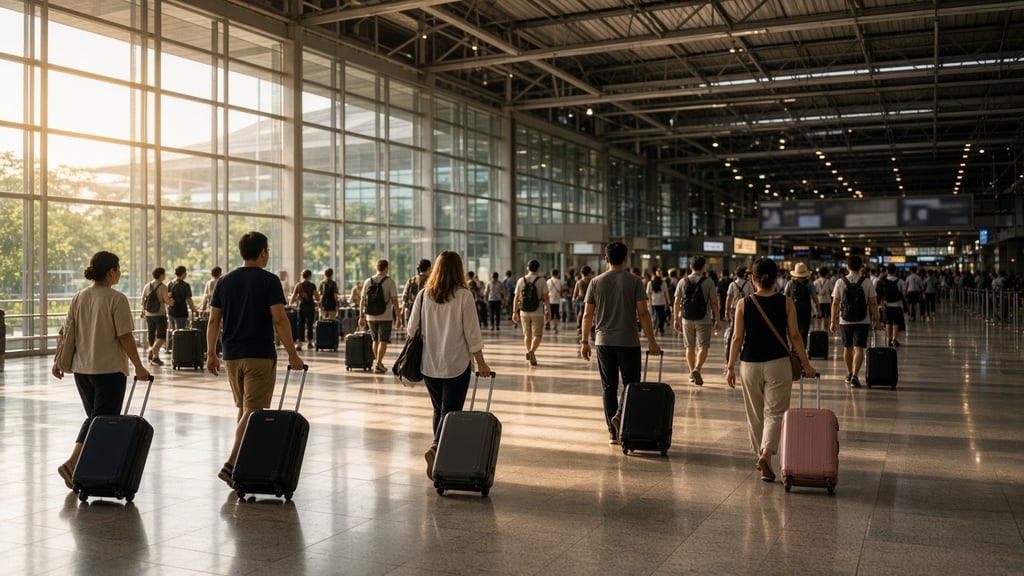
A former Thai Airways International cabin crew member arrived back in Thailand through Chiang Mai International Airport on 18 November 2026, after Australian prosecutors abandoned a heroin importation case that had held her in Victorian custody since late June. Thai narcotics investigators and public prosecutors now take the lead, treating the 26-year-old as a witness in a wider inquiry into the elephant-pattern tote bags intercepted at Melbourne Airport.
The woman, identified in court papers as Meena Kondo (also rendered in some reports as Meena Condo), had been a Thai Airways cabin attendant when she was arrested on 25 June 2026. Australian Border Force screening of her baggage flagged anomalies on X-ray. Officers later said a white powder concealed in the linings of a set of cloth tote bags tested positive for heroin. Australian police put the intercepted quantity at more than one kilogram, with an estimated street value of A$500,000. Thailand's Office of the Narcotics Control Board later described the seized material as about 900 grams.
How the Australian case collapsed
Kondo faced three Commonwealth offences under the Criminal Code Act 1995: section 307.2 (importing a marketable quantity of a border-controlled drug), section 307.6 (possessing a marketable quantity), and section 307.1 (importing a commercial quantity). Marketable quantity for heroin starts at 250 grams. Commercial quantity starts at 1.5 kilograms. The commercial-quantity import count carries a maximum of life.
She remained on remand in Victoria for more than four months. On 17 November 2026 she appeared by video link before Melbourne Magistrates' Court. Magistrate Donna Bakos formally struck out every charge after prosecutors applied to withdraw them. The Commonwealth Director of Public Prosecutions said the file had been reviewed against the Prosecution Policy of the Commonwealth, which requires both sufficient evidence and a reasonable prospect of conviction. Thailand's ONCB said Australian prosecutors had already decided on 12 November that communications data and financial records did not prove Kondo knew the bags contained heroin.
Withdrawal is not an acquittal after trial. It ends the Australian prosecution without a judicial finding of guilt or innocence. That distinction matters in Thailand, where dropping a foreign charge does not close a domestic narcotics inquiry, and it can still leave a visa record or extra border screening.
Thai prosecutors open the next chapter
Watcharin Phanurat, director-general of the Investigation Office at the Office of the Attorney General, said Thai prosecutors will question Kondo under the statutory framework that covers offences committed outside the Kingdom. Narcotics Suppression Bureau officers will sit in. Officials will treat her, at this stage, as a witness rather than a defendant.
A joint Thai inquiry already lists three people under arrest and an arrest warrant for a fourth, according to the Attorney General's office. Investigators are mapping how the bags were prepared in Thailand and who was waiting in Melbourne. Watcharin has stressed that no formal Thai charging decision will be made until she has been interviewed in person.
On 9 July 2026 the House Committee on the Prevention and Suppression of Money Laundering and Narcotics convened a hearing on cabin-crew involvement in transnational drug consignments. The Ministry of Foreign Affairs' Department of Consular Affairs attended alongside Thai Airways International, CAAT, Customs, and the ONCB. Consular officials urged chemical swabbing, more sniffer dogs, dedicated narcotics X-ray capacity, and random check-in questionnaires.
Airline crew, security, and a carrier still under scrutiny
Thai Airways has not issued a detailed public narrative of Kondo's employment status beyond the widely reported fact that she is a former cabin crew member. Crew members enjoy faster airside movement and are a known recruitment target for groups that hide narcotics in gifts, souvenirs, or errands. The July hearing made clear that Thai regulators want that screening tightened, not relaxed.
What This Means for Expats and Travelers in Thailand
Anyone flying out of Thailand, crew or passenger, is legally responsible for the contents of bags they check or carry. Accepting a parcel, a stack of souvenir totes, or a favour for a friend is how unwitting courier cases begin. Australia's border-controlled drug offences do not require a commercial motive to be charged, and remand can last months even if the file later collapses. A discontinued Australian prosecution also does not wipe a Thai investigation, and a drug arrest can complicate future visas even without a conviction.
Travellers should refuse to carry items they did not pack, photograph their own bags at check-in if someone else has handled them, and remember that a visa, an airline ID, or a clean prior record is not a defence. If Thai prosecutors conclude Kondo was used rather than recruited as a knowing courier, that finding will still leave the people who packed the bags facing Thai courts. The practical lesson is simpler: do not carry other people's luggage, and do not assume a dropped charge overseas is the end of the story in Thailand.



Comment verification
Step 1 of 3
Verify your email once to publish your comment. Your email is never shown publicly.
Enter the 6-digit code sent to .
Choose the display name shown next to your comments.