Thailand's 450-baht tourist fee is unlikely before mid-2027
Collection from foreign air arrivals cannot start before June or July 2027. The National Tourism Policy Committee reviews the draft on 12 November before Cabinet.
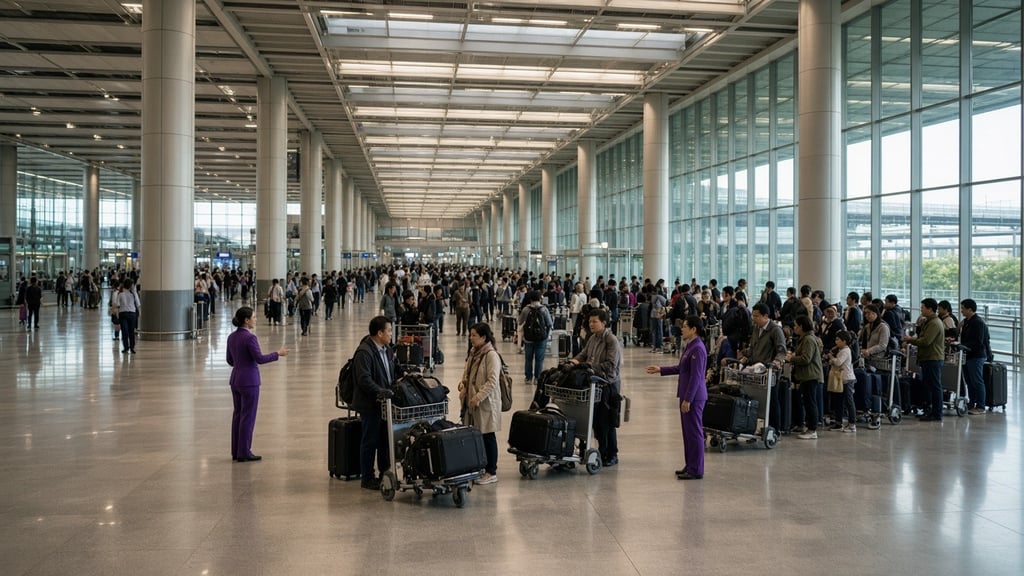
Foreign visitors flying into Thailand this high season will not pay the proposed 450-baht tourism fee at the airport. Officials at the Ministry of Tourism and Sports now put the earliest collection from eligible air arrivals around June or July 2027, later than the first-quarter target set in early October.
The calendar is driven by procedure, not by a press conference. The draft announcement of the National Tourism Policy Committee can take effect only 180 days after it appears in the Royal Gazette. Cabinet has not approved the text. The committee, chaired by Deputy Prime Minister and Commerce Minister Suphajee Suthumpun, is due to review a revised draft on 12 November, with a possible Cabinet submission the following week. Even a Gazette notice in late November would land the 180-day clock in late May 2027. Remaining work on exemptions, collection systems, and visitor insurance has already pushed the working window to mid-year.
Nothing is being charged today. A 30 October meeting of the same committee, recorded on the Royal Thai Government website, stated that public comments on the levy were still being collated and that collection had not been authorised. Travellers arriving in November and through the first half of 2027 should treat any website demanding 450 baht as a scam, not as an official fee.
What the 450-baht draft actually contains
The current proposal is a flat 450 baht per eligible foreign visitor, replacing an earlier split of 300 baht for air arrivals and 150 baht for land and sea. Phase one would cover air arrivals. Land and sea crossings, including busy Malaysian and Lao routes, would follow about a year later. A single payment would cover multiple entries for 30 days and sit alongside a visitor insurance package funded from the same levy.
Draft exemptions include holders of work permits, diplomatic and official passports, and border passes, plus transit passengers, air and sea crew, and children under two. Those categories are still being rewritten before the 12 November sitting.
An online hearing on the legal portal law.go.th and the ministry secretariat site ran from 24 August to 28 September 2026. The Thailand Tourism Promotion Fund and the Government House readout both recorded 5,954 responses: 80.50 percent backed the draft announcement and 78.30 percent backed the 450-baht rate. Support was weaker for charging air, land, and sea at the same rate. The most popular collection method, chosen by 36.26 percent of respondents, was to fold the fee into the airline ticket.
Where the money is supposed to go
Revenue would flow into the Fund for the Promotion of Thai Tourism, created under the National Tourism Policy Act B.E. 2551 (2008) and later expanded so the fund can buy insurance for foreign visitors. After collection costs and the insurance premium, officials expect at least 8,000 million baht a year for destination repair, safety, and new attractions. Tourism Minister Surasak Phancharoenworakul has framed the levy as a way to stop relying only on the annual budget. From January to September 2026, more than 22 million foreign visitors generated over 1 trillion baht in tourism receipts, according to the ministry's October briefing.
Thailand is late, not first. More than 80 countries already charge some form of tourism tax or arrival fee, a comparison the ministry used during the hearing. Earlier Thai attempts in 2022, set at 300 and 150 baht, were postponed during the pandemic recovery and never gazetted into force.
What This Means for Expats and Travelers in Thailand
If you hold a work permit, the draft still points to an exemption, but the wording is being revised. Retirement and destination-visa holders who enter as tourists should assume they will pay once the air phase starts, unless the committee writes them out. A 30-day multiple-entry rule would help visa-run regulars at land borders, yet land collection is a year behind the airports.
Do not pay anyone claiming to collect the fee in 2026. The Thailand Digital Arrival Card remains a separate, free Immigration Bureau form at tdac.immigration.go.th. The ministry has already warned about fake TDAC sites. A 450-baht tourism tax checkout on a random website is the same class of fraud.
Airlines are the ministry's preferred collection channel because cash desks at Suvarnabhumi or Phuket would lengthen immigration queues. Talks with aviation agencies and the Immigration Bureau are already on the work plan. Until Cabinet approves a Gazette text, ticket prices should not include this levy. Watch the 12 November committee outcome and the Royal Gazette, not social media screenshots, for the real start date.



Comment verification
Step 1 of 3
Verify your email once to publish your comment. Your email is never shown publicly.
Enter the 6-digit code sent to .
Choose the display name shown next to your comments.