Fuel shock knocks Thai Airways back into a quarterly loss
The flag carrier still grew third-quarter revenue 12.9 percent, to 50.13 billion baht, but a 60 percent jump in average jet fuel prices, higher finance costs, and flood-related one-offs flipped the bottom line into the red.
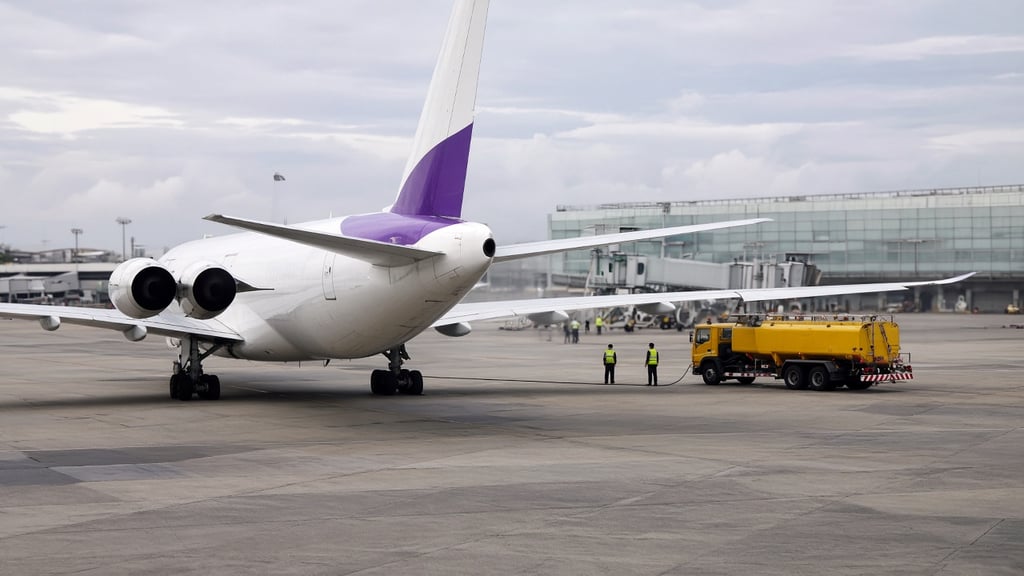
Thai Airways International posted a net loss of 418 million baht in the third quarter of 2026, reversing a 4.42 billion baht profit a year earlier. Demand did not collapse. Revenue excluding one-time items still rose 12.9 percent to 50.13 billion baht from 44.40 billion baht. Fares simply could not outrun jet fuel, floods, and finance charges.
The Stock Exchange of Thailand's reviewed F45 summary, which reports the result attributable to shareholders of the parent, put the deficit at 431.6 million baht, or 0.02 baht per share, against earnings of 0.16 baht a year earlier. Both figures cover July through September 2026.
Passenger fares and excess baggage brought in 39.50 billion baht, up 10.7 percent. Thai Airways carried 3.97 million passengers in the quarter, 2.1 percent more than a year earlier, and filled 76.5 percent of seats, almost unchanged from 76.8 percent. Traffic held. The cost of flying it did not.
Jet fuel expense jumped 57.0 percent to 18.06 billion baht. Average fuel prices rose 59.8 percent to 152.69 US dollars a barrel from 95.56 dollars after fighting in the Middle East flared again from early July. Total expenses excluding one-time items climbed 29.1 percent to 46.29 billion baht. Operating profit before finance costs, excluding one-offs, fell 55.1 percent to 3.84 billion baht, leaving an EBIT margin of 7.7 percent.
The airline did pass some of the shock into tickets. Average passenger revenue, including fuel surcharges and insurance but excluding excess baggage, rose 10.3 percent to 2.88 baht per passenger-kilometre from 2.61 baht. Domestic unit revenue jumped 20.2 percent. Europe rose 11.4 percent, Asia 8.0 percent, and Australia 7.3 percent. Cargo yield, also including fuel and insurance surcharges, climbed 28.0 percent even as the freight load factor slipped to 51.1 percent from 53.3 percent.
Higher fares still left a hole. Net one-time expenses of 1.13 billion baht included flood-related costs, a net foreign-exchange loss, and a gain on the measurement of derivatives. EBITDA dropped 39.8 percent to 7.48 billion baht.
The nine-month picture remains in profit. From January through September 2026, Thai Airways recorded a net profit of 11.23 billion baht, down from 26.39 billion baht a year earlier. The fleet stood at 91 aircraft on 30 September, averaging 13.2 block hours a day.
The balance sheet is no longer the wreck of 2020. Cash, cash equivalents and other current financial assets totalled 135.49 billion baht at the end of September, up 11.93 billion baht from the end of 2025. Shareholders' equity stood at 82.58 billion baht, up 6.66 billion baht over the same stretch. Thai Airways completed court-supervised business rehabilitation in 2025 after a recapitalisation that restored positive equity. One quarterly loss does not unwind that repair.
The Bank of Thailand's second-quarter 2026 monetary policy report assumed Dubai crude would average about 90 US dollars a barrel for the year. Thai Airways' realized jet-fuel average of 152.69 dollars a barrel shows how far aviation fuel ran beyond that crude baseline. The airline said it used partial fuel hedging. Advance bookings for the year-end travel peak remain satisfactory, according to the results statement.
What This Means for Expats and Travelers in Thailand
Expect the fare you actually pay, not the advertised base fare, to stay elevated into high season. Thai Airways has already lifted fuel surcharges on routes where it judged the market could take it, and average yield is up more than 10 percent. Compare the all-in price, including surcharge and insurance, against last year's ticket, not against the headline cabin fare.
Route reliability looks steadier than the profit line. Cabin factor held near 76.5 percent, passenger numbers rose slightly, and the company has not announced a broad winter capacity cut tied to this result. Cash on hand of more than 135 billion baht also argues against a sudden grounding scare of the kind that followed the 2020 court filing. Schedules can still flex if oil stays high, and other Thai carriers have already trimmed some flying this year, so long-haul connections are worth reconfirming rather than assuming last year's pattern.
Low-cost airlines will look cheaper on the search screen. They often fold fuel into the base fare or add a smaller line item, and they have less long-haul exposure. For Bangkok to Chiang Mai, Phuket, or Samui, that gap can be large. For Europe, Japan, or Australia, the flag carrier still sells the connections, baggage rules, and Star Alliance itineraries many residents need.
Practical steps are ordinary. Book peak dates early, screenshot the surcharge line before you pay, and keep a flexible ticket if oil headlines worsen. If you commute on THAI for work or visa runs, a 10 percent yield increase is a budget line, not a crisis. If you are flying home for the holidays, it is the difference between a tolerable fare and a painful one.



Comment verification
Step 1 of 3
Verify your email once to publish your comment. Your email is never shown publicly.
Enter the 6-digit code sent to .
Choose the display name shown next to your comments.