Mae Sot mule brokers paid 10,000 baht a head to feed border scam cash pipes
Cyber police in Tak seized 40 phones loaded with banking apps after raiding a Mae Sot office accused of buying Thai bank accounts for scam and online-gambling crews. Recruits were paid up to 10,000 baht per account.
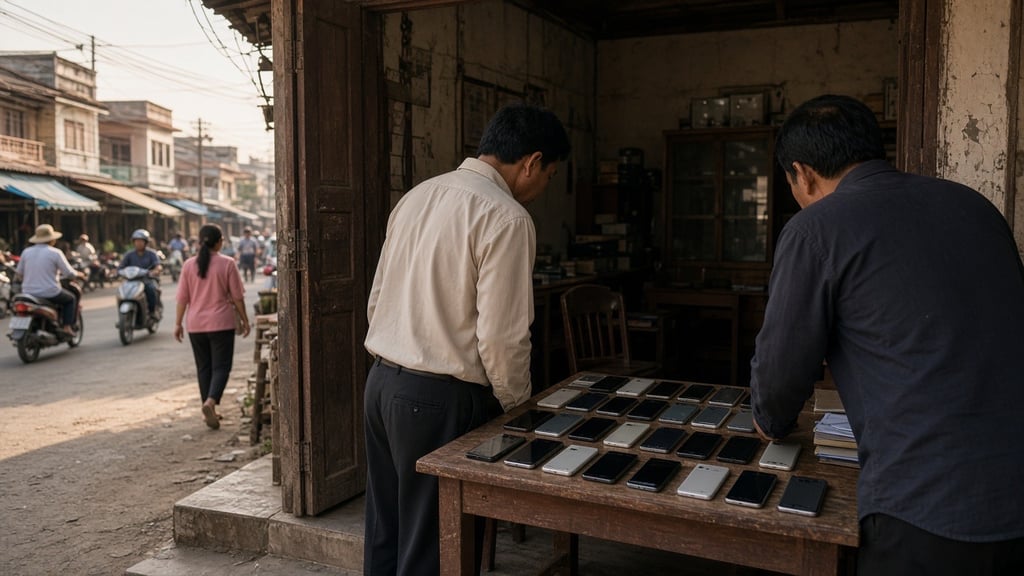
Cyber crime officers in Tak province arrested three men after searching a Mae Sot building accused of buying Thai bank accounts and turning them into cash pipes for scam crews and online-gambling operators. Officers with a Mae Sot Provincial Court warrant on Ban Thung Road seized 40 mobile phones already loaded with banking apps, four extra phones, seven notebooks, and 20 methamphetamine pills.
The suspects were Tak residents aged 31, 35, and 42. Police say the group recruited people to open ordinary deposit accounts and recorded each holder's name, app passcode, email, and phone number so a finished phone could be handed over ready to use. Recruits were paid 8,000 to 10,000 baht per account. The phones were then sold on, police say, with the brokers keeping a 2,000 to 3,000 baht margin. The office had operated for more than a year.
The three men were charged with jointly procuring, advertising, or publicising the sale, rental, or lending of deposit accounts, electronic cards, or electronic money accounts for use in technology crime. The oldest suspect also faces a narcotic possession count.
How mule accounts are assembled and sold
A mule account is a bank or e-wallet account that remains in an ordinary person's name while someone else uses it to receive and move criminal proceeds. When a stolen transfer is traced, the first named customer is often a recruit who sold access, not the organiser who collected the cash.
The Mae Sot office industrialised that step. Recruits opened genuine accounts at ordinary banks. Apps went onto dedicated phones. The finished handset became a portable cash pipe. Scam compounds on the Myanmar side of the border, and gambling sites that need Thai baht rails, pay for that pipe because it looks like a local retail account at opening.
Selling an unused account can feel like a small private deal. Once the phone leaves, incoming transfers can include funds taken from romance-scam victims, fake-investment pitches, or business-email fraud. The named holder remains the legal customer of the bank.
Legal risk for people who sell or lend accounts
Thailand's 2023 emergency decree on technological crimes treats mule accounts as a standalone offence. People who allow another person to use their deposit account, electronic card, or e-wallet, or who open one knowing it will be used for crime, face up to three years in prison, a fine of up to 300,000 baht, or both. Brokers who arrange, advertise, or publicise the sale, rental, or lending of those accounts face two to five years in prison and a fine of 200,000 to 500,000 baht, or both.
The Anti-Money Laundering Office has warned that account sellers can also be treated as accomplices, sued for civil damages, listed as high-risk persons, stripped of electronic banking, and pursued for money laundering in every province where the account was used. In a 2024 briefing, AMLO said it had cut transaction circuits on nearly 400,000 mule-linked accounts.
Banks, under Bank of Thailand rules tightened through 2024 and January 2025, now manage mule risk at the person level, not only the account level. From August 2024, commercial banks have shared suspicious-person data through the Central Fraud Registry. They can suspend electronic channels, refuse new accounts, and alert senders about to transfer to a flagged account. People frozen after a police or AMLO listing are told to deal with the Anti-Online Scam Operation Center on 1441.
Why Mae Sot sits on this cash route
Mae Sot is a trading town on the Moei River, facing Myawaddy in Myanmar. Cross-border commerce, migrant labour, and informal money movement have long been part of daily life. Scam compounds operating in parts of Myanmar still need Thai bank rails to collect payments from victims inside Thailand and abroad. A local office that turns walk-in recruits into ready phones is useful because the accounts pass basic bank checks at opening.
That geography does not make every shopkeeper in Mae Sot a suspect. It does explain why cyber units watch the district. Closing one office does not empty the market, but it does raise the price of the next phone.
What This Means for Expats and Travelers in Thailand
Foreigners were not the main recruit pool in this raid, but gangs still try to use them. A Thai account opened with a foreign passport can look less like a typical mule to some filters, until a burst of inbound transfers tells a different story. Offers to help you open a second account, pay you to receive a transfer, or borrow your banking app for a few days are recruitment, not favours.
Keep banking-app logins, one-time passwords, and the SIM card tied to your bank in your own hands. If someone asks you to receive money and forward it, stop; that is classic mule work. If a bank freezes a channel, call the bank and, if the freeze is scam-related, AOC 1441. Do not try to clear the account by moving whatever is left. The 10,000 baht fee advertised in Mae Sot is smaller than a criminal record that follows you through every Thai bank, visa renewal, and job application.


Comment verification
Step 1 of 3
Verify your email once to publish your comment. Your email is never shown publicly.
Enter the 6-digit code sent to .
Choose the display name shown next to your comments.