Klong Prem gate arrest: a 20,000 baht mule payday behind a 10 million baht scam
A 37-year-old man finished a fraud sentence at Bangkok's Klong Prem prison on 3 November, then was arrested at the gate on a mule-account warrant. Police say accounts in his name received funds from a Facebook romance-investment fraud that cost one victim more than 10 million baht. He remains a suspect, not a convict, on the new charge.
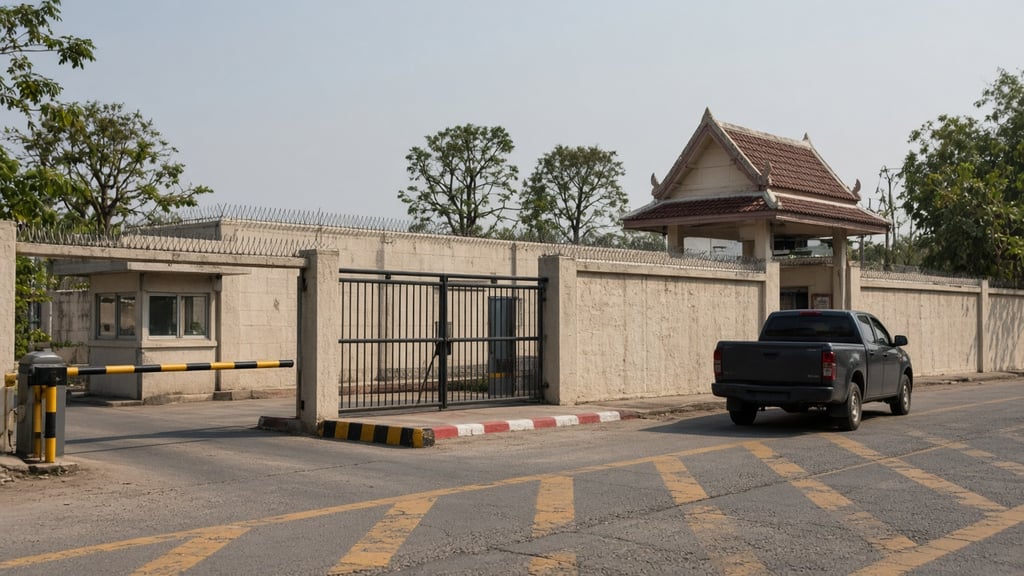
At about 8.30am on 3 November 2026, a 37-year-old Thai man finished a fraud sentence at Klong Prem Central Prison in Chatuchak, Bangkok. Central Investigation Bureau special-operations officers were waiting at the gate with a warrant that had been sitting since March.
Police identified the suspect as Winai, also known as Bo. He is alleged, not convicted on the new charge, to have opened or allowed others to use bank accounts that received funds from a Facebook romance-and-investment fraud. One complainant told Cyber Crime Suppression Division 1 that the loss reached 10,118,133.51 baht. Officers announced the arrest the next day and sent him to CCSD 1. Investigators said they are still looking at others in the network.
Thai coverage of the CIB briefing said Winai told officers that in 2024, while unemployed, a friend offered him 5,000 baht for each account he opened. He said he travelled with his girlfriend and a friend, first opened an account in Pathum Thani, then crossed into Poipet, Cambodia, by an unofficial border route. In Poipet he said he used facial recognition to open four accounts, collected 20,000 baht in total, and spent about 10 days in a casino building before returning to Thailand. He claimed he thought the accounts would serve online gambling. Police said they were not convinced.
A romance pitch, a fake shop, then a freeze that never came
According to the CIB account, the complainant first met the scammers on Facebook. A fake profile built a romantic relationship, then steered the victim toward an online shop on a website named LeLong Shopping. The first withdrawal worked: 4,304.88 baht came back out. That small success is a standard confidence trick. Larger transfers followed. Withdrawals then stopped.
Tracing showed money had passed through an account in Winai's name. Officers also noted a separate public-fraud case from Bang Rak police station, with reported damage of 69,799 baht, which is why he was already inside Klong Prem. The new warrant, number 263/2569, was issued by the Phra Khanong Criminal Court on 23 March 2026. It covers opening or allowing others to use deposit, electronic-card, or e-money accounts for technological crime, plus supporting public fraud by impersonation and supporting the insertion of false or misleading computer data. An alleged admission in preliminary questioning is not a court verdict.
Klong Prem is a maximum-security compound in Chatuchak. A gate arrest there is not a legal shortcut. It is simply the moment a wanted person becomes reachable.
Thai banks already treat mule accounts as a system risk
The warrant language tracks the Emergency Decree on Measures for the Prevention and Suppression of Technological Crimes, B.E. 2566 (2023). Section 9 makes it an offence to open or allow others to use a deposit account, electronic card, or e-money account without intending to use it for yourself or your own business, while knowing or having reason to know it will be used for technological crime. The penalty is imprisonment of not more than three years, a fine of not more than 300,000 baht, or both. Section 10 raises the range for people who broker the sale, rent, or lending of those accounts.
Banks must exchange suspicious-account data, suspend suspect transfers for up to seven days, and tell victims who report a tech-crime transfer to file a police complaint within 72 hours. On 30 January 2025 the Bank of Thailand tightened the rules further: freeze high-risk accounts even without a victim complaint, block incoming funds to clearly identified mule accounts, warn senders before they transfer, and share names of people showing suspicious behaviour, not only those already listed by the Anti-Money Laundering Office.
What This Means for Expats and Travelers in Thailand
If you hold a Thai bank account, treat the passbook, the app, and the debit card as personal identity documents, not favours. Lending an account to a partner, a colleague, or a friend who cannot open one yet can put your name on a criminal file if that account later receives scam proceeds. The law does not require you to have designed the romance pitch. Knowing, or having reason to know, is enough.
Watch for the same pattern that drained more than 10 million baht from one complainant: a social-media romance, an invitation to invest in an online shop, a small successful withdrawal, then pressure to send larger sums. If money has already left, call the bank immediately, ask for a freeze, and file a complaint at any police station or with the Cyber Crime Investigation Bureau within 72 hours so the freeze path stays open.
Do not accept cash to open extra Thai accounts, scan your face at a border casino, or carry someone else's KYC documents. The payday in this file was 5,000 baht an account. The alleged downstream loss was more than 10 million. The person whose name is on the account is the one officers can find.



Comment verification
Step 1 of 3
Verify your email once to publish your comment. Your email is never shown publicly.
Enter the 6-digit code sent to .
Choose the display name shown next to your comments.