Thai Motorists May Get Cash to Scrap Ageing Vehicles for New Pickups
The Excise Department is seeking 6 billion baht to pay 40,000 baht toward a new locally made pickup if motorists scrap a pre-2012 vehicle. The 150,000-unit plan still needs Cabinet approval.
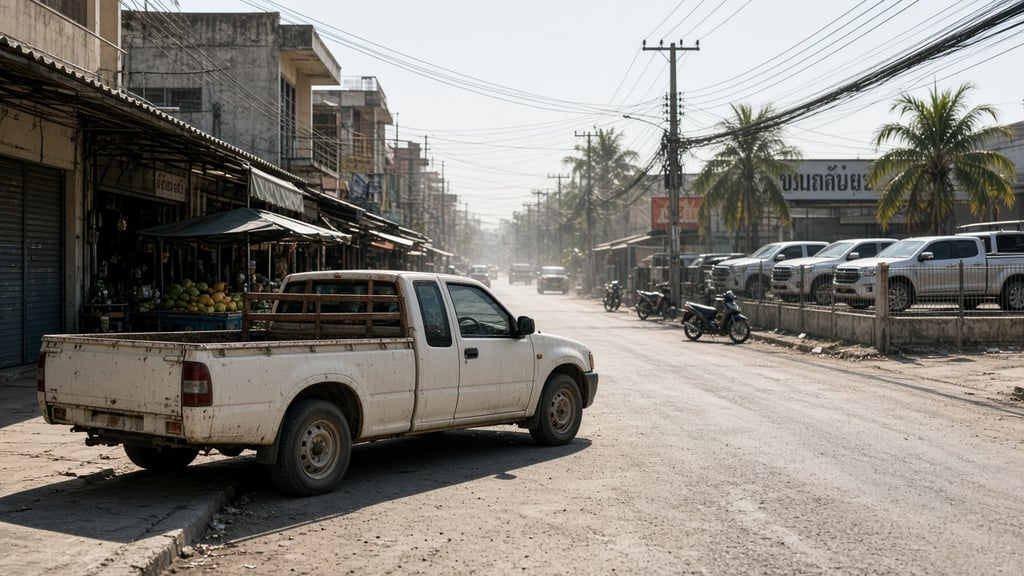
Thailand's Excise Department has asked the Finance Ministry for 6 billion baht to pay motorists 40,000 baht each if they scrap an ageing vehicle and buy a new pickup built in Thailand. The Public Debt Management Office filing would fund 150,000 replacements in fiscal year 2027. It is a borrowing bid under the 2026 energy-transition emergency decree, not a live showroom offer. Screening boards, the National Electric Vehicle Policy Committee, and the Cabinet still have to approve it.
Director-General Pornchai Thiraveja signed the paper. Prime Minister Anutin Charnvirakul announced the underlying decree on 5 May 2026, to cushion living costs and to push the country off fossil fuels. The pickup scheme sits in that second lane: old engines off the road, cleaner ones on it, and factories for Thailand's one-ton trucks still running.
How the swap would work
Only Thai nationals aged 20 or over, named as owner in the registration book, would receive one grant for one vehicle. The car, van, or privately registered goods vehicle being surrendered would have to have been registered before 2012, with readable engine and chassis numbers, current annual tax paid, and no outstanding finance or legal seizure. A dealer would take it to the Department of Land Transport, cancel its vehicle identification number for good, and send the hulk to a Ministry of Industry-certified dismantler. The Government Savings Bank would then pay the 40,000 baht to the manufacturer as a deposit or an invoice cut. Owners would not receive a cash envelope.
The replacement would have to be a pickup or pickup-based passenger vehicle assembled in Thailand. Combustion models would need Euro 5 or Euro 6 standards, carbon dioxide of no more than 185 grammes per kilometre, and B20 biodiesel capability. Electrified pickups would also count. Only manufacturers that already run a Thai pickup plant and pay excise tax could join. The paper assumes factory discounts on top, and a GSB soft loan capped at 5 percent a year for electrified models.
Why pickups, and why now
Thailand is Southeast Asia's largest vehicle maker and a world-scale market for one-ton pickups, which use a high share of local parts. Domestic demand has slumped as banks tightened hire-purchase. The Bank of Thailand's second-quarter 2026 report recorded another contraction in that credit line, a slide since early 2024. The Excise paper cites that squeeze as a reason farmers and small firms cannot leave old diesels.
Land Transport figures in the proposal put 8,175,322 passenger cars, pickups, and vans at 10 years or older, including 3,090,813 aged 20 to 30 years and 1,766,218 past 30. The Pollution Control Department treats diesel exhaust as a main urban source of PM2.5. A regional PCD briefing put diesel vehicles at about 57 percent of Bangkok's fine dust in early 2021, and a 2025 report still lists diesel combustion in congested traffic as the first source in the capital. New diesels have had to meet Euro 5 since 1 January 2024. Pre-2012 pickups on Euro 1 to Euro 3 standards are the stock the scheme wants gone.
Certified end-of-life plants can handle about 50,000 vehicles a year, which is why the grant is limited to pickups rather than every new car. Spending, if approved, is sketched from January 2027. Officials project at least 82.5 billion baht of domestic pickup sales if all 150,000 slots fill, with the old VIN cancelled so the truck cannot return to the used market.
What This Means for Expats and Travelers in Thailand
Foreign passport holders cannot claim the 40,000 baht. The grant is for Thai nationals only. A foreigner who owns a pre-2012 pickup, or whose Thai spouse does, should not assume a workaround: the registration book has to match a Thai owner aged 20 or over, one grant per person. Companies are outside the scheme as well. Anyone shopping for a used work truck in 2027 should watch prices. If 150,000 older vehicles leave the fleet and cannot legally return, remaining pre-2012 pickups, songthaews, and farm trucks may get scarcer, not cheaper. New locally built pickups could be slightly easier to finance if factories add discounts and if GSB's 5 percent cap applies to electrified models, but lenders are still cautious.
Air quality is the part that does reach visitors. Bangkok winters already fail annual PM2.5 limits, and Chiang Mai's burning season is a separate problem this scheme does not touch. Taking 150,000 old diesels off the road would help at the margin, not reset the sky. Until Cabinet signs, there is nothing to queue for at a dealer.
Comment verification
Step 1 of 3
Verify your email once to publish your comment. Your email is never shown publicly.
Enter the 6-digit code sent to .
Choose the display name shown next to your comments.