Thailand Inflation Hits 45-Month High of 3.90% on Fuel and Floods
Fuel prices up 29.18% and flood-hit food costs took headline inflation above the Bank of Thailand's 1% to 3% target band in October, while consumer confidence fell.
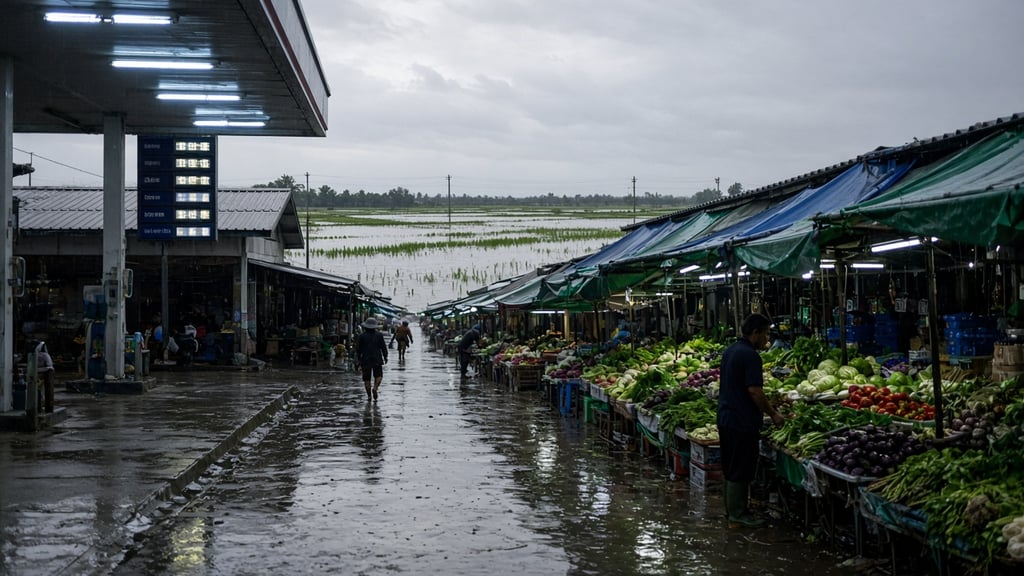
Thailand's headline inflation printed 3.90% in October 2026, the fastest annual rise in 45 months, after retail fuel jumped 29.18% and floods pushed vegetable prices through wet markets. The Ministry of Commerce set the Consumer Price Index at 103.90, up 3.90% from October 2025 and 0.94% from September, when the annual rate was 2.82%. That reading sits above the Bank of Thailand 1.0% to 3.0% medium-term target band agreed for 2026 by the Cabinet and the Monetary Policy Committee.
The Trade Policy and Strategy Office (TPSO) attributed about 56% of the headline move to fuel, a 2.18 percentage-point contribution by itself. Average diesel in October 2026 was 42.70 baht a litre, against 31.35 baht a year earlier. Gasohol 95 averaged 41.47 baht, up from 32.27. Gasohol 91 averaged 40.92 baht, up from 31.68. Officials pointed to a low domestic fuel base last October and higher global energy prices after attacks on Saudi producing areas. Pump prices still track the world market. The vehicles, transport and communications group, covering school vans, minibuses, buses, motorcycle taxis and songthaews, rose 10.93% year on year. Electricity bills moved the other way.
Flooded farms, then the stall price
Food and non-alcoholic drinks rose 4.26%, from 3.07% in September. Flooding in vegetable belts lifted limes, holy basil, kale and spring onions early in the month. Those prices eased as water receded, but the monthly average still fed the CPI. Prepared meals, including noodles, rice with curry, pad krapao and fried rice, rose 4.06%. Eggs and dairy jumped 6.90%. Pork, chicken and seafood also cost more. Fresh fruit was the exception, down 0.15%.
Core inflation, which strips out fresh food and energy, was 1.58%. Over the first 10 months of 2026, headline inflation averaged 1.77%. Commerce kept its full-year forecast at 1.8% to 2.2%, midpoint 2.0%, and still expects a positive November print. This October figure is the worst since January 2023, and still well below the 2022 energy spike.
A TPSO survey of 5,585 people put consumer confidence at 46.5 in October, down from 48.9 and below the 50 line. Current-conditions confidence fell to 36.5. The three-month outlook stayed above 50, at 53.1. Households cited high debt, energy-price uncertainty, and flood damage to incomes. Bangkok sat just above 50. Other regions sat below.
The Bank of Thailand's Monetary Policy Committee voted unanimously on 28 October to hold the policy rate at 1.00%. Forecasts put average headline inflation at 2.1% in 2026 and 1.3% in 2027. Officials treated the lift as a temporary supply shock from energy and El Nino, while warning that Middle East risk and firms passing on costs could push inflation higher. Growth is projected at 2.4% in 2026, still below potential. Commerce has kept 3,036 Blue Flag outlets open for 90 days. Those programmes trim grocery tickets. They do not reset the diesel board.
What This Means for Expats and Travelers in Thailand
If you rent in Bangkok, Chiang Mai, Phuket or Pattaya, the October CPI is not a rent index, but landlords and Grab drivers will cite it. Diesel at 42.70 baht a litre, against 31.35 a year earlier, shows up in taxi fares, van hires and island transfers. Budget a thicker transport line for the cool season. The 10.93% jump in the transport group hits airport runs.
Wet-market and supermarket food is the second hit. Flood premiums on greens were visible in early October. Pad krapao, fried rice and curry-over-rice rose 4.06% as a group. Eggs and dairy were up 6.90%. Short-stay visitors will notice 5 to 15 baht more on everyday plates. Long-stay households will see it on the weekly shop. Fruit is cheaper this month. Electricity moved lower, so the bill that rose is diesel and dinner, not the air-conditioner.
The baht story is mixed. A policy rate held at 1.00% keeps Thai yields low, which can weigh on the baht against hard currencies and help dollar or euro pensions stretch. That help is partial when diesel, food and transport are the items you buy. Retirees paid in baht feel the 3.90% print in full. Core inflation at 1.58% says the heat is still in energy and fresh food, but the BOT has flagged cost pass-through into early 2027. Commerce is still guiding a full-year average near 2.0%. One month above the band does not rewrite that forecast. It does rewrite this month's grocery and petrol bill.

Comment verification
Step 1 of 3
Verify your email once to publish your comment. Your email is never shown publicly.
Enter the 6-digit code sent to .
Choose the display name shown next to your comments.