Thailand fuel fund resets diesel subsidies and petrol levies from 1 November
Notice No. 181 sets a 3.90 baht subsidy on regular diesel and 5.82 baht on B20 from 1 November 2026. The Oil Fuel Fund is already more than 107 billion baht in deficit.
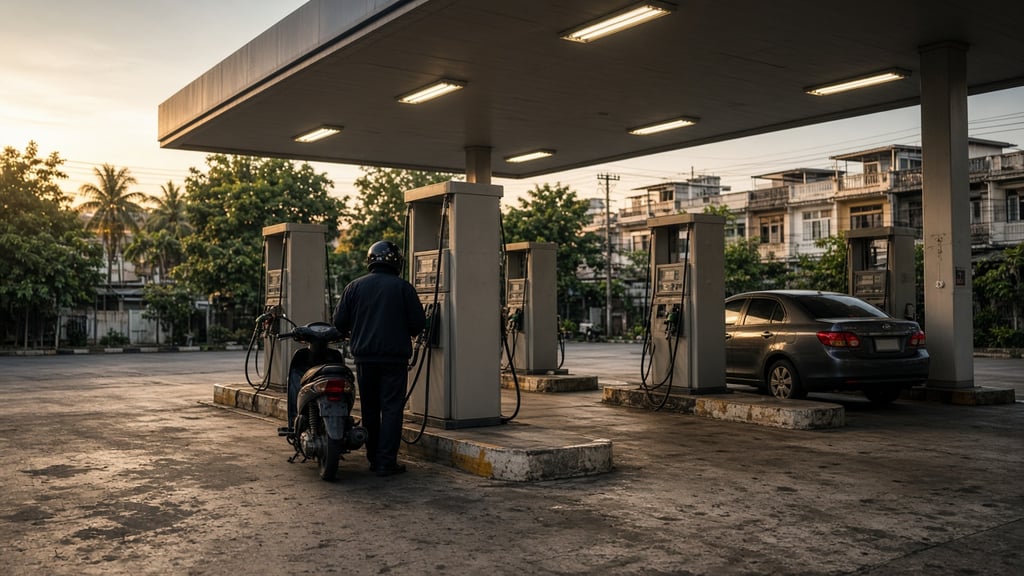
Thailand's Oil Fuel Fund Committee has reset the levy and subsidy rates that sit inside the country's retail fuel formula, with the new schedule taking effect on 1 November 2026. The decision is recorded in Committee Notice No. 181 of B.E. 2569, signed on 30 October by the Oil Fuel Fund Office .
The notice applies equally to fuel produced in Thailand and fuel imported for domestic use. It replaces Notice No. 178, which had been issued only one day earlier, on 29 October. Officials stressed that the document sets fund contribution and compensation rates by product, not a fresh list of pump prices at service stations.
What drivers will see in the formula
Under the new schedule, several petrol grades continue to pay into the fund. Unblended benzene carries a levy of 7.81 baht per litre, the highest contribution on the list. Gasohol 95 and Gasohol 91 each pay 0.35 baht per litre, while Gasohol E20 pays 0.22 baht. Kerosene, premium high-speed diesel at 1.50 baht, low-speed diesel, and fuel oil carry smaller levies. High-speed diesel blended below the standard biodiesel requirement, if certified by the Department of Energy Business, pays 1.00 baht per litre into the fund.
Three products receive compensation rather than paying in. Regular high-speed diesel is subsidised at 3.90 baht per litre. High-speed diesel B20 receives 5.82 baht per litre. Gasohol E85, the high-ethanol blend, is subsidised at 1.32 baht per litre. Those three figures will shape what truckers, pickup owners, and flex-fuel motorists actually pay.
Refunds, exports, and what the notice leaves out
The same rates govern refunds and repayments when fuel that has already paid a levy, or already received a subsidy, later qualifies for an exemption. Exported cargo whose original rate cannot be verified is to use the figures in Notice 181. The schedule excludes benzene that will be blended with ethanol to make gasohol, and it excludes base diesel that will be blended with biodiesel to produce regular high-speed diesel or B20.
Pailin Fungkiat, director of the Finance and Accounting Bureau, signed the notice on behalf of the acting director of the Oil Fuel Fund Office. The office is based at the Energy Complex in Chatuchak, Bangkok.
A fund already deep in the red
The Energy Policy and Planning Office weekly oil-price briefing for 26 October to 1 November 2026 shows why the committee is still using the fund as a shock absorber. On 1 November the fund reported assets of 33,786 million baht against liabilities of 140,989 million baht, a net deficit of 107,203 million baht. The oil account stood at minus 65,344 million baht. The LPG account stood at minus 41,859 million baht.
That briefing also records a shift in diesel compensation during the week the notice was prepared. The subsidy on regular high-speed diesel B7 was raised by 0.70 baht per litre to 3.90 baht, matching Notice 181. The subsidy on B20 was cut by 2.50 baht per litre to 5.82 baht, still the largest compensation on the list but narrower than the 8.32 baht recorded a week earlier. Retail boards on 2 November listed B7 diesel around 42.54 baht per litre and B20 around 33.50 baht.
The legal basis is the Oil Fuel Fund Act B.E. 2562, which lets the committee set contribution, compensation, refund, and repayment rates so domestic prices can be held in a range the cabinet has judged appropriate during a fuel-price crisis. A cabinet-endorsed 2026-2029 fuel-crisis plan sits behind the current round of notices.
What This Means for Expats and Travelers in Thailand
If you drive a petrol car, the headline change is not a surprise overnight jump at the pump. Gasohol 91 and 95 still pay a modest 0.35 baht per litre into the fund, and E20 pays even less. The larger benzene levy of 7.81 baht per litre applies to unblended benzene, not to the gasohol most private cars actually buy. Watch the board for E10 versus E20, because the fund treatment is different and station prices already diverge by several baht.
Diesel users should treat 1 November as a formula reset, not a promise that B7 will stay frozen. The 3.90 baht subsidy on regular high-speed diesel is real support, but the fund is more than 107 billion baht in the red, so further notices can arrive with little warning. Pickup owners, van operators, and anyone running a long Isaan or southern road trip should budget a buffer. B20 remains the cheaper diesel grade on recent boards, helped by a 5.82 baht subsidy, but availability is thinner outside major corridors.
Tourists in rental cars and motorcycle taxis will feel any pump move only after retailers reprice. Check yesterday's board before a long drive, and keep a small cash float because some provincial stations still prefer cash on weekends. LPG users are on a separate account; this notice does not reset cooking-gas or autogas rates. For the official schedule, read Notice 181 on the EPPO weekly briefing and the fund office site rather than relying on social-media screenshots of pump prices.

Comment verification
Step 1 of 3
Verify your email once to publish your comment. Your email is never shown publicly.
Enter the 6-digit code sent to .
Choose the display name shown next to your comments.