Bangkok summit puts Asia's US$136.5bn scam bill on the table as AI runs the factory
A survey of 17,460 adults across 13 Asian markets, presented at the Global Anti-Scam Summit in Bangkok, estimates consumer losses at US$136.5 billion. Thailand is both a victim market and a regional enforcement hub as compounds splinter and AI automates the pitch.
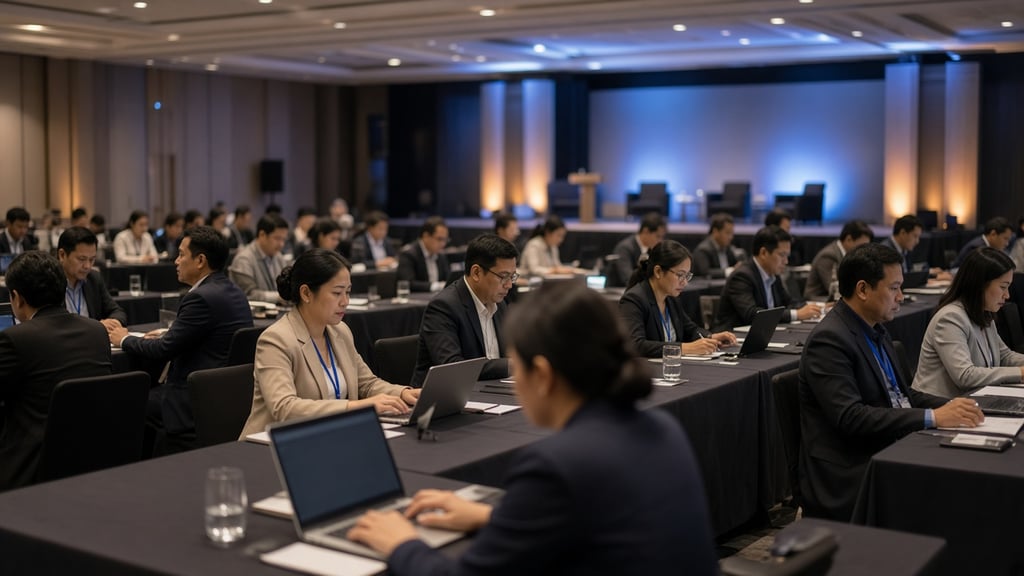
Delegates packed the Pullman Bangkok King Power on 10-11 November for the Global Anti-Scam Summit Asia 2026, the first time the regional gathering has been hosted in Thailand. The opening number in front of police, banks, telecoms and platform staff was a consumer-survey estimate: US$136.5 billion lost to scams over 12 months across 13 Asian markets, including Thailand.
The figure comes from the Global Anti-Scam Alliance State of Scams in Asia 2026 study, built with Gogolook (Whoscall) and fielded by Opinium among 17,460 adults from 16 March to 13 April across 13 markets from China and India to Thailand and Vietnam. It is a survey estimate presented in Bangkok, not a police-ledger total. An independent UNODC assessment launched in Bangkok in July put 2025 scam losses across East Asia, South-East Asia, Australia and New Zealand at US$88.3 billion to US$114.1 billion.
Seventy-one percent of adults in the GASA sample said they had encountered a scam in the past year. Two-thirds felt confident they could spot one, yet 62 percent of those who met a pitch still engaged. Of those who engaged, 26 percent lost money. Among people who lost money, 51 percent had been hit more than once, and 72 percent reported damage to mental wellbeing. Phone calls remained the most common channel at 56 percent, ahead of texts at 50 percent and chat apps at 40 percent. Shopping, investment and job offers were the main baits.
When the factory runs without a human on the line
The Bangkok sessions treated generative AI as infrastructure, not a gimmick. Tools now select targets, write personalised copy, hold the conversation and push fake links, so a romance or investment pitch can scale without a large boiler-room staff. Organisers said AI-written phishing is about five times more effective than hand-written lures, so posters and school talks are no longer a sufficient defence.
Voice cloning is the piece expats in Thailand already recognise. Callers impersonate a bank officer, a company boss, or a relative in trouble, using a cloned voice plus scraps of personal data from earlier breaches. Gogolook's chief executive warned that gangs are shifting to international and satellite numbers as SIM rules tighten. Platform staff described a joint takedown with Thai police that removed more than 150,000 scam accounts and produced 21 arrests. Blocklisted sites can still survive for about three years elsewhere on the web.
Thailand as victim market and enforcement hub
A companion State of Scams in Thailand 2026 study, prepared with Mastercard and Whoscall, estimated Thai consumer losses at about 65.8 billion baht (US$1.85 billion) over 12 months, or roughly US$335 per victim. Presenters said 79 percent of Thais surveyed had encountered a scam in 2026, up from 72 percent a year earlier. Phone calls accounted for 72 percent of Thai encounters. Facebook (54 percent) and LINE (48 percent) were the usual first contact. Bank transfers moved the money in 49 percent of Thai cases, against a 36 percent Asian average.
Hosts launched a GASA Thailand chapter and argued that Thailand is not only a victim market but a regional coordination point. The summit was co-hosted by the Ministry of Digital Economy and Society, the Royal Thai Police, the Bank of Thailand and the Securities and Exchange Commission. Minister Chaichanok Chidchob described account-freeze pipelines. Delegates visited the Royal Thai Police Anti-Cyber Scam Center. In the Asia survey, 71 percent backed banks blocking high-value transfers when a scam is suspected, and 69 percent backed telcos or apps blocking malicious calls.
The compound story was treated as unfinished business. UNODC's July assessment described a franchised criminal economy of cyber-enabled fraud, forced labour in compounds, and shared laundering, with people from at least 80 countries identified inside regional scam sites. Speakers said raids on large bases, including in Cambodia, have not ended the industry. Operations have split into smaller hotel and rental cells in the Middle East, Mexico and Eastern Europe. Disruption fails if the money pipes and recruitment ads stay intact. Thailand sits next to those compounds, takes the inbound calls, and now hosts the regional talk shop. None of that, on its own, closes the factories.
What This Means for Expats and Travelers in Thailand
If you live here on a retirement, DTV, or remote-work visa, the risk is a LINE add from a "bank", a WhatsApp voice note that sounds like a child in Europe, a polished trading app, or a job ad that funnels people toward compounds across the border. Treat unexpected calls as hostile, especially plus-prefix and satellite numbers. Never confirm OTP codes or PromptPay names on the same channel that started the panic. For investment and romance pitches, assume the face, the voice, and the dashboard can all be synthetic. Move money only after a second check on a number you already have, and let a Thai bank's scam delay stand even when it is inconvenient.
- Deepfakes and family-voice clones: hang up, call back on a number you already have, and agree a family code word before the next trip.
- Pig-butchering and fake investment apps: no one you met on a dating app or in a hotel lobby needs your crypto wallet or a "trial deposit".
- Job and "easy visa" ads: high-pay customer-support roles in neighbouring countries remain a trafficking funnel into scam compounds.
- If you have already sent money: report to your bank and the Royal Thai Police Anti-Cyber Scam channels immediately. Recovery is limited, but mule-account freezes still move in hours, not weeks.
The summit's useful admission is that confidence is a trap. Most people in the survey thought they could spot a scam. Most of those who met one still talked to it. The practical defence for foreigners in Thailand is slower money, colder calls, and treating every urgent story as a script until a second channel proves it is not.


Comment verification
Step 1 of 3
Verify your email once to publish your comment. Your email is never shown publicly.
Enter the 6-digit code sent to .
Choose the display name shown next to your comments.