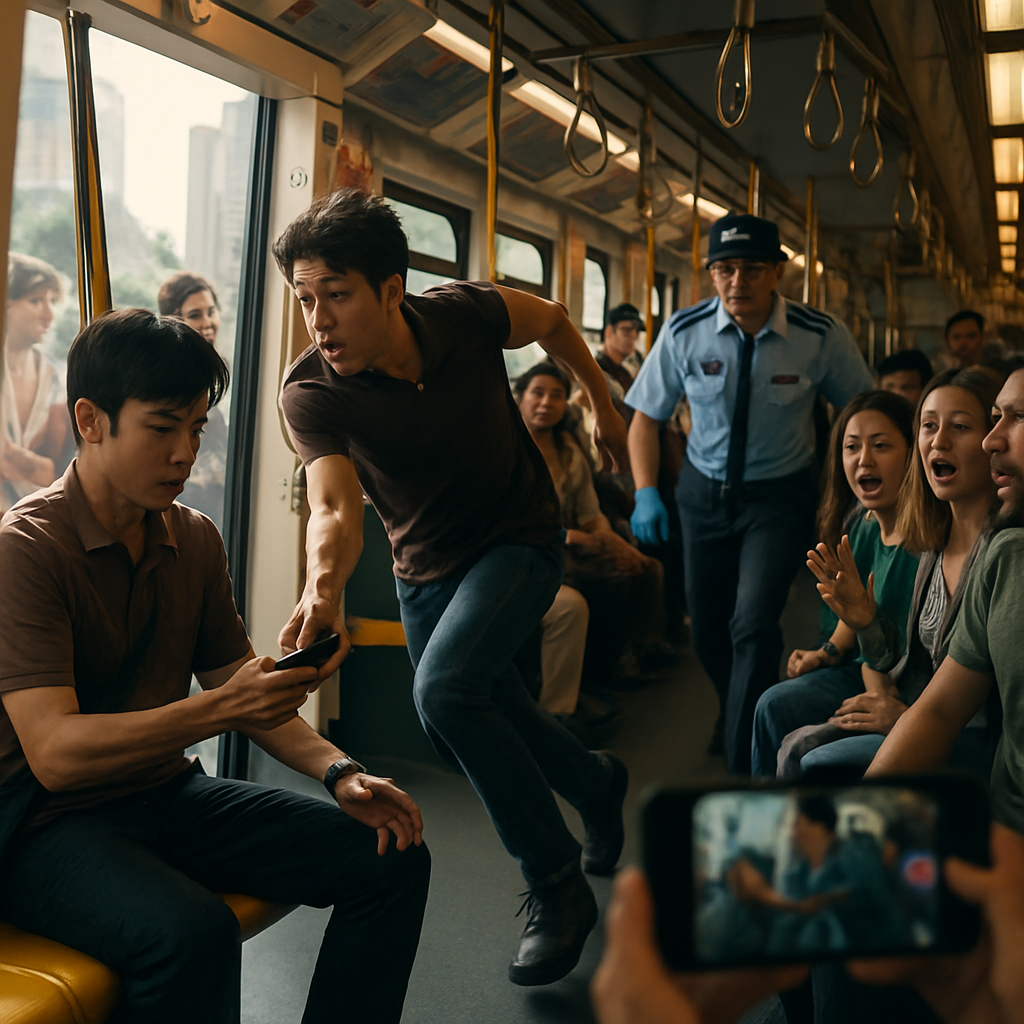
What began as a quick TikTok prank on a packed BTS Skytrain carriage has ballooned into a full-blown online debate about responsibility, perception and the thin line between entertainment and misinformation. A short clip of a mock phone theft — filmed and shared by a Thai content creator — has drawn fire from netizens and commentators who say the joke does more harm than laughs, especially when foreign tourists might see it and take it at face value.
The video unfolds simply: the creator is glued to his phone, seemingly distracted, when an accomplice snatches the device and sprints away. The creator throws on a surprised expression, editing and cadence imply an authentic snatch-and-run. Posted originally to TikTok and later shared on the Facebook page เจ๊ม้อย v+, the staged moment racked up views fast — crossing the one‑million mark — and then the complaints began.
Critics argue that the stunt plays fast and loose with public trust. “Making content like this seriously damages Thailand’s image in terms of safety. What does BTS have to say about this?” asked one commenter, echoing a common theme in the backlash: that a single clip can skew perceptions about safety on public transport. Others pointed out that security staff are present in some stations, wondering aloud what foreign tourists are supposed to think if they see such a scene without context. “It ruins the image of tourism,” read one reaction.
“Bangkok is safe. It’s disgraceful to harm the country’s image like this.”
Those words — and many like them — piled up under the reposts. Another critic framed the video as part of a wider problem: “Content that affects society or the country should be regulated. These days, many young people are creating things that aren’t good examples for others.” The point resonated with those worried about impressionable audiences and the growing appetite for viral moments, no matter the consequences.
Faced with the outcry, the creator went public with an apology on Instagram. “I apologise for [the clip]. I made it just for fun with a friend, but I didn’t think through whether I should have done it. It was completely my fault, 100%,” he wrote. He added: “I’m sorry for causing harm to Thailand’s reputation and to the transport company. I didn’t intend to hurt anyone. There won’t be any more videos like this from me. I’m sorry.”
The apology did little to soothe everyone. Some viewers were skeptical, suggesting the mea culpa came only after the backlash — a PR move to stem reputational damage while still enjoying millions of views. “A fake apology in exchange for millions of views. You can tell he’s secretly pleased,” one commenter noted, implying that for some creators the ends (engagement and exposure) justify the means.
Beyond the personal accountability argument, this episode raises a few broader questions that are worth remembering whenever a clip starts trending:
- How much context does a short-form video need? Without clear signals that something is staged, viewers naturally draw conclusions — and those conclusions can be sticky.
- What responsibility do platforms and creators share? Platforms host the content and creators provide the narrative; when that narrative misleads, both bear some blame.
- How do viral stunts affect real-world perceptions? A single clip may ripple through tourism marketing, safety perceptions and even recruitment for public transport services if left unchallenged.
Thailand has long marketed itself as a warm, welcoming destination. Incidents like this — even staged ones — expose how fragile a country’s public image can be in the age of viral media. No one expects content creators to forgo creativity, but audiences and industry voices are increasingly insisting that creativity not come at the expense of truth or public welfare.
For the creator involved, the path forward is clear: repair trust through consistent, transparent behavior rather than a single statement. For viewers, the incident is a reminder to be a little more media literate — pause, look for context, and ask whether the clip was meant to deceive or entertain. And for the platforms and public institutions, perhaps it’s time to revisit policies or guidance about stunts filmed in public spaces that could shape perceptions of safety.
In the end, a staged prank on a Bangkok train has sparked a necessary conversation: viral content can entertain, but it can also mislead. When millions of eyes are on a clip, creators owe it to their audiences — and to the communities those videos portray — to think twice.


















As someone who grew up near the BTS, this stunt feels stupid and selfish; it feeds stereotypes about Bangkok being unsafe. Creators have to remember their clips don’t exist in a vacuum, they shape real opinions about our city.
It wasn’t just stupid, it was dangerous because someone might actually panic and get hurt while chasing a fake thief. Posting it without a clear disclaimer was reckless.
Exactly — and the apology feels like damage control after the views rolled in. If he truly cared he’d do community outreach or take the clip down permanently.
Or maybe this is just viral marketing and everyone is overreacting; tone it down, Somchai, not every prank is a national crisis.
Staging a theft on public transport is irresponsible and frankly harmful to tourism. People who travel trust what they see online, and leaving it ambiguous is cruel.
That’s scary though. If I saw that I’d be terrified and maybe never ride a train there again.
Pat, I get the fear — that’s the point. The stunt intentionally manipulates that fear, which is why creators should think twice before ‘entertaining’ millions of viewers.
This is a textbook case of context collapse: short-form clips collapse complex realities into misleading snapshots. Platforms bear responsbility as much as the creator for failing to label staged content.
Agreed. From a regulatory standpoint, there may be grounds for platform-level guidelines about deceptive staging in public spaces.
Yes — and beyond policy, civil society should push for media literacy programs so tourists and locals can better evaluate viral content.
Sounds like overkill. People should just use common sense. We don’t need more rules for every dumb video online.
As someone who commutes daily, I found it embarrassing that this happened on the BTS. The platform should ban disruptive filming during busy hours.
If you formalize bans you risk stifling legitimate content creators. Better to require disclaimers or a clear staged label instead of blanket bans.
A label helps, but enforcement matters; signs or announcements could remind riders not to film stunts that simulate crimes.
Platforms profit from outrage and ambiguity; it’s naive to expect self-regulation to work. There should be enforceable penalties for content that misleads about public safety.
Penalties risk chilling speech though. What’s misleading to one person isn’t to another; we should be careful with heavy-handed rules.
True, but staging criminal acts without disclosure crosses a line — it’s not mere opinion, it’s a deliberate representation that can harm public perception.
So only bland, safe content allowed. Great for tourism brochures, terrible for creativity.
I laughed at first because it’s a classic prank, but then I realized how many tourists might take it seriously. Mixed feelings.
That ‘mixed feelings’ is the point — creators chase that exact reaction for engagement, which is the problem.
Yeah, and that self-awareness doesn’t absolve them. An apology after the backlash isn’t the same as responsibility.
People act like the sky is falling; staged clips have always existed. If tourists are that gullible, education is the answer, not censorship.
From a tourism perspective, a viral clip like this can undo months of positive PR. One sensational clip sticks longer than a thousand reassuring posts.
That’s media negativity bias in action. It’s not just Thailand; destinations worldwide suffer from a single viral negative narrative.
Exactly — which is why destination managers need rapid-response strategies to contextualize or counter misleading content.
Fake apology. He monetized the panic and then said sorry when it cost him reputation. Classic influencer playbook.
Security staff and transport authorities should be more visible and empowered to stop stunts that simulate crimes. It’s about deterrence and public confidence.
Why would anyone prank like that? It could cause someone to faint or start a fight. Not funny.
There is a cultural angle too: the global appetite for sensational content pressures creators everywhere to escalate. Blaming individuals alone misses the ecosystem problem.
Creators want clicks, platforms want content, and viewers want thrills. Nobody feels responsible until it’s public relations season.
Legally, staging a crime might cross into public nuisance or even inducement if it leads to harm. Authorities should examine whether any laws were broken.
I work in tourism and this hurts small businesses. People judge a whole city by a 15-second clip; the economic fallout is real for tour guides and hotels.
Also worth noting: content like this can be weaponized in political discourse to paint cities or groups as unsafe. It’s not politically neutral.
Call me old-fashioned but there’s a basic ethics test creators fail: would you do this if your mom or an elderly person were on that train?
The creator apologized, but accountability should be measurable — remove the video, donate ad revenue to safety campaigns, or collaborate with transit authorities.
Some people will never be convinced a clip is fake because algorithms strip context. That’s a design problem for the platforms, not just the creator.
I think viewers should also learn to pause before resharing. We all have a role in spreading or stopping misinformation.
Prank culture has always flirted with harm; social media amplifies the reach. Maybe creators should have to display a visible disclaimer in the video itself.
As a local vendor, I worry tourists will avoid the BTS and take taxis, which could be worse for congestion and emissions. The ripple effects are unexpected.
I’m torn — performance art in public has a long history, but intentionally simulating criminal acts without consent is disrespectful and potentially dangerous.
Regulate the platforms with transparency requirements: label staged content clearly and show provenance metadata for viral clips.
This could have been educational if framed as a PSA about pickpocketing with a clear message. Instead it chose ambiguity for clicks.
A one-off apology won’t fix the damage. The creator needs a visible, sustained effort to rebuild trust, like partnering with transit safety programs.
Some replies here are dramatic. People love to moralize online. Yes it was dumb, but it’s not the end of Bangkok’s tourism.
The incident shows how quickly perceptions form and ossify. A robust response from the BTS company would help restore faith sooner than internet debate alone.