Bangkok's rat war is a food-waste test for Silom, Yaowarat and Sukhumvit
City Hall is tightening dump windows in four restaurant-heavy streets and will count rats with cameras and traps for six months. Restaurants and condo residents in Silom, Chinatown and Sukhumvit will feel the change first.
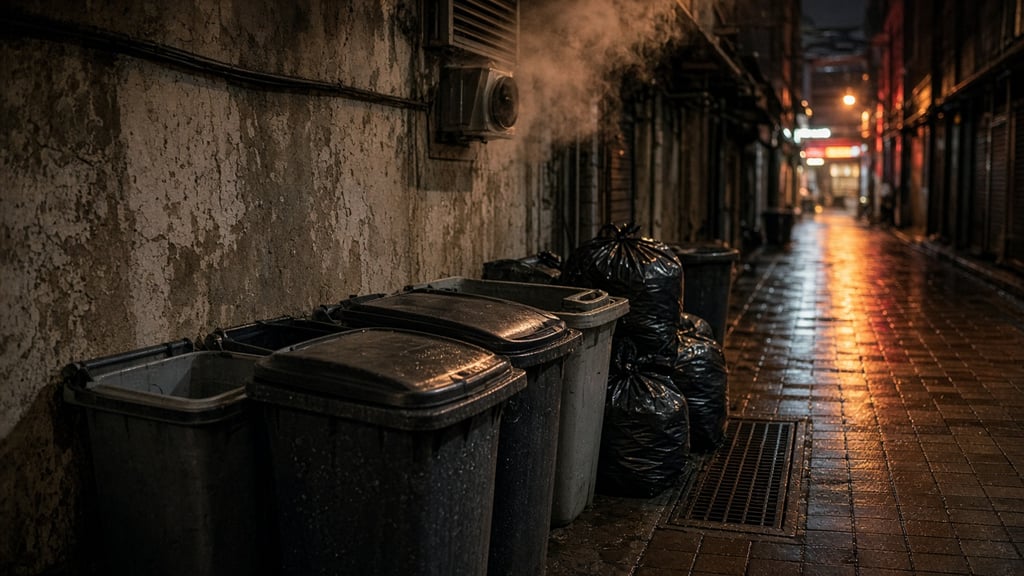
Bangkok's newest public-health fight is not a poison drop. It is a timing problem. On 14 November 2026, Governor Chadchart Sittipunt used a Bang Rak walkabout to frame City Hall's war on rats as a campaign against kitchen scraps left on pavements for hours, not against the animals themselves.
Bang Rak has only about 30,000 registered residents, but Silom's offices, hotels and restaurants load the district with waste several times a day. Bags put out after 6pm can sit until 1am or 2am. That gap is the buffet.
Four streets, one theory of the rat
The pilots sit on Silom, Yaowarat (Chinatown), Banthat Thong and Sukhumvit, with extra work in Din Daeng. Deputy Governor Pornprom N.S. Vikitsreth has been explicit: dry plastic is not the magnet. Food waste is. Wet bags left on the kerb overnight feed colonies that then move through drains and old masonry.
Sukhumvit is already testing a one-hour dump window followed by a one-hour collection window. Officials used 8pm-9pm out and 9pm-10pm collected as an example, not a citywide timetable. Phra Khanong District Office, under BMA policy code P253, surveyed dump points on Sukhumvit Soi 81 to 101/1, designated 14 spots, and posted dump hours in August and September 2026 under the 100-day Quick Win environment plan.
On Banthat Thong, officials have discussed a Taiwan-style hand-to-truck model with Chulalongkorn University's property office, so dinner-hour kitchens pass bags straight to the vehicle. Public-works crews are also walking old shophouses, telling owners to cement rat holes, and looking at drainage flaps plus water-permeable asphalt around tree-base burrows on the same P253 list.
How City Hall plans to count the rats
Pornprom said the city will not rely on it looks cleaner. Motion cameras, infrared gear and trapping surveys are supposed to produce a before-and-after number over about six months. Bang Rak councillor Wiphut Sriwa-urai told the inspection party that fewer rats were already being seen. That is an impression, not a published baseline.
City Hall's dashboard can look more finished than the rats. The Sukhumvit one-hour dump trial was marked complete by 29 September 2026, and P253 paperwork scores near 90 percent. The 30 percent activity cut still has no verified result, no public budget, and no current district-level rat census.
The problem is old. A BMA veterinary public-health survey at 47 inner-city markets in 1999-2000 trapped 1,177 rats and shrews, 84.3 percent of them Norway rats. That is not today's census. It is why Silom alleys and Yaowarat kitchens keep coming up.
The public-health stake is leptospirosis, not a cartoon rat
The Department of Disease Control reminded the country on 10 October 2026 that leptospirosis (khai chi nu) does not require a bite. Leptospira leave infected animals in urine and enter people through cuts, softened skin, or the eyes, nose and mouth after contact with water or mud. Fever, headache and calf pain typically show within two weeks. Severe cases can hit the kidneys and lungs.
Bangkok is not in the middle of a published spike. The BMA Health Department's 2025 D506 figures listed four leptospirosis cases in the capital and no deaths. That is still a kitchen and condo problem: wet sois, open bins, and flood-season puddles around food-prep areas. You do not need to see a rat to pick up contaminated water.
What This Means for Expats and Travelers in Thailand
If you run or rent a restaurant on Silom, Yaowarat or Sukhumvit, the practical change is the dump clock. Keep food waste in a lidded bin until the posted hour. Do not stack bags on the pavement at 6pm because the truck usually comes sometime tonight. If your kitchen cannot hit the window, store waste in a proper container at the front, not on the kerb.
Condo juristic persons and foreign tenants should treat the soi the same way. Overnight bags outside a Sukhumvit lobby are now a pest-control issue, not just a smell. Households that sort waste and register on BKK Waste Pay still pay 20 baht a month; mixed waste is 60. Ask your building manager which dump hour the district actually posted. The Sukhumvit 8pm-9pm example is not automatic on every soi.
Travelers eating on Yaowarat or walking Silom after rain should treat standing water and open wounds as the real risk, not a cartoon rat on the bin. If you develop fever and muscle pain within two weeks of wading a flooded soi, tell a doctor you had water and mud contact. The DDC hotline is 1422. Until the six-month count is in, the rule for Silom, Chinatown and Sukhumvit is simple: stop feeding the night shift.


Comment verification
Step 1 of 3
Verify your email once to publish your comment. Your email is never shown publicly.
Enter the 6-digit code sent to .
Choose the display name shown next to your comments.