A Photo Op or a Photo Fight? How Wat Arun’s Iconic Views Sparked a Social Media Dust-Up
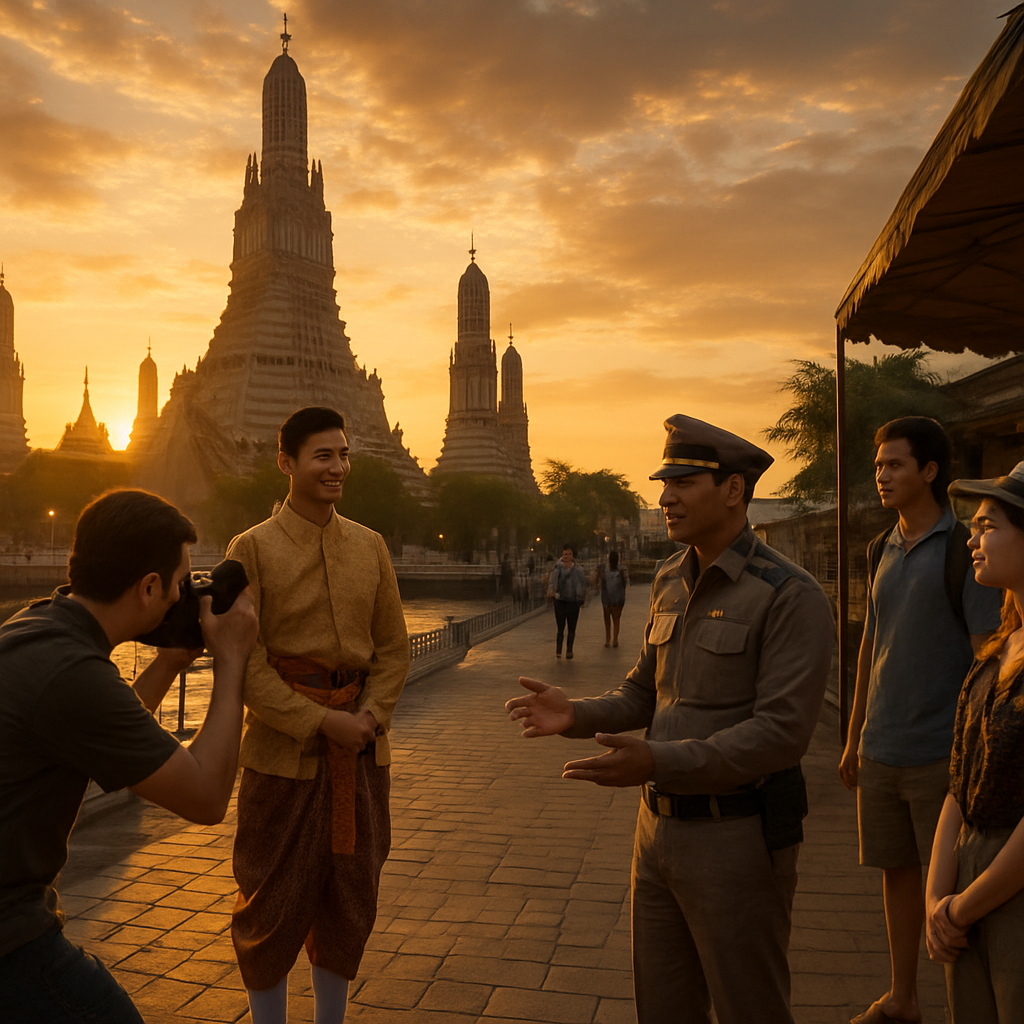
Wat Arun, the Temple of Dawn, has always been one of Bangkok’s most photogenic spots — sunrise light kissing its spires, visitors draped in traditional Thai costumes, and the river breezes carrying the scent of incense. Lately, though, the temple’s postcard-perfect image came with an unexpected extra: confrontation over who gets to be in the frame.
The story went viral after Krisda “Pond” Witthayakhajorndet, founder of the entertainment company Be On Cloud, shared an account on X that struck a chord. Pond wrote about visiting Wat Arun Ratchawararam Ratchawaramahawihan on January 2 and being impressed by the sea of tourists — many of them renting traditional Thai outfits and clearly enjoying the dramatic backdrop. What spoiled the vibe, he said, was a local photographer aggressively prioritizing paying clients by repeatedly moving other tourists out of the shot.
Pond’s description makes the scene vivid: foreign visitors confused, awkward smiles fading to frustration, and a photographer who seemed more determined to get the perfect paid portrait than to respect the shared public space. Pond intervened, reminding the photographer that Wat Arun is a public landmark “meant for everyone.” According to Pond, the photographer brushed off the warning and argued back. Pond’s closing plea was blunt: public space isn’t something to be claimed for making a living at the expense of others’ experience.
That social media post acted like a match to a field of dry grass. In the comments, many netizens chimed in with similar tales. Tourists and locals alike recalled being nudged out of the way, shouted at by vendors and photographers eager to attract paying customers, or unnerved by repeated interruptions during what should have been a quiet, reverent visit. Some complained that vendors’ loud calls and photographers’ booming directions clashed with the contemplative atmosphere expected at a temple.
Given how quickly the issue spread online, the Thai Tourist Police stepped in. Officers increased patrols around Wat Arun to manage crowd flow and help prevent confrontations. They also met with temple management and relevant agencies to discuss clearer and fairer guidelines for photography services on the grounds. The goal: find a balance that allows local photographers and costume-rental businesses to earn a living while protecting visitors’ right to enjoy the landmark without feeling harassed or displaced.
Officials urged local photographers to cooperate, suggesting a switch in tone from aggressive hustling to polite assistance. The Tourist Police framed their message around basic courtesy: avoid pushing visitors out of frames, stop shouting to attract clients, and help maintain the temple’s atmosphere — not undo it. The energy of the response shows an appreciation for both tourism’s economic benefits and the need to preserve the dignity of a national monument.
This episode raises a familiar but important tension: how do popular tourist sites stay accessible and welcoming without becoming commodified beyond recognition? At Wat Arun, traditional costume rentals and portrait photographers add color and income. They also risk turning a sacred space into a series of staged moments where paying customers get priority access. For many visitors — especially first-timers — the expectation is simple: respect the place and the people who come to see it.
There’s room for compromise that benefits everyone. Clear signage about respectful behavior, designated areas for paid photo sessions, time-limited slots for portraits, and a code of conduct for vendors and photographers could ease friction. Staffed information points or volunteers can guide tourists to quieter spots for contemplative visits while directing paying clients to specific photo zones. The recent meetings between the Tourist Police and temple management suggest such collaborative solutions are on the table.
For now, the message from both the public and the authorities is straightforward: the landmark belongs to everyone. Photographers and vendors who help visitors capture memories are valuable, but their methods must not come at the expense of fellow visitors’ comfort or the sanctity of the site. As Wat Arun continues to draw crowds — locals and travelers alike — what happens next could become a template for other crowded attractions around the world.
So next time you’re at Wat Arun, camera in hand or posing in a traditional costume, take a breath and look around. The perfect photo is wonderful, but the best memories are made when everyone gets to enjoy the view.

















I posted about this because it felt wrong to watch people being shoved out of temple frames so someone could charge for a picture. Public space shouldn’t be rented out by intimidation.
As a local photographer I get why tourists pay for portraits, but shoving people is unacceptable and damages our reputation; we need better systems not chaos.
I was there that day and it was tense — I almost missed the sunrise because of a photoshoot taking over the viewpoint.
Thanks for saying that — I felt like I was the only one bothered, but once I posted others spoke up too; this isn’t about jobs, it’s about respect.
If the police stepped in fast it might solve this temporarily, but long term signage and designated photo slots sound necessary.
Tourists renting costumes are lovely, but there’s a line when sacred spaces become stages for paid shoots.
I think small businesses like costume rentals feed local economies; the fix should protect tourists but not eliminate vendors’ livelihoods.
That’s a naive take. When vendors turn temples into theme parks, the culture dies and tourists get ripped off with staged photos.
I hear that concern, but regulation can balance both. Punishing vendors outright isn’t the only answer.
This could be a civics lesson: how public goods are negotiated between citizens, businesses, and the state.
Why can’t people just take turns? It’s not that hard.
Turn-taking is polite, but power dynamics matter — a shout from a vendor can intimidate a solo tourist who doesn’t speak the language.
Oh, I didn’t think of the language thing. That makes it more complicated.
This is a microcosm of overtourism and the commodification of heritage. Any sustainable policy needs economic incentives tied to spatial governance.
As a Bangkok resident, I worry both about livelihoods and about tourists disrespecting temples. We want solutions that keep both intact.
Exactly — designate paid zones, impose time windows for commercial shoots, and perhaps a permit fee that funds temple upkeep and guides.
Permit fees sound fine in theory, but bureaucratic capture could favor established vendors over newcomers who need income.
That’s a valid risk. Transparent allocation and community oversight could mitigate capture.
For clarity: most of us try to be respectful. A few bad apples spoil it and the whole community suffers. Training and voluntary codes would help.
Voluntary codes rarely work without enforcement. People need clear rules and consequences to change behavior.
I agree enforcement helps, but start with peer pressure and incentives before fines ruin small operators’ incomes.
Incentives like discounts on permits for certified polite vendors could be a clever nudge.
Tourist Police increased patrols and met with temple management; suggestions were made about polite conduct and designated areas.
That’s promising, but will police prioritize preventing harassment or just mediating after fights break out?
Our stated goal is proactive prevention: visible presence, clear signage, and liaison with vendors to avoid escalation.
Visible presence helps, but long-term change needs community buy-in, not just uniforms on the ground.
Temples are spiritual spaces; even if tourism funds upkeep, there must be limits when commercial activity disrupts worship and contemplation.
I respect that, but many locals also benefit economically from tourism. It’s not a simple zero-sum fight.
True, Benjamin, but dignity and reverence should be non-negotiable at sacred sites.
Staged tourism is curated fakery. I want authentic experiences, not a line of people being painted into postcards.
Authenticity is often a constructed ideal. Locals selling costumes are offering a cultural product — whether staged or not depends on perspective.
Selling culture isn’t bad, but it becomes exploitative when locals pressure others out of communal spaces.
Practical proposals: clear signage, timed commercial slots, a permit system, and volunteer guides to steer paying customers to photo zones.
Volunteer guides are great but who trains them? Who pays? Sustainability matters, not just an ad hoc fix.
Funding could come from a small permit surcharge or tourism taxes earmarked for site management and guide stipends.
I felt harassed once at a temple and never returned to the same area. These vendors cost more than money — they cost atmosphere.
As the person who first shared my experience, I agree — the atmosphere was ruined for me and for others I spoke to that day.
Krisda, thanks for bringing it up publicly. Without posts like yours, nothing changes.
Short and simple: be kind. If a vendor asks you to move politely, ask what time they need and if you can switch spots in a minute.
Politeness is great, but many tourists don’t speak Thai and vendors sometimes shout commands that feel coercive.
Then signage in multiple languages and a volunteer point would help bridge that gap.
I’m concerned about enforcement fairness. Which vendors get permits? Will locals be pushed out by commercial interests?
Community oversight committees including local vendors, temple staff, and resident reps could allocate permits fairly.
That could work if it’s genuinely inclusive and transparent, not just a rubber stamp for established businesses.
There are broader lessons here for cities worldwide: public spaces must be governed to preserve use-values, not just exchange-values.
Academic language aside, people want to enjoy places without feeling like props. Policy should be practical and enforceable.
Agreed — theory is useless without implementation. Pilot programs at popular sites could test what works.
Rejoining the thread: my intention wasn’t to demonize vendors but to push for respectful practices that help everyone.
Thanks for clarifying, Krisda. If influencers and locals can co-design solutions, we might avoid heavy-handed rules.
Co-design is key. When stakeholders participate, rules are more likely to be followed and fair.
I want to see concrete next steps: timeline for signage, who makes the permit rules, and an appeal process for vendors.
We aim to publish a draft code of conduct within weeks and invite vendor and community feedback before finalizing.
That’s encouraging — transparency will build trust among locals and tourists alike.
Sometimes tourists expect temples to be photo studios; education campaigns about appropriate temple behavior could really help.
Education is good, but those campaigns rarely reach tourists who are already in selfie mode.
Combine education with subtle design changes — marked contemplative spots and separate photo platforms to channel behaviors.
If a permit market is created, monitor it. Platforms often produce unintended monopolies without checks and data-driven oversight.
Data collection can track peak times and enforce time-limited slots. Tech can make management efficient and fair.
Yes, but guard against surveillance creep. Data should serve management, not punitive profiling of vendors or visitors.
As someone who rents costumes occasionally, I’d welcome clearer rules because chaos scares customers away and hurts business.
Then let’s organize a vendor association to negotiate permits and train members on etiquette.
Count me in. Better standards mean better respect and probably better long-term income.
Final thought: small changes can have big ripple effects; let’s aim for respectful tourism that benefits people and preserves places.
Amen to that. Hope the Tourist Police follow through and we see real improvements at Wat Arun and beyond.