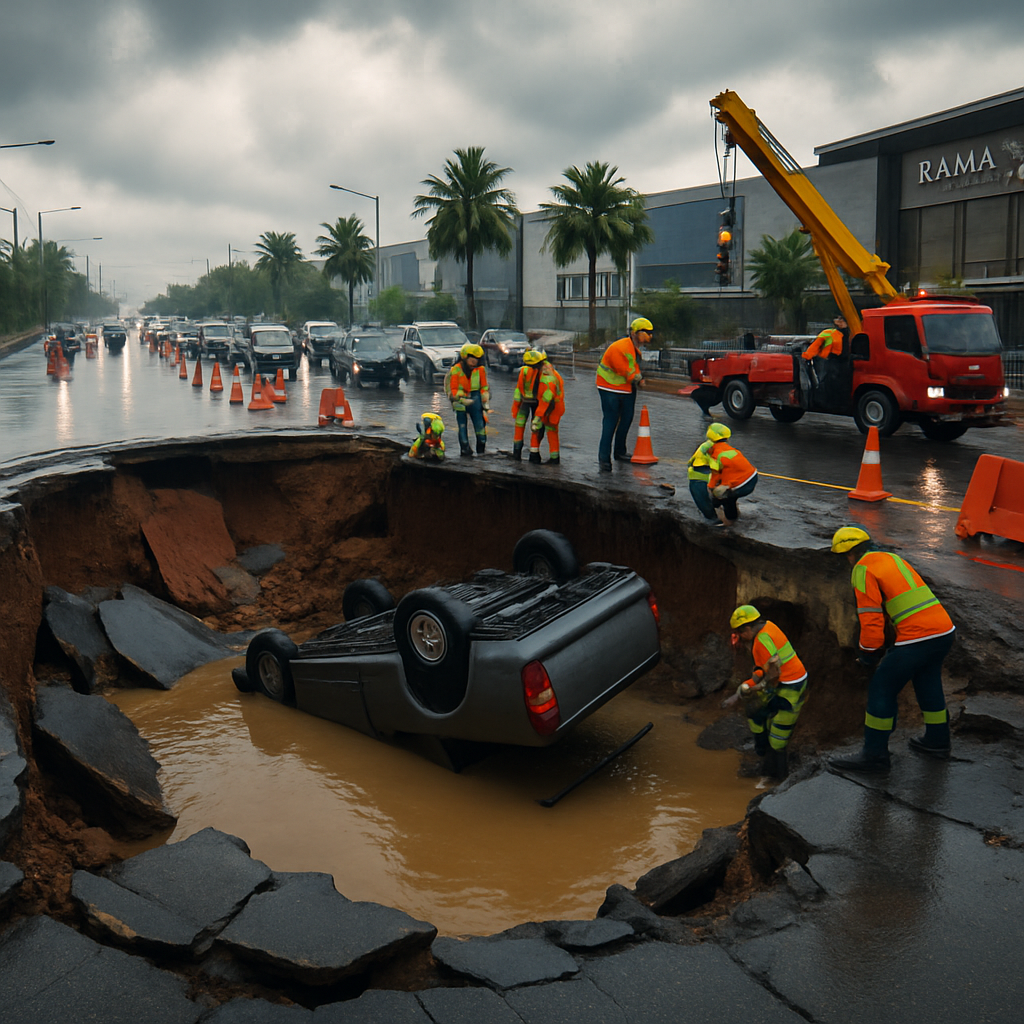
Commuters expecting a routine drive into Bangkok on the morning of January 17, 2026, got an unexpected — and dramatic — detour when a section of Rama 2 Road suddenly collapsed near the Big C Rama 2 shopping complex in Samut Sakhon province. The incident, which took place at about 6:30 a.m. on the inbound side toward Bangkok, left a pickup truck overturned and submerged upside down in a sizeable water-filled hole, and turned a public-holiday morning into a traffic headache for thousands.
According to first reports, the collapse didn’t simply crumple pavement — it created a deep void in a parallel lane, where the asphalt gave way and revealed a large, water-laden cavity. A pickup truck driving through that lane lost traction and control as the road beneath it surrendered, plunging into the gaping hole and ending up overturned in a ditch filled with water. Thankfully, emergency responders at the scene confirmed the driver sustained no serious injuries and was able to crawl out of the vehicle under his own power.
The response was rapid. Local authorities and rescue teams were on site shortly after the collapse was reported. Crews focused first on public safety — shutting off the water flow feeding the damaged section, stabilizing the immediate area, and setting up temporary barriers to keep other vehicles and pedestrians away from the danger zone. With the affected lane closed, traffic quickly backed up in both directions along Rama 2 Road, amplifying delays for drivers already travelling on a public holiday when many people head into Bangkok.
Motorists were urged to steer clear of the area and take alternative routes while repair crews and safety inspectors carried out urgent work. Commuters faced long waits, and traffic management teams did their best to ease the tailbacks, but the combination of the lane closure and holiday traffic proved a stubborn bottleneck.
Authorities said an investigation will look into the cause of the failure. Inspectors will examine the road’s underlying structure and nearby drainage systems — two usual suspects whenever a stretch of roadway gives way, particularly when water is involved. Whether an underground pipe burst, long-term erosion undermined the pavement, or some other factor was at play, engineers will need to assess the scene carefully before any permanent repairs are made and the lane can be reopened safely.
Local media and community pages were the first to share details and photos of the collapse, including posts from the Samut Sakhon News Society 2 Facebook page that circulated images of the overturned pickup and the sunken road. The story was later picked up by national broadcaster Sorayuth Suthasanachinda, helping the report reach a wider audience as traffic updates and official statements became available.
For commuters and residents in the area, the incident is a stark reminder of how quickly a routine route can become hazardous. City planners and residents alike will be watching the investigation closely; if drainage problems or underground infrastructure failures are found to be contributing factors, there could be calls for wider inspections of nearby roads to prevent a repeat. Officials say further updates will be provided as repair efforts proceed and investigators determine the exact cause.
In the meantime, anyone planning to travel on Rama 2 Road should check local traffic reports, allow extra time for journeys, and follow detour advice from traffic authorities. If you’re in the area, be prepared for lingering lane closures and the slow work of heavy machinery and engineers who need to make sure the road is safe before letting it carry that inevitable rush of return commutes once again.
The upside to the morning’s drama: despite the alarming visuals, this time the human cost appears low. The driver walked away without serious injury, and prompt emergency action helped prevent further harm. Still, the scene — a truck turned upside down in a water-filled sinkhole on a busy artery into Bangkok — is the kind of incident that will keep local authorities busy for days as they repair the damage and reassure commuters that the road will be safe to use again.
Expect more updates from local officials and news outlets as repair crews work through the day and investigators complete their assessments. For now, treat Rama 2 Road as a route to avoid if possible and stay tuned for traffic restoration notices from Samut Sakhon authorities and national traffic information services.


















This is exactly why we can’t trust road maintenance to last more than a few years here. Roads collapsing on holiday mornings shows picking the cheapest contractor cost lives waiting to happen. Someone needs to account for all those bahts and answer publicly.
Calm down, Joe — no one died this time and the driver is okay. But I agree we should check who did the work and when it was last inspected.
I know people are lucky today, but luck isn’t a plan, Somsak. We should demand transparency about inspection schedules and budgets for repairs.
Budget cuts or bad materials, pick your poison. The government loves patching cosmetic cracks and ignoring subsurface drainage.
From an engineering standpoint, water undermining support layers is the most plausible cause, especially if drainage valves or culverts failed. A proper geotechnical survey and CCTV of pipes should be done before permanent fixes. This could be an opportunity to upgrade the entire corridor, not just slap asphalt back on.
Agreed, Maya. CCTV and soil borings will reveal whether voids formed from erosion or if a burst pipe caused sudden washout. Temporary shoring and diversion of traffic are priorities while tests are conducted.
Exactly, Engineer_Thai — and pushing for a full survey could prevent similar failures on adjacent stretches. Short-term band-aids just create repeat incidents.
Sounds technical, but who enforces the standards? Engineers can recommend, but if the agency ignores the report like they often do, nothing changes.
Wow that’s scary. The truck went upside down in water, is the driver okay? Roads should not drop like that!
Yes, he was reported to walk away without serious injury, but the shock is real. We should teach kids about avoiding damaged roads and reporting hazards quickly.
I hope they put up signs fast. Some people might drive into it if they’re not paying attention.
This gridlock on Rama 2 is nonsense, especially on a holiday when people are trying to get into Bangkok. Authorities should have contingency routes pre-planned for these exact scenarios. Why do we always act surprised?
Because plans exist on paper but not in practice, Luke. I drive Rama 2 daily and the detour signage was confusing this morning.
Confusing signage is half the problem, and slow tow trucks don’t help either. We need real drills and faster emergency clearances.
You all sound like city managers now. Maybe people should leave earlier instead of blaming responders who were actually there fixing things.
Media loves a dramatic photo and this one delivered, but are we making the situation worse by sharing sensational images before knowing the facts? The upside is public pressure might speed up inspections across the region.
Photos are necessary for accountability sometimes, Sophie. But yes, clickbait shrinks nuance and feeds panic rather than solutions.
Then let’s demand detailed official updates alongside the images — both transparency and careful reporting are needed.
If the collapse revealed a cavity next to the lane, that implies progressive subsidence rather than a single pothole failure. Expect engineers to look for piping flows in subbase and possible sinkhole formation connected to groundwater dynamics. Repair should include geotextile, proper compaction, and possibly an underground drain replacement.
Good technical note. Also consider long-term monitoring like inclinometers and acoustic sensors along vulnerable stretches to detect early movement. Prevention is cheaper than emergency repair.
Absolutely, Professor. Implementing low-cost monitoring at known risk points could catch failures before they become dramatic incidents like this one.
I bet the contractor cut corners to win the bid, politicians looked the other way, and taxpayers will foot the bill. It’s the same old cycle and nothing will change unless heads roll.
Don’t forget some officials sign off without visiting the site. I see contractors patching for show, then the subsurface rots away.
Exactly. Public shaming and legal consequences might teach them better than more reports and apologies.
So thankful the driver is okay, but this is a wake-up call for commuters to check live traffic feeds and plan alternate routes. Local authorities should offer shuttle options or clearer detours during big incidents. Community groups could help share verified updates to cut confusion.
Community sharing is great, as long as folks don’t spread rumors. Verified info only — otherwise chaos multiplies.
True, Larry. That’s why official channels need to be faster and community admins need to coordinate with traffic authorities.
Climate change means more intense rain and worse drainage events, so expect more sinkholes if infrastructure isn’t upgraded. Farmers like me notice the changes in water behavior and it’s scary how fast things shift. This should be part of a bigger climate-proofing plan.
I agree climate stress is a factor, but this could also be purely mechanical — old pipes, poor compaction, or utility work gone wrong. Don’t politicize everything.
Both can be true, Niran. Mechanical failure plus heavier rains accelerate collapse risk, so we need both fixes and climate adaptation.
Imagine being the tow truck driver who has to fish that pickup out while traffic snarls for hours. Not a fun morning for anyone.
That tow operator deserves praise — they work in dangerous conditions and under public pressure. Institutional support for those crews should be improved.
Why do officials always promise ‘updates to follow’ and then nothing appears for hours? People deserve timely and honest information. Silent communication breeds mistrust and conspiracy theories.
Agreed. Even a short interim statement explaining what’s being checked would reduce speculation. Engineers need time, but communicators can still provide context.
This will cost a lot to repair and the traffic losses are an economic hit too. Will insurance cover the damage or will the driver be left to bear some cost? We need clarity on liability in these accidents.
Liability is messy here; sometimes municipalities accept responsibility, other times private firms are blamed. The driver probably has to go through lengthy claims either way.
I used to work in road maintenance and can tell you the subdrain layer is often neglected. When the surface looks fine, the ground underneath can be a disaster. Regular subsurface checks are rare because they’re expensive.
So it’s exactly what we were saying — inspectors cut corners or skip thorough checks. If it’s expensive, then prioritize based on risk maps.
This is also a reminder to always have a phone charged and emergency tools in your vehicle. If something dramatic happens, being prepared can save lives. Small actions matter when infrastructure fails.
Good tip, Cecilia. I will pack a portable charger and a basic first-aid kit now.
Holiday traffic plus an unexpected lane closure — of course it’s chaos. Employers should consider flexible hours or remote options when big infrastructure issues are forecast. Work culture can adapt to avoid massive commuting stress.
Flexible work could reduce peak traffic, but not everyone can work from home. Still, it’s a policy conversation worth having after incidents like this.
People keep saying ‘ask who to blame’ but I want to know when roads will actually be safer. Investigations are fine, but show us a timeline and a plan for prevention. Action beats blame every time.
Yes, timelines and public checkpoints for repairs should be published. That holds agencies accountable instead of vague promises.
If drainage was shut off as article says, who authorized that and why did it cause a collapse? That detail feels important and suspicious. Someone should release the maintenance logs.
Maintenance logs should be public for infrastructure affecting thousands. Transparency prevents cover-ups and helps independent experts weigh in.
This photo will make the rounds and then be forgotten until the next disaster. I’m tired of reactive responses. We need systemic funding for infrastructure resilience, not episodic outrage.
Amen to that. Unless voters demand consistent investment, politicians will treat roads like a background expense until something dramatic happens.
Local businesses near Big C will be hit by the detours too. Deliveries, customers, and staff all get delayed which hurts small owners who already struggle. Recovery planning should include economic relief for nearby shops.
There’s always a meme thread about sinkholes online, but this is not funny — infrastructure safety affects real people. Hope inspectors release their findings soon so we can stop second-guessing.
Ask not who built the road, ask who signed the certifications. Sometimes bureaucratic box-ticking pretends to be safety. We need independent audits of big arterial routes.
Independent third-party audits can reduce conflicts of interest but cost money. Still, the price of auditing is lower than the social and economic cost of collapses.
I saw people taking selfies near the hole this morning and it made me sick. Respect the danger zone and let crews work. Social media posts can distract responders and encourage unsafe behavior.
Sadly human nature: people love a spectacle. Authorities should cordon off sites better to prevent that.
Hope this incident sparks a program to map all old drains and pipes under major roads. So many utilities are decades old and nobody knows the state below. A survey now could save lives later.
Mapping utilities and integrating LiDAR and ground-penetrating radar surveys would be ideal, though resource-heavy. Still, phased mapping focusing on high-risk corridors is doable and wise.
I don’t trust the first reports sometimes — witnesses exaggerate. Wait for the engineers and official report before making big accusations. Fast social judgment can ruin reputations unfairly.
We should also think about public health: standing water attracts mosquitoes and can become a hazard if repairs take long. Quick draining and sanitation are part of the recovery that no one talks about.
Good point. Vector control should be part of the checklist whenever water-filled cavities are exposed in urban areas.