Chinese man arrested in Bangkok over 267-day overstay
Investigators detained a 36-year-old Chinese national in Bang Khun Thian after his permitted stay had expired 267 days earlier. A Guangzhou warrant had been shared with the Immigration Bureau, and an arrest-track overstay now carries a five-year re-entry ban.
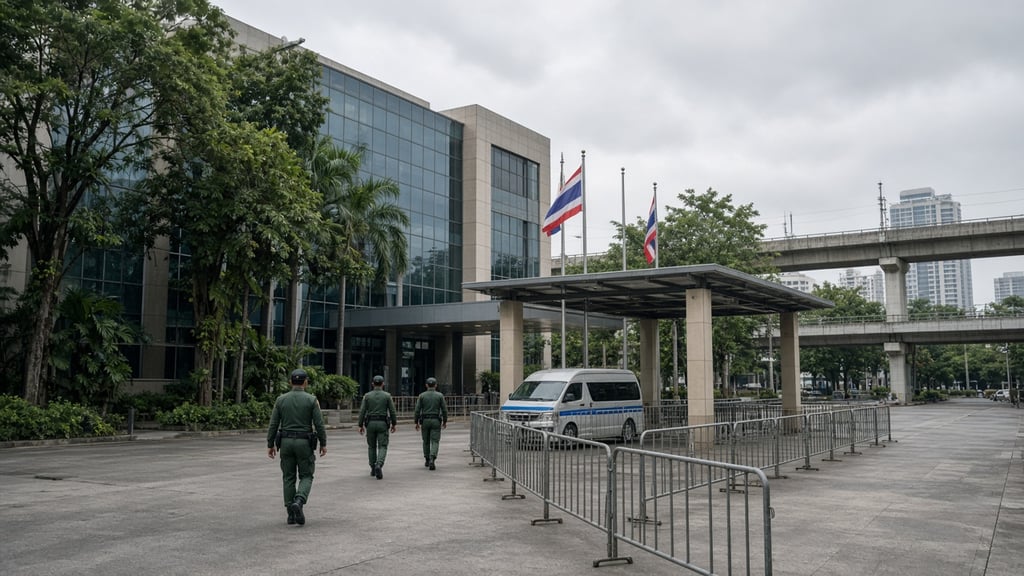
Immigration investigators arrested a 36-year-old Chinese national in Bangkok on 29 October 2026 after confirming he had remained in the Kingdom 267 days past the date stamped in his passport. The same file carried an arrest warrant issued in Guangzhou, which Chinese officials had shared with Thailand through the foreign-affairs channel and the Chinese embassy. Once another government asks Bangkok to look, an overstay becomes a locate-and-arrest job, not just an airport fine.
The Immigration Bureau's Investigation Division found the man, identified in official briefings only under the pseudonym Linn, outside a residence in Tha Kham subdistrict, Bang Khun Thian district, along Rama 2 Road. Investigators said they traced his movements after the coordination note arrived, then approached a person matching the description, identified themselves as police, and inspected his identity documents and passport on the spot.
Entry stamp, expiry date, and the overstay clock
Passport records showed he entered Thailand on 6 December 2025 with permission to remain until 3 February 2026. By the date of the check, that permission had been expired for 267 days, well past the 90-day mark that already triggers a re-entry ban even for people who walk into an immigration office on their own. Officers charged him with remaining in the Kingdom after permission had ended, explained his legal rights, and recorded that he admitted the overstay during the arrest process.
He was taken to the Investigation Division for arrest paperwork, then handed to investigators for further proceedings. Thai reports of the operation placed the work with an Immigration Bureau investigation team assigned to locate foreign nationals named in overseas warrants. The Chinese warrant, dated 21 January 2026, came from the Tianhe District Public Security Bureau in Guangzhou, Guangdong province. The alleged offence behind that warrant was not disclosed in the Thai briefing.
Why a foreign warrant changes the overstay file
An ordinary overstay is usually settled at an airport or immigration counter: a cash fine, a stamp, and, if the stay ran past 90 days, a ban on coming back. This file is different because the man was found at a Bangkok residence after a foreign warrant moved through diplomatic channels. Remaining after permission ends is an offence under the Immigration Act B.E. 2522. When a person is arrested rather than surrendering, Ministry of Interior Order No. 1/2558 applies the heavier blacklist: five years if the overstay is one year or less, ten years if it is more than one year.
At 267 days the arithmetic of the fine hits the statutory ceiling long before the calendar does. Five hundred baht a day would total 133,500 baht, but the Immigration Division 1 FAQ caps the comparative fine at 20,000 baht. The ban is the larger consequence. Because officers arrested him, the five-year re-entry prohibition is the schedule that applies, not the one-year ban that would have followed a voluntary surrender after more than 90 days.
Thailand and China already keep a consular track for visa and immigration work. In January 2024 the Director-General of the Department of Consular Affairs and a deputy commissioner of the Immigration Bureau met Thai embassy officials in Beijing to discuss visa processing, immigration coordination, and consular assistance. That channel exists for ordinary travel as well as the kind of identity notice that reached Bangkok investigators in this case.
What This Means for Expats and Travelers in Thailand
For anyone living or visiting on a temporary stamp, the practical lesson is blunt. Overstay is not only an airport surcharge. Once the clock passes 90 days, even a self-report carries a one-year ban. Once officers come to you, the ban jumps to five years if the overstay is still under a year, and ten years if it has run longer. The 20,000 baht cap can make a long overstay look cheap on paper. The blacklist is what actually closes the door.
Treat the expiry date on the entry stamp, not the visa sticker, as the date that matters. Visa validity is not the same as permitted stay. If you need more time, extend at the immigration office that covers your district before the stamp runs out. If you have already overstayed, walking in is still the cheaper legal path: a lower ban, a documented exit, and no arrest record.
Foreign warrants are a separate layer. Thai officers can charge the immigration offence first, then process the person through investigation and removal. Keep 90-day reporting current if you hold a longer stay, file TM30 address notices, and do not assume a quiet soi on Rama 2 is invisible. The fine is capped. The ban, and the arrest itself, are not.



Comment verification
Step 1 of 3
Verify your email once to publish your comment. Your email is never shown publicly.
Enter the 6-digit code sent to .
Choose the display name shown next to your comments.