Chinese Passenger Held at Suvarnabhumi With 8,900 Unregistered Weight-Loss Pens
Customs at Suvarnabhumi seized 8,900 unregistered GLP-1 injection pens, valued at 5.34 million baht, from a Chinese passenger arriving from Dhaka on 31 October 2026. Two suitcases, no FDA papers, and a reminder of the 15 September special-control rule.
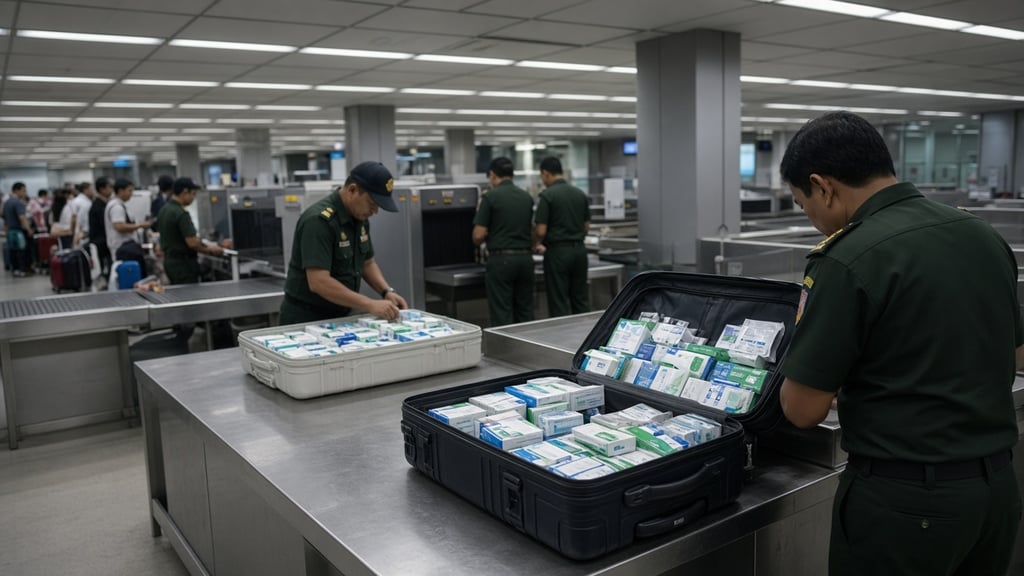
Thai Customs officers at Suvarnabhumi International Airport detained a Chinese passenger on 31 October 2026 after a baggage inspection uncovered 8,900 unregistered injectable weight-loss pens packed into two suitcases. The traveller had arrived from Dhaka, Bangladesh. The Customs Department published the case on its official Facebook page on 1 November and put the seized goods at 5,340,000 baht.
The pens belong to the GLP-1 class of injectables, first built to treat type 2 diabetes and later used, under a doctor, for weight management. Licensed products in this class are prescription-only in Thailand. Inspectors reported that none of the 8,900 units carried Thai Food and Drug Administration registration or an import permit.
How the inspection unfolded
Santanee Phairattanakorn, director of the Suvarnabhumi Airport Passenger Control Customs Office, said officers opened the two bags during a passenger-control check and found the pens in plastic packets. The department did not name the traveller. He was transferred to police for legal proceedings under the Customs Act B.E. 2560 (2017) and the Drug Act B.E. 2510 (1967).
The count sits far outside any reasonable personal-use reading of the passenger rules. Airports of Thailand guidance for Suvarnabhumi arrivals lists food, medicine, cosmetics, and dietary supplements in unusually large or commercial quantities as restricted goods. Those items require written FDA approval before they may enter the country, and the permit must be shown at customs. A single prescribed pen in a toilet bag is not the same legal object as nearly 9,000 units in checked luggage.
Why GLP-1 pens now sit on the red-flag list
From 15 September 2026, injectable GLP-1 receptor agonists such as liraglutide and semaglutide have been listed as specially controlled drugs under Ministry of Public Health Notification No. 58. The Thai FDA, in a 14 September briefing, said licensed modern pharmacies may sell the medicines only against a doctor's prescription, and a pharmacist must complete the dispense. Importers and licensed sellers have been asked to report sales into a Track and Trace serialisation system so a box serial number can be checked on the FDA website. The FDA hotline 1556 and the Oryor Smart application take public reports around the clock.
The tighter class was a response to unsupervised cosmetic weight-loss use, counterfeit pens, products of unknown origin, and online sales outside licensed pharmacies. Patients with a medical indication who remain under a doctor's care can still obtain registered products through the legal channel. Selling a specially controlled drug without a prescription, selling without a licence, or trading unregistered medicine can bring imprisonment and fines. Unlawful drug advertising can draw a fine of up to 100,000 baht.
Passenger-channel smuggling is not a one-off. On 29 June 2026, the Customs Enforcement Division and Don Mueang Airport Customs reported seizing 252 boxes of weight-loss pens, valued at more than 3.3 million baht, from two Thai passengers arriving from Japan. Earlier Suvarnabhumi cases in 2026 also involved GLP-1-class injectables arriving from Bangladesh. Finance Ministry leadership has told the department to tighten screening for illegal and substandard goods, with injectable weight-loss products named as a priority at international passenger checkpoints.
What This Means for Expats and Travelers in Thailand
Do not pack commercial quantities of injectable medicine for entry at Suvarnabhumi, Don Mueang, or any other Thai airport. Large volumes of drugs, even if bought legally abroad, need FDA authorisation. If officers treat the load as undeclared commercial cargo, the case can move from a tax discussion to a criminal file under the Customs Act and the Drug Act. Two suitcases of pens is not a grey area.
If you use a GLP-1 pen under a doctor's care, travel with the original labelled box, the prescription or clinic letter, and only the quantity you need for the trip. Keep it in carry-on where possible. If a serial number is printed on the pack, the FDA Track and Trace page can confirm whether the product is in the Thai system. A pen bought from a social-media seller, a gym contact, or a suitcase vendor is the profile customs is now hunting.
Residents who want treatment in Thailand should go through a licensed clinic or hospital and collect the medicine from a licensed pharmacy with a Thai prescription. Since 15 September, over-the-counter sales of injectable GLP-1 products are not lawful. Ask the pharmacist to show that the pack is FDA-registered. Report suspect online listings on 1556 rather than trying a cheap import.
On arrival, use the red channel if you are carrying prescription injectables in any quantity that might look commercial, plus any goods over the personal exemption. AOT tells passengers to declare personal items valued over 20,000 baht per piece, goods bought for resale, and cash above 450,000 baht or 15,000 US dollars. When in doubt, declare. A conversation at the counter is cheaper than a custody suite.



Comment verification
Step 1 of 3
Verify your email once to publish your comment. Your email is never shown publicly.
Enter the 6-digit code sent to .
Choose the display name shown next to your comments.