Chinese woman wanted over call-centre gang found 394 days overstayed in Samut Prakan
Samut Prakan Immigration arrested a 31-year-old Chinese national, identified as Miss Hua, at a Thepharak condominium after her passport showed a 394-day overstay and a warrant from China over a Myanmar-based call-centre fraud case.
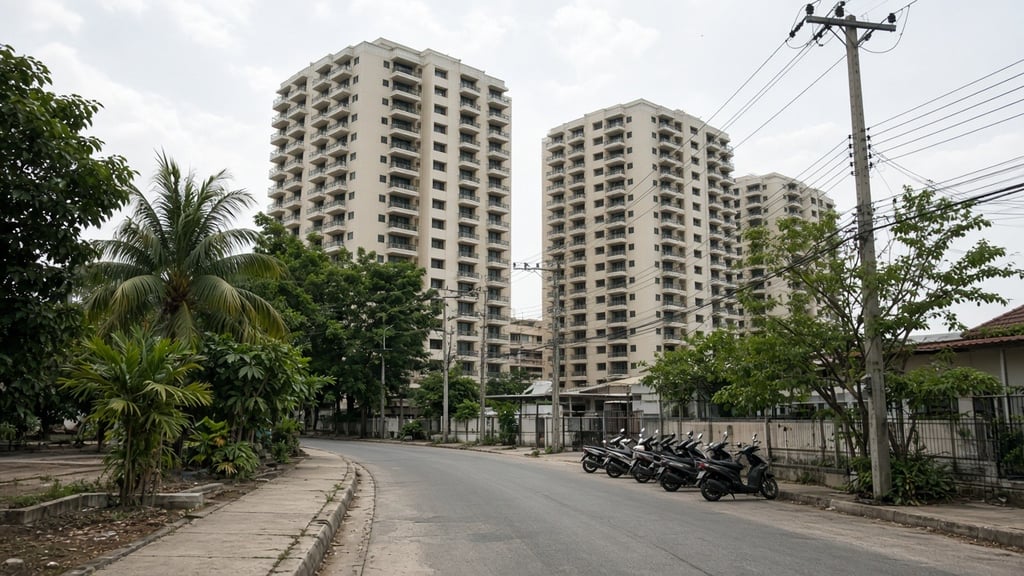
Samut Prakan Immigration officers arrested a 31-year-old Chinese national, identified only as Miss Hua, at a condominium on Soi Sukhumvit 117 in Thepharak subdistrict after tracking her between 31 October and 1 November 2026. A passport check showed she had remained in Thailand 394 days past the date stamped in her travel document. Officers also matched her to a warrant issued in China over an alleged transnational call-centre fraud case.
The result of the operation was announced on 3 November by Police Major General Songprod Sirisukha, commander of Immigration Division 3, which covers Samut Prakan and 24 other provinces in the central, eastern and western regions. Field work was led by Acting Police Lieutenant Colonel Sanchai Saenpan and the provincial investigation team, under orders from Police Lieutenant General Nopphasin Poolsawat, commissioner of the Immigration Bureau.
Hua was living in Mueang Samut Prakan, a short drive south of central Bangkok along the Sukhumvit corridor, in a residential condominium rather than a hotel. Once a permitted stay expires, many people leave tourist zones and rent rooms in suburban buildings where lodging reports are uneven and neighbours rarely ask about visa stamps. That is the pattern investigation units now treat as a lead, not an accident of the map.
Warrant tied to a Mong La call-centre network
Further checks found that Chinese authorities wanted Hua in connection with a cross-border scam. Immigration officers said that in 2020 she and others joined a fraud network operating from a call-centre building in Mong La, a town in Myanmar's Shan State opposite the Chinese border at Daluo. The group allegedly targeted lesbian women in China, built fake romantic relationships, then steered victims into investment schemes that promised high returns and were not real businesses.
Mong La sits in the Golden Triangle hinterland, where electricity, telecoms and the daily currency of trade have long run through China more than through Naypyidaw. The town has a documented history as a casino, wildlife-trade and organised-crime hub. Thai police did not release the Chinese case number, the names of alleged victims, or any extradition timetable. Hua was handed to investigators for processing under Thai immigration law first.
Police Major General Songprod said the bureau had been told to press harder against transnational crime networks, with mule bank accounts and money laundering listed as priorities. The Immigration Bureau's public line after the arrest was that Thailand should not become a place where people wanted abroad can sit out a warrant in a suburban condo.
What a 394-day overstay means under Thai law
Under the Immigration Bureau's published tariff, an overstay fine is 500 baht per day and stops at 20,000 baht. At 394 days, the raw daily sum would far exceed that ceiling, so the cash penalty hits the cap. Paying the fine does not cancel a re-entry ban.
Ministry of Interior Order No. 1/2558, still summarised on the Bangkok Immigration FAQ, splits outcomes by how the foreigner leaves. Someone who surrenders after more than one year overstay faces a three-year ban. Someone who is arrested and prosecuted after more than one year overstay faces a ten-year ban. Hua was detained in a condo, not at an airport departure desk, so the arrested track applies if prosecutors proceed on the overstay itself.
Section 81 of the Immigration Act B.E. 2522 also allows imprisonment of up to two years, a fine of up to 20,000 baht, or both, for remaining after permission ends. In practice, many simple overstay cases are disposed of with the daily fine and a ban. A live foreign warrant changes the file: investigators must hold the person, notify the relevant embassy channel, and wait for any formal request from China.
What This Means for Expats and Travelers in Thailand
The arrest is a reminder that the stay stamp, not the visa sticker expiry date, is the number that matters. A tourist visa, visa exemption, or extension can all run out while the holder is still in a rented room. Immigration Division 3 has been running suburban condo checks in Samut Prakan, and 394 days is well past the point where a quiet exit at Suvarnabhumi would have been a shorter ban instead of a likely ten-year bar after arrest.
Anyone who has overstayed should treat a knock at a condo door as a criminal process, not a paperwork errand. Turning yourself in at an immigration office before officers come looking is the difference between a shorter ban and a five- or ten-year ban, plus possible detention at the Immigration Detention Centre in Nonthaburi while the file is closed. Keep copies of entry stamps, extension receipts, and TM.30 confirmations. Landlords who skip the lodging report make it easier for someone like Hua to sit unnoticed, but they also create a paper trail gap that investigation teams now treat as a lead.
Travelers who only visit for a few weeks are unlikely to meet this unit. Long-stay renters in Thepharak, Bang Phli, and the outer Sukhumvit sois should assume that passport checks at residential buildings are part of the current enforcement mix, especially when a foreign warrant is in the system.



Comment verification
Step 1 of 3
Verify your email once to publish your comment. Your email is never shown publicly.
Enter the 6-digit code sent to .
Choose the display name shown next to your comments.