ONCB Puts Sniffer Dogs on Don Mueang International Arrivals and Departures
ONCB and the Airport Interdiction Task Force ran random K9 checks on inbound and outbound international bags at Don Mueang on 6 November 2026, found nothing illegal, and said the sweeps will continue.
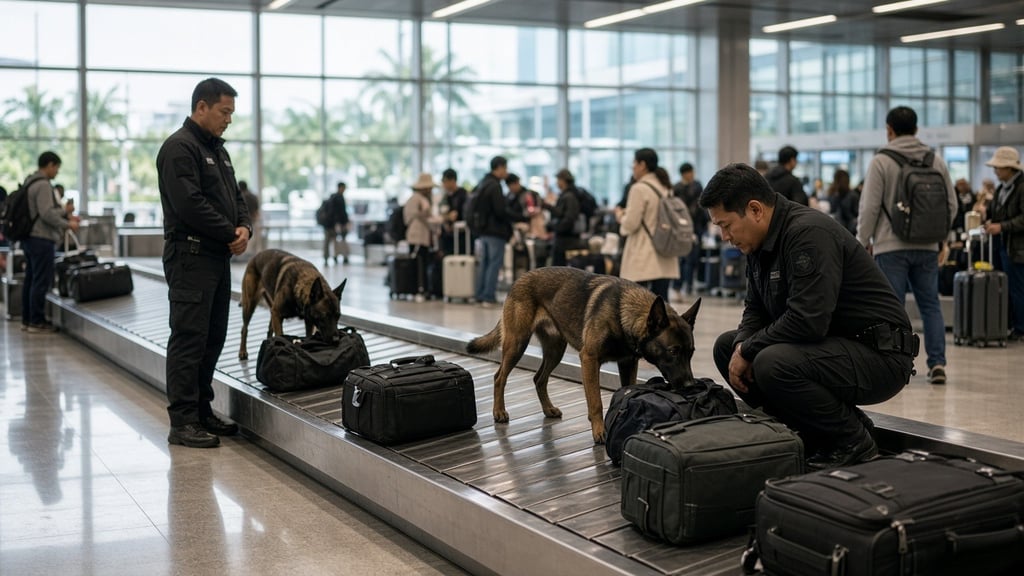
Thailand's narcotics board put drug-detection dogs on both inbound and outbound international traffic at Bangkok's Don Mueang Airport on Thursday, 6 November 2026. Officers from the Office of the Narcotics Control Board (ONCB) worked with the Airport Interdiction Task Force (AITF) to pull passengers and bags at random. The searches found nothing illegal. Officials said the same pattern of checks will continue.
AITF is a joint airport programme. On this operation it brought together ONCB, the Customs Department, the Narcotics Suppression Bureau, Don Mueang airport staff, and AirAsia security officers. Bags were selected at random. K9 teams then screened the selected luggage. The ONCB framed the work as part of a national plan it describes as a war on drugs, under the direction of Police Lieutenant Colonel Suriya Singhakamol, the board's secretary-general.
The board said partner agencies will keep random inspections and surveillance inside Don Mueang on a regular basis. Intelligence on smuggling behaviour will be analysed so officers can score risk and mark individuals and countries they treat as higher threat for trafficking. Those assessments, ONCB said, will shape later targeted checks. The stated aim is to keep Thailand from becoming a transit corridor for international drug shipments.
Why this airport, and why this mix of agencies
Don Mueang (IATA: DMK, ICAO: VTBD) is Bangkok's older international airport and the main operating base for Thai AirAsia, Thai AirAsia X, Thai Lion Air, and Nok Air. Terminal 1 handles international flights. Terminal 2 handles domestic traffic. Airports of Thailand operates the civil field, now the country's second-busiest airport. In 2025 it moved about 31.65 million passengers, of whom 12.24 million were on international services. Low-cost carriers moving large volumes of short-haul regional traffic make the airport a natural place to test whether narcotics are riding in passenger bags rather than cargo pallets.
The ONCB, founded in 1976, coordinates narcotics policy. It does not replace Customs or the Narcotics Suppression Bureau. It sits with them. Thursday's deployment is that model in public: a board-led task force, a visible K9 team, and a promise that empty results will not end the programme. AirAsia security joining the line is practical. The carrier dominates Terminal 1 international traffic, so its staff already stand at bag drop and the arrival belt.
Travellers using Don Mueang have already absorbed two other screening changes that are not drug operations. From 1 November 2026, the airport replaced handheld metal-detector wands with manual pat-downs when a passenger needs a second look after a walk-through detector or body scanner, under CAAT Regulation No. 113. From 16 October 2026, CAAT rules also let authorised staff open checked bags without the owner present when X-ray screening raises reasonable suspicion. Those aviation-safety rules sit beside the ONCB work. They are not the same search.
What the first public day did and did not show
An empty result does not mean the corridor is clean. It means this sample of random bags did not hold a prosecutable load. ONCB has not named the flights, the terminals, or the countries on any watch list. Officials also have not said how many bags were pulled. What they have said is that random selection plus dogs is now a standing method at Don Mueang, on arrivals and on departures.
That two-way coverage matters. A departure check is aimed at people using Thailand as an exit point. An arrival check is aimed at inbound concealment. Anyone connecting through Don Mueang, not only tourists landing for a beach holiday, can be pulled. The ONCB's next step is to mine the day's observations for risk scores rather than wait for a seizure to justify the dogs.
What This Means for Expats and Travelers in Thailand
Expect a dog at the carousel or near the departure bag drop without a warning. Cooperate, keep your bags in sight, and do not joke about drugs with officers. Cannabis remaining in Thailand is still tightly regulated. Cross-border movement of cannabis products, kratom extracts, prescription medicines without paperwork, or vape liquids that contain controlled substances can put a passenger into a criminal process, not a fine at the gate.
Leave extra time at Don Mueang. Pat-downs from 1 November already slow the security lane at peak hours. A random K9 stop on top of that can add minutes you did not budget. Pack medicines in original labelled containers with a copy of the prescription. Power banks and spare lithium batteries stay in cabin bags, not in checked luggage, because the separate CAAT bag-opening rule is still in force.
If you fly AirAsia or another low-cost carrier through DMK on a visa run, a work trip, or a family visit, treat this as a new normal rather than a one-off photo opportunity. ONCB said the checks will continue. The first public day found nothing. The next one may not. See the ONCB release of 6 November 2026 for the official notice.



Comment verification
Step 1 of 3
Verify your email once to publish your comment. Your email is never shown publicly.
Enter the 6-digit code sent to .
Choose the display name shown next to your comments.