Pattaya tourism lags as flight costs jump up to 40%, group warns
Chon Buri's tourism federation says airfares have jumped as much as 40 percent, Vietnam is undercutting prices, and a Chinese safety advisory is clouding Pattaya's high-season outlook.
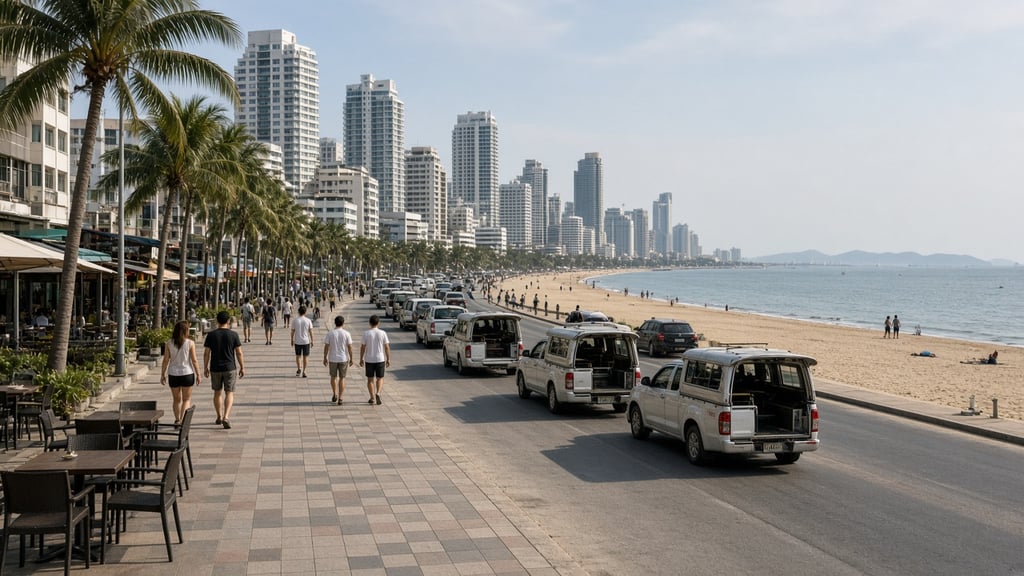
Pattaya's winter high season is approaching with less visibility than hotel and tour operators expect. On 4 November, Thanet Supornsahasrungsi, president of the Chon Buri Tourism Federation, told reporters that ticket prices into Thailand have risen by 30 to 40 percent, and that businesses lack the advance-booking picture they normally see two to three months before peak months.
The federation's warning lands as national arrival numbers run behind last year. The Ministry of Tourism and Sports recorded 23,199,306 foreign arrivals from January through September 2026, 3.8 percent below the same period in 2025. September brought 2,000,339 visitors, down 10.5 percent year on year. The Tourism Authority of Thailand still targets around 33 million international arrivals for the full year.
Why tickets into Thailand cost more this winter
Federation officials link the fare jump to higher aviation fuel costs and disruption on Middle Eastern connecting routes after conflict involving the United States and Iran. Many European visitors have long used Gulf hubs because those connections were typically 20 to 30 percent cheaper than nonstop flights. With those cheaper connections harder to book, some European travelers have postponed Thailand trips rather than pay the new price.
That matters for Pattaya because the European winter market has historically filled beachfront hotels from November through February. Without a clear booking curve, operators cannot plan staffing, room inventory, or restaurant capacity with the usual confidence.
Vietnam, Japan, and China as cheaper alternatives
Thanet also pointed to regional competition. Vietnam continues to add attractions and international routes, and he put comparable travel costs there at roughly 20 to 30 percent below Thailand. Japan is pulling more visitors because of a weaker yen. China is opening new domestic and outbound destinations and offering competitive airfares of its own.
For Pattaya, a traveler who once treated the Eastern Seaboard as the default winter beach trip now has cheaper alternatives. Operators who rely on package groups are the most exposed, because those groups can be rerouted with a single brochure change.
Chinese confidence after the 16 October advisory
A separate pressure point is Chinese visitor confidence. On 16 October, China's embassy in Bangkok issued an advisory urging Chinese nationals in Thailand to raise their safety awareness. The notice cited people going missing after arrival, illegal detention, and attempts to move victims toward the Thailand-Myanmar border after fake high-salary job or investment offers.
Tourism and Sports Minister Surasak Phancharoenworakul responded on 20 October, stressing that holidaymakers in Thailand are safe and that some victims appeared to have been deceived before they left China. Chinese Ambassador Zhang Jianwei later said the notice was a precaution for citizens, not a warning aimed at Thailand. The Association of Thai Travel Agents has still reported Chinese booking cancellations of more than 30 percent compared with the same period in 2025, and warned the slide could deepen around Chinese New Year 2027 if confidence is not restored.
Pattaya is particularly sensitive to that market. Chinese group tours have long filled mid-range hotels, coaches, and shopping stops on the Eastern Seaboard. When groups cancel or stay only in Bangkok, the resort feels it first. Federation officials have asked the government to reassure visitors and to develop attractions that can compete this season.
Deputy Prime Minister and Foreign Minister Sihasak Phuangketkeow raised the advisory in talks in Beijing this week, seeking a shared message that legitimate Chinese tourists remain welcome. At the same time, Thailand's visa-exemption rules tightened from 15 September, cutting visa-free stays to 30 days for 60 countries after a longer 60-day scheme. Combined with higher airfares, that shorter stamp can change how long winter visitors are willing to book a Pattaya hotel.
What This Means for Expats and Travelers in Thailand
If you already live in Pattaya, expect a quieter November than a classic high season, at least until booking patterns become clearer. Some hotels may discount more aggressively or lean harder on Thai guests and short-haul Asian markets. Nightlife operators who depend on European winter crowds should plan for delayed arrivals, not a sudden December surge.
Travelers still coming from Europe should compare connecting itineraries carefully. Gulf-hub tickets that used to undercut nonstops by 20 to 30 percent may no longer do so, and last-minute fares are the most inflated. If your trip is flexible, booking earlier than usual, or routing through East Asia rather than the Middle East, may save more than a last-minute Pattaya package.
Chinese visitors, and anyone traveling with Chinese family, should treat the embassy notice as a crime-prevention briefing, not a beach-town closure. Use licensed taxis or ride-hailing, do not accept unsolicited job or investment offers, and keep passports and phones in your own control. Ordinary holiday travel along Beach Road, Jomtien, and the islands is not what the advisory describes.
Expat residents who rent rooms or run small guesthouses should watch December occupancy week by week rather than assuming the usual winter lift. A fare shock plus a confidence shock does not cancel Pattaya's high season, but the season may arrive later, thinner, and more dependent on visitors already in Thailand.



Comment verification
Step 1 of 3
Verify your email once to publish your comment. Your email is never shown publicly.
Enter the 6-digit code sent to .
Choose the display name shown next to your comments.