Phuket Police Arrest Russian Man for Illegal Tour Guiding
Phuket Tourist Police and tourism registrars followed a Russian man from Promthep Cape to the Big Buddha on 5 November 2026, then arrested him for unlicensed tour guiding.
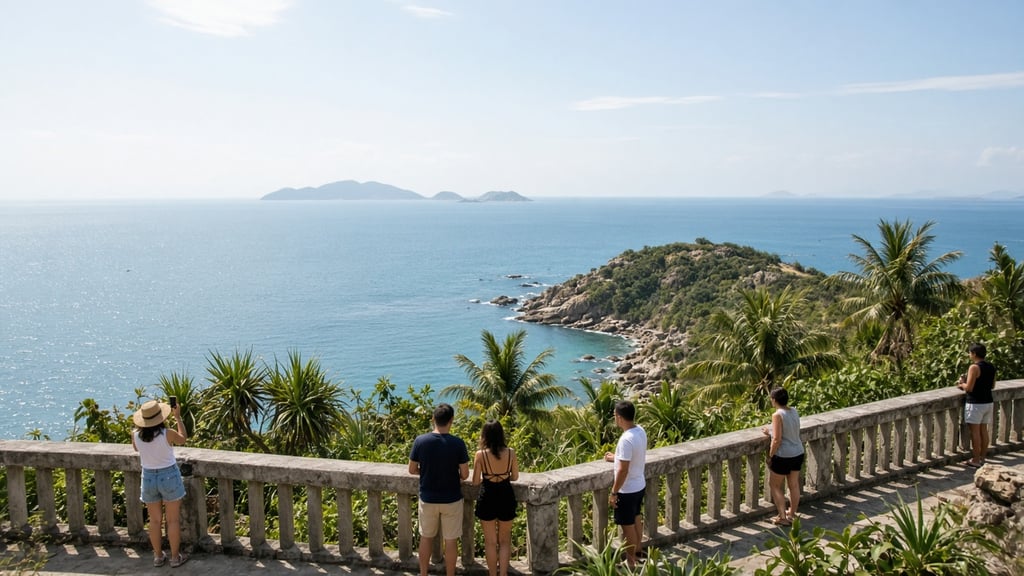
Phuket Tourist Police and inspectors from the Department of Tourism's Southern Region 2 Tour Business and Tour Guide Registration Office detained a Russian man on the morning of 5 November 2026 after watching him lead a group of 10 foreign visitors along a south-island sightseeing circuit without a Thai tour guide licence.
Officers first saw the man at about 8:30 a.m. at the Promthep Cape viewpoint in Rawai, at the southern tip of the island. They say he was walking the group through the site and explaining the location. The team stayed with the party as it continued to the Big Buddha on Nakkerd Hill, also called Nak Kerd Mountain, in Karon. There the officers identified themselves, arrested the man, and handed him to investigators for legal proceedings.
Authorities said they would also seek to revoke his visa and remove him from Thailand. Tour guiding is not a casual side job under Thai law. It is a licensed profession reserved for Thai nationals, and a tourist or long-stay stamp does not create an exception.
A monitored route, not a random stop
Promthep Cape and the Big Buddha sit on the same visitor loop. The Phuket Provincial Administration describes Promthep Cape as a high rocky cliff at the island's southernmost point, about seven kilometres from Rawai Beach, known locally as the Cape of God. The same pages place the Big Buddha, Pra Puttha Ming Mongkol Aknakkiri, on Nak Kerd Mountain in Karon Village, a 5.4 kilometre climb from the Chalong side of Chao Fa Road. The Tourism Authority of Thailand lists both stops on a standard one-day Phuket itinerary.
That geography matters. Inspectors could stand at a public railing, watch a man speak to a group of 10, then follow the same vans up Nakkerd Hill.
Police framed the case as part of a wider push against foreign-national offences they say damage the tourism industry. The charge itself is specific: acting as a tour guide without a licence, under Section 49 read with Section 86 of the Tour Business and Guide Act B.E. 2551 (2008).
What the statute actually requires
Section 49 of the Act says anyone who wants to work as a guide must apply for a licence from the registrar. Section 50 of the same law sets the qualifications. The applicant must be a Thai national, at least 18 years old, and must complete the required training and knowledge test. There is no parallel card for a foreign resident or a person who "just helps friends" in return for cash.
Section 86 is the penalty clause. A person who performs the duties of a guide without that licence, or while a licence is suspended, faces imprisonment of up to one year, a fine of up to 100,000 baht, or both. That is a criminal offence, not a municipal ticket.
A second layer sits in labour law. The Government Public Relations Department, citing Labour Minister Treenuch Thienthong on 24 October 2025, restated that tour guiding is one of 27 occupations reserved exclusively for Thai nationals. Foreigners found working illegally as guides face fines of 5,000 to 50,000 baht, deportation, and a two-year ban on applying for a work permit. Employers who hire illegal foreign guides face 10,000 to 100,000 baht per worker.
Those two statutes stack. A foreigner cannot obtain a guide licence because the Tourism Act requires Thai nationality, and cannot obtain a work permit for guiding because the occupation list forbids it. Informal commentary at a viewpoint, if officers treat it as paid guiding, can trigger the tourism charge, the work-without-permit path, and immigration action on the visa.
What This Means for Expats and Travelers in Thailand
If you live in Phuket, Rawai, Chalong, or Kata and you organise paid day trips in Russian, English, or any other language, this arrest is the operational warning. Telegram groups, villa WhatsApp chats, and "I'll pick you up at the cape" arrangements look like hospitality until a registrar is standing at the railing. Money, tips, commissions, or free lodging in return for leading a group can all be treated as guiding.
Travelers should ask for a Department of Tourism guide licence and a licensed Thai tour company before paying. A non-Thai person leading a group at Promthep Cape or the Big Buddha is a red flag, even if the commentary is excellent. Licensed Thai guides routinely work in Russian, Chinese, and English. Language is not the loophole.
A tourist visa, exemption stamp, retirement extension, or marriage visa does not authorise work. Immigration can seek visa revocation on top of the tourism charge. Keep group outings as unpaid time with actual friends. If you want a structured island loop, book it through a registered operator with a Thai guide who can show the card.



Comment verification
Step 1 of 3
Verify your email once to publish your comment. Your email is never shown publicly.
Enter the 6-digit code sent to .
Choose the display name shown next to your comments.