Pattaya Condo Raid Puts Eight in Custody Over Thai-Chinese Mule Account Pipeline
Region 2 investigators used a Pattaya court warrant to search a Central Pattaya condominium, arresting five Thai and three Chinese suspects and seizing dozens of bank books, ATM cards, SIM cards and phones tied to nationwide online fraud.
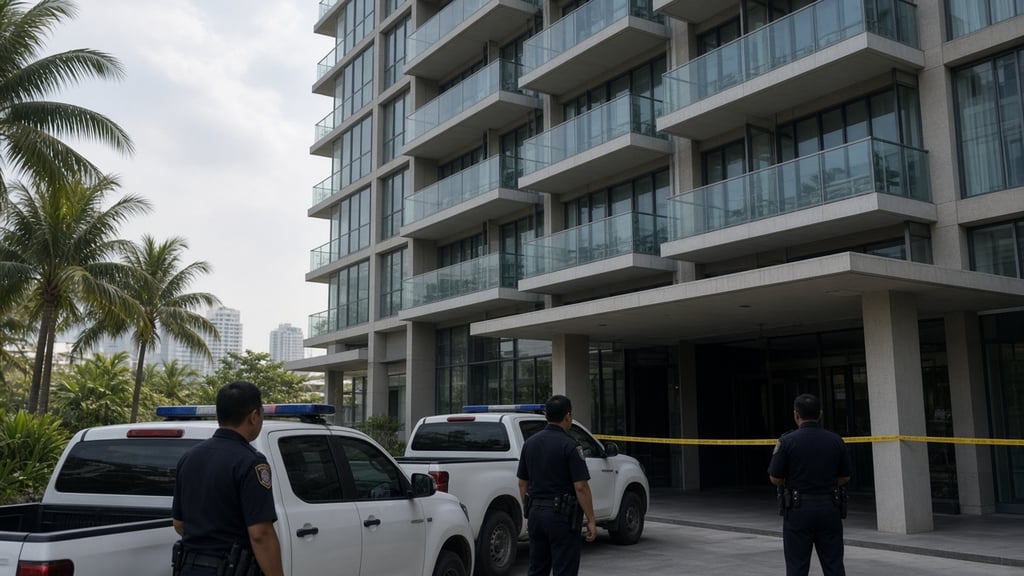
Provincial Police Region 2 investigators entered a Central Pattaya condominium on Friday under a search warrant issued by Pattaya Provincial Court and detained eight people they say handled the cash end of a Thai-Chinese online fraud network. Five of those arrested are Thai. Three are Chinese nationals. Officers tied the room to deception complaints across the country with combined reported losses of more than 100 million baht.
The raid was ordered by Pol. Maj. Gen. Kiattisak Srathongoy, commander of the Region 2 investigation division, after tips that Thai and Chinese operators had gathered in Pattaya to run scams through online channels. Pol. Col. Theerasak Osathanon, investigation superintendent 3, led officers from the Region 2 Anti-Online Fraud Center, working with deputy commander Pol. Col. Chaloemsak Thianthongsri and news-analysis superintendent Pol. Col. Suwat Borirak. Later briefings identified the building as The Trust Condominium on the Central Pattaya strip, a dense tower zone of short-stay rooms, SIM shops and bank branches.
Inside the unit, officers collected 22 bank passbooks, 35 ATM cards, 28 SIM cards, 19 mobile phones, three laptop computers and 2.71 grams of crystal methamphetamine. That mix is typical of a mule-account cash-out cell: books and cards to receive victim transfers, SIMs and handsets to harvest one-time passwords and complete face-scan approvals, and laptops to move balances before banks freeze the pipes.
Investigators say the group bought and sold Thai bank accounts and ATM cards between Thai nationals and foreigners so stolen funds could land in accounts that did not match the names on the original scam chats. That trade is now a criminal offence in its own right. Thai law treats procuring, opening or allowing another person to use a deposit account for crime as a standalone charge, not a paperwork footnote.
Follow-on tracing pointed to conversion of the proceeds into digital assets, then hops across several wallets and platforms, including Binance, Bitkub, Maxbit and imToken. Police framed the crypto layer as a concealment step rather than an investment story. Those leads remain open, and officers said they are expanding the inquiry to other people who may have supplied accounts or moved funds.
The eight suspects were initially charged with jointly procuring, opening or allowing others to use deposit accounts to commit offences, plus possession and use of crystal meth. They were transferred to investigators at Pattaya City Police Station. Names and individual roles have not been released. The charges remain allegations to be tested in court.
The raid sits inside a wider Thai campaign against mule accounts, known in Thai as banchi ma. In August 2026 the government tightened rules so that once a mule-account owner is identified, banks can freeze mobile banking, ATM and online channels across every account at every bank, blacklist the person from opening new accounts, and in some cases freeze high-risk accounts even before a victim files a complaint. A companion rule, in force from 12 August 2026, is meant to let victims apply to the Anti-Money Laundering Office for restitution without waiting for a court order.
The Digital Economy and Society Ministry, through the Anti-Online Scam Center hotline AOC 1441, has warned that people who hand over accounts, OTP codes, PINs or face scans after fake easy-job ads can face investigation even if they claim they did not know the money was stolen. Penalties flagged in that public notice include imprisonment of one to ten years and fines of 20,000 to 200,000 baht, depending on the facts of each case. Foreigners holding Thai accounts are not exempt from that pipeline.
What This Means for Expats and Travelers in Thailand
Foreign residents in Pattaya, Bangkok and other visa hubs should treat any request to open, rent or lend a Thai bank account as a legal red line, not a side hustle. The people in this case are accused of sitting between scam victims and crypto off-ramps. If your name is on the passbook, you can be the one in the interview room. That risk applies to Thai citizens and to foreigners who hold Thai accounts.
Chinese nationals, and anyone on a tourist stamp, destination Thailand visa, retirement extension or other long-stay permission, should assume that a fraud arrest will trigger immigration scrutiny on top of the criminal file. Overstays and drug counts compound that exposure. Do not share OTP codes, banking apps or face-scan approvals with a business partner, a new romantic contact, or someone offering cash to just receive a transfer.
Report suspected mule-account pitches to police or AOC 1441. Press 2 on that line if a bank freeze hits an account you believe is innocent. Tourists who lose money to QR-code or investment scams should file at the nearest station quickly, because mule balances are often emptied within hours. The practical lesson from Friday's warrant is not that every Chinese neighbour is a suspect. It is that rooms stacked with extra SIMs, extra ATM cards and extra bank books are a policing target, and that lending your account is now treated as joining the pipeline.



Comment verification
Step 1 of 3
Verify your email once to publish your comment. Your email is never shown publicly.
Enter the 6-digit code sent to .
Choose the display name shown next to your comments.