TAT Maps Five 2027 Tourism Bets. Here Is What Changes on the Ground
Bangkok's TAT showcase packaged wellness, festivals, crafts, regenerative travel, and quality seals as 2027 products. For people who live here, the test is prices, crowds, and whether secondary towns actually see the money.
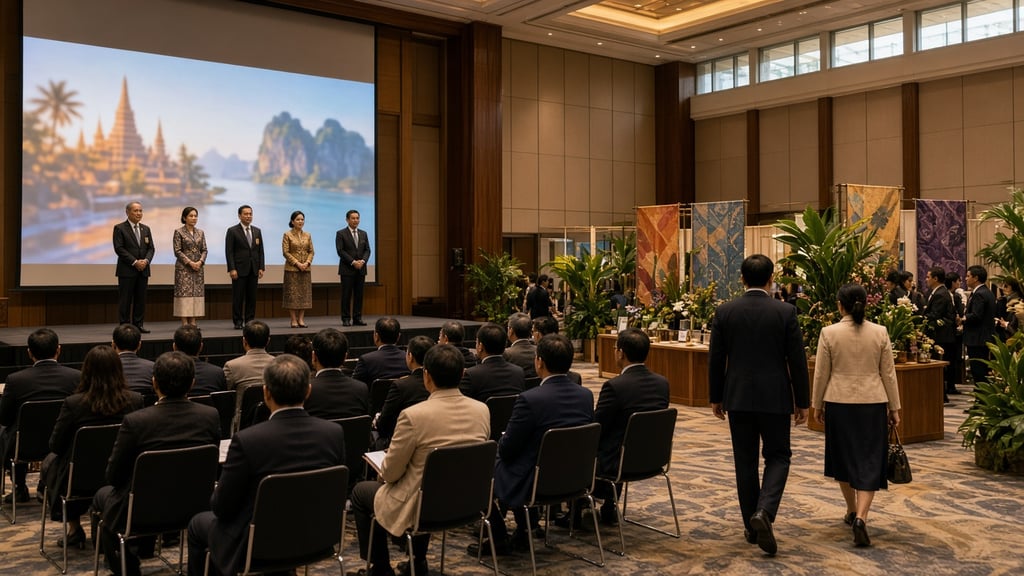
The Tourism Authority of Thailand used a mid-October Bangkok trade showcase to turn a year of slogans into a product catalogue. At Thailand Nextperience, officials named five 2027 priorities: wellness and longevity, a year-round festival calendar, creative and craft experiences, sustainable and regenerative travel, and a quality brand labelled Trusted Thailand.
The event ran on 20 October 2026 at Pullman Bangkok King Power. TAT Governor Thapanee Kiatphaibool presented the list as the working side of The Year of Transformation, launched with Tourism and Sports Minister Surasak Phancharoenworakul in late August. The public target is unchanged: grow tourism revenue by at least 5 percent, shift more visitors toward secondary destinations, and talk less about arrival counts.
That is the brochure. For residents, long-stay visa holders, and anyone booking a Thai weekend, the test is narrower. Which of these products change hotel rates, clinic queues, festival crowds, or the tours you can buy in Chiang Mai and the Mekong towns?
Five product lines, one high-value bet
TAT is not hiding the commercial thesis. Thailand wants high-value trips: longer stays, higher spend, and packaged experiences that overseas trade partners can put on a shelf. The five lines are the inventory for that pitch.
Wellness and longevity sits at the top, sold under Healing is the New Luxury. Officials split it into treatment and recovery, preventive and longevity care, and softer nature and tradition programmes. Named examples include Siriraj's Sappaya Sathan traditional medicine centre in Bangkok and a surf-therapy activity in Phang-nga. The idea is to stitch hospitals, hotels, spas, food, and sport into one itinerary.
Festival economy is the calendar valve. TAT wants 365 days of reasons to move: Pride events, large electronic music brands already on the Thai circuit, night programmes, marathons, plus signature rites such as Ubon Ratchathani's candle festival, Nakhon Phanom's illuminated boat procession, and Sakon Nakhon's Christmas star parade. The aim is year-round spending beyond the beach-and-Bangkok loop.
Creative economy turns crafts, food, and hands-on visits into sellable products. One romance-oriented set lists 55 items and four routes. Another packages gems, textiles, and workshops. A third, Creatrip Thailand, is the soi, kitchen, and community version.
Sustainable and regenerative travel is the conservation wrapper. TAT is promoting a Chiang Mai prototype after an earlier Krabi model, linking Lanna heritage, nature sites, and community livelihoods. Trusted Thailand is the seal: TAT-certified programmes, hotel carbon-footprint labelling, and the Thailand Tourism Awards.
Slogans versus the street
A parallel Bangkok forum the same day put numbers on the distribution problem. TAT again pushed values over volume. Remarks at Nation Forum 2027 mapped the concentration: Bangkok, Phuket, Chonburi, Surat Thani, and Chiang Mai still take about 70 percent of tourism income, leaving 72 provinces to share the rest.
That gap is the part that matters if you live here. A regenerative trek in Chiang Mai does not thin Old City traffic. A longevity clinic package can lift rents around private hospitals without moving budget tourists off Walking Street. Signature events in Ubon or Sakon Nakhon can spread visitors, or they can mean a three-day crush and the same hotel-rate jump people already know from Songkran.
Trusted Thailand is the one pillar with a consumer handle. If certification is searchable and tied to a real complaint route (TAT keeps pointing to the 1672 contact centre), long-stay residents get a filter for hotels and tours that is more than a review-site score. If it is only an awards night, nothing changes except the brochure.
Government public relations material from August locked in the same 5 percent revenue target, a 60:40 split between major and secondary destinations, and a loyalty ranking among Asia's top three. Nextperience is the product catalogue for that plan, not a new law and not a visa change.
What This Means for Expats and Travelers in Thailand
Treat the five priorities as a map of where marketing money and package design will go in 2027, not as a promise that the beaches will empty or that BTS cars will suddenly feel roomy.
On wellness, expect more clinic-plus-hotel bundles and more longevity language in Bangkok, Phuket, and Chiang Mai, plus continued pressure on well-known private hospitals from international patients. Shop with medical credentials, not campaign hashtags. Health insurance fine print still matters more than a TAT slogan.
On festivals, book early if you want Ubon candles or Nakhon Phanom boats. Signature-event status puts more visitors on the same few dates. Music festivals already strain transport and short-let prices. Year-round celebration is a crowding plan as much as a culture plan.
On creative and regenerative products, ask who gets paid. A weaving workshop or a give-back trek is only regenerative if the community sets the terms and the fee is not a green sticker on a standard van tour. Chiang Mai's prototype is the one to watch for new certified routes, and possibly new limits, around places such as Doi Inthanon and Mae Kampong.
On Trusted Thailand, look for the actual marks (TAT STGs STAR, CF-Hotels, Tourism Awards) when you pick a hotel or operator. Keep 1672, and your embassy channel, for real disputes. High-value positioning often means a higher price for the same room with a new story attached.



Comment verification
Step 1 of 3
Verify your email once to publish your comment. Your email is never shown publicly.
Enter the 6-digit code sent to .
Choose the display name shown next to your comments.