Thai Airways Boeing 787 returns to Shanghai after cockpit window crack
Flight TG663 from Shanghai Pudong to Bangkok turned back on 4 November after a left cockpit windscreen crack. Nobody was hurt. Passenger rights on a China departure differ from CAAT rules.
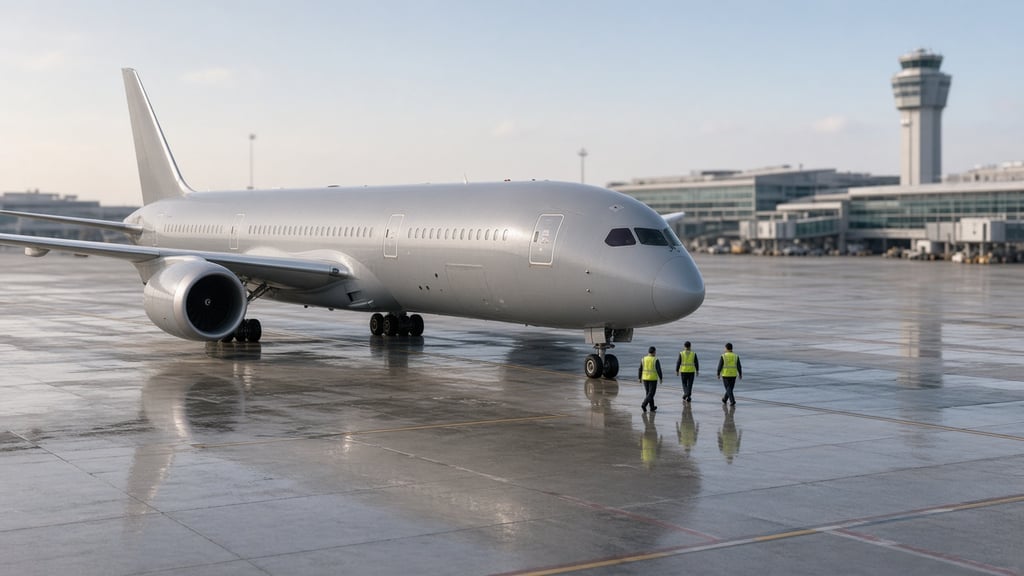
A Thai Airways International Boeing 787-9 flying from Shanghai to Bangkok turned back to its departure airport on Wednesday morning after the crew found a crack in the left cockpit windscreen. The airline said no passengers or crew were hurt, and that hotels plus onward seats were being arranged while a replacement aircraft was lined up for the following day.
Flight TG663 left Shanghai Pudong International Airport at 08.08am local time bound for Suvarnabhumi Airport. The aircraft, a Dreamliner registered HS-TWA, was still in the climb when pilots identified a crack on the left side of the cockpit's front windscreen and elected to return under standard safety procedures.
Why the crew dumped fuel and came back
Independent flight-safety records compiled by the Aviation Herald show the crew stopped the climb at about 2,700 metres, roughly 9,000 feet, after departing Pudong's runway 17L. The aircraft dumped fuel to bring its landing weight within limits, then landed back on runway 16R about 80 minutes after takeoff. Tracking later in the day still showed the jet on the ground at Shanghai.
Fuel jettison after a heavy takeoff is a planned procedure, not a sign that the aircraft was out of control. A long-haul 787 typically leaves Shanghai with more fuel than it is certified to land with. Dumping down to a legal landing weight is the textbook response when a crew aborts a sector soon after departure.
Thai Airways said it had booked accommodation for stranded passengers and crew, coordinated with partner airlines on same-day and next-day seats, and would operate TG662 and TG663 on Thursday with larger aircraft so leftover travellers could be moved. Anyone still holding a disrupted ticket was told to keep checking the airline's channels rather than assume the original 787 would fly again on 4 November.
Passenger rights after a China-origin turnback
The disruption looks like a Thai story because the airline and the destination are Thai. The legal picture is more awkward. Thailand's Civil Aviation Board Regulation No. 101, in force from 20 May 2025, sets cash care and compensation rules for delays, cancellations and denied boarding. Those statutory baht amounts apply to Thai and foreign carriers on flights departing Thailand. TG663 left China, so the CAAT schedule of 1,500 baht after five hours, or the higher bands after ten hours, is not the automatic ticket home.
Two other regimes still matter. China and Thailand are both parties to the Montreal Convention of 1999. Article 19 makes the carrier liable for damage caused by delay unless it proves it took all measures that could reasonably be required, or that those measures were impossible. China's Regulations on the Management of Flight Regularity also cover foreign airlines departing mainland airports and require published care, including meals, hotels and rebooking, when a flight is delayed or cancelled.
Thai Airways later told passengers they could lodge individual claims through its website for assessment. Keep receipts for hotels, taxis, meals and missed connections. Photograph boarding passes. If a later Thailand-origin sector is cancelled, CAAT's complaint portal is the domestic channel. For this Shanghai departure, start with the airline file, then a Montreal Convention delay claim if documented losses remain unpaid.
What This Means for Expats and Travelers in Thailand
People flying the Shanghai corridor this winter, including visa-run regulars, festival visitors and residents connecting home via Pudong, should treat a technical turnback as a delay with paperwork, not a reason to panic about the 787 type. Cockpit windscreens are laminated, multi-pane units. A visible crack in one pane is a known, documented reason to land. It is not the same as a cabin window failing in cruise.
Build slack into PVG-BKK connections. The great-circle hop is about 2,894 kilometres and usually under five hours airborne, which makes it a favourite same-day link for Bangkok residents. When the aircraft comes back, you lose the whole day and possibly a visa appointment or a connecting flight out of Suvarnabhumi. Travel insurance that names delay and missed connection, plus a screenshot of the airline app status, is more useful than arguing at the gate for cash.
If you were ticketed on TG663 on 4 November, ask the airline in writing for the rebooking record, meal and hotel vouchers, and a claim reference. Do not assume CAAT Regulation 101 cash bands apply because the carrier is Thai. They apply when the flight leaves Thailand. Keep the Montreal Convention in mind for proven extra costs. Check whether your inbound TG662 from Bangkok has been swapped for the larger aircraft the airline promised for 5 November.



Comment verification
Step 1 of 3
Verify your email once to publish your comment. Your email is never shown publicly.
Enter the 6-digit code sent to .
Choose the display name shown next to your comments.