Sihasak tells Beijing China embassy warning misplaces blame for scam networks
In Beijing, Sihasak Phuangketkeow told Wang Yi organised networks, not Thailand, are behind cases in the Chinese embassy warning; ordinary tourists face no extra risk.
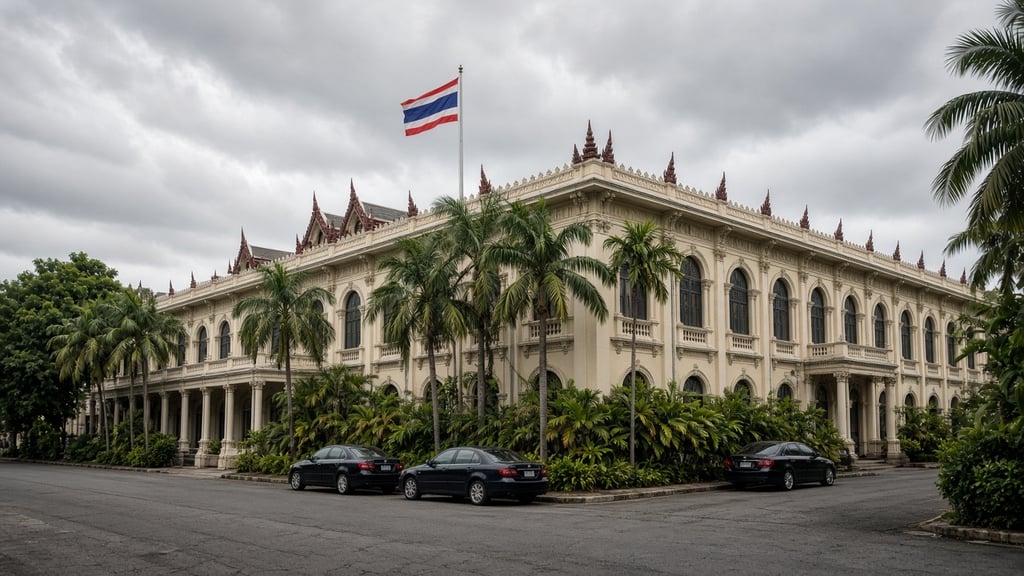
Thailand's foreign minister used talks in Beijing on 4 November 2026 to tell China that a recent embassy travel warning had pointed the finger at the wrong target. Deputy Prime Minister and Foreign Minister Sihasak Phuangketkeow, co-chairing the 11th Mekong-Lancang Cooperation Foreign Ministers Meeting with Wang Yi, said organised criminal networks, not Thailand as a holiday destination, sit behind the cases in the notice.
The Chinese Embassy in Bangkok advisory was issued on 16 October 2026. It described Chinese nationals who had gone missing after entering Thailand, been held against their will, and then been moved toward the Thai-Myanmar border. The listed lures include inflated salaries, business trips, investment pitches, and filming offers aimed at livestreamers. Travellers were told to verify jobs, refuse unofficial vehicles, and skip non-essential border trips.
Sihasak's argument in Beijing tracked a line he had already set out at home. On 21 October, the Government Public Relations Department reported that he had called tourist safety a top priority, said the vast majority of visitors still travel without incident, and stressed that the scams are run by transnational groups rather than by Thai nationals acting alone. He asked that advisories stay in proportion to actual risk, and recommended that the Ministry of Tourism and Sports work more closely with the Chinese Embassy.
That distinction matters because China remains Thailand's largest source of foreign visitors. The Tourism Authority of Thailand recorded 3,149,889 arrivals from China between 1 January and 5 August 2026 and still expected the full year to exceed five million, backed by a Trusted Thailand safety campaign. China accounted for 1.49 million arrivals in the first quarter. A warning read as a general alert against the country, rather than against fake jobs and border transfers, can still ripple through family chats and tour bookings.
The two governments already share a visa framework that makes ordinary travel simple. In their 20 July 2026 joint statement, Bangkok and Beijing highlighted the mutual visa exemption for ordinary passport holders and pledged closer work against trafficking, online scams, and money laundering. Sihasak's Beijing message was that a public warning cannot substitute for joint investigative work: identifying recruiters, mapping financial flows, and catching the organisers who move victims after they land.
At the Mekong-Lancang meeting itself, Thailand called for stronger action on transboundary crime, online scams, and financial fraud. Sihasak proposed an MLC task force of central banks, police, regulators, and private firms, building on the Bangkok Blueprint for Fraud-Resilient Financial Services. Thailand is also ready to co-host the 5th MLC Leaders Meeting in Guilin later this year. The warning became a test of whether both sides will describe the same crime as a networked industry that uses Thailand as a corridor, not as proof that ordinary hotels and beaches are unsafe.
Holidaymakers who fly in on the visa exemption, book licensed hotels, and stay on the usual tourist circuit are not the population the embassy described. Highest risk, Thai officials say, sits with people answering unsolicited job ads, accepting an online pickup, or agreeing to a last-minute run toward Mae Sot, Ranong, or other crossings. Treating that as a general tourism scare, Sihasak told his counterpart, misplaces the blame and leaves Chinese families more frightened of Thailand than of the recruiters.
What This Means for Expats and Travelers in Thailand
Residents who host family from China this winter should share the embassy's actual list of risks, not the headline version. The notice is about fake employment, investment pitches, and unofficial transport toward the Myanmar border. It is not a new visa rule or a change to the mutual exemption. Relatives flying in for beaches and temples do not need extra immigration paperwork because of this advisory.
Anyone living here who is offered a too-good job through Chinese social media, or who is asked to collect a new arrival at the airport and drive them somewhere unexplained, should treat that as a crime approach, not a favour. Report it. Tourist Police on 1155 can take calls in Chinese. The national police emergency number is 191. The embassy's own consular protection line in Bangkok is +66-2-245-7010.
Hotel and tour staff should expect nervous questions from Chinese guests this peak season. The useful answer is specific: licensed transport, keep passports yourself, ignore job offers that include a free ticket and a pickup, and skip a last-minute border province. Thailand is still trying to keep Chinese visitor numbers above five million this year. That target now depends as much on how Bangkok and Beijing describe the scam industry as it does on air seats.



Comment verification
Step 1 of 3
Verify your email once to publish your comment. Your email is never shown publicly.
Enter the 6-digit code sent to .
Choose the display name shown next to your comments.