Thailand hotel closures jump 42 percent as tourism struggles
Department of Business Development filings show 148 hotel and accommodation closures from January to September 2026, up 42 percent, while new registrations fell 31.2 percent. The squeeze is real for small operators, not a national shutdown.
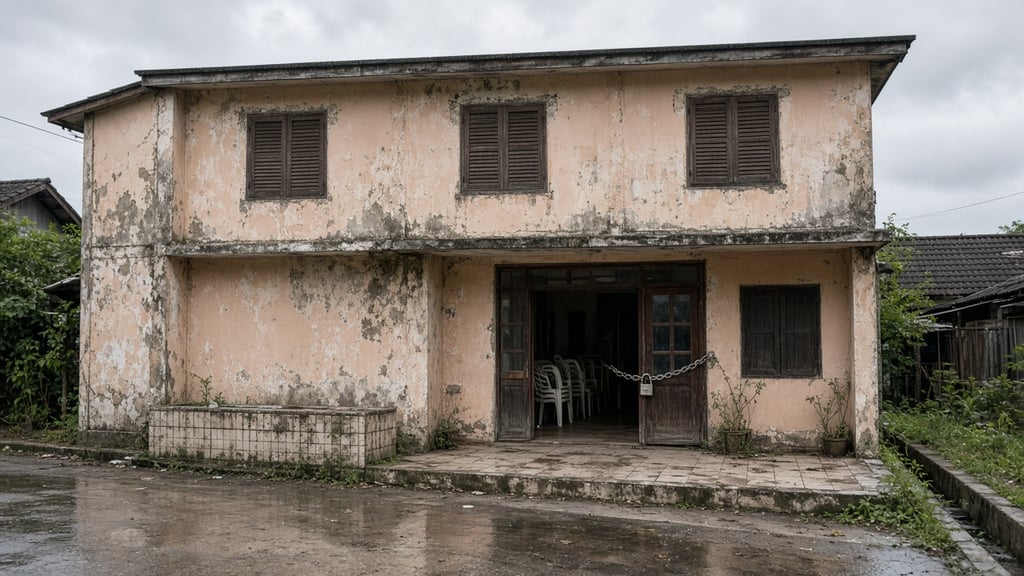
Thailand's hotel sector is not emptying out. It is thinning at the edges. Between January and September 2026, 148 hotel and accommodation businesses registered their closure with the Department of Business Development, a 42 percent increase on the same stretch of 2025. New registrations fell 31.2 percent, to 779. Kasikorn Research Centre published the DBD extract on 26 October.
Those 148 closures sit against a stock of about 15,000 hotel and accommodation operators, 98 percent of them small or medium-sized, employing around 430,000 people. The share that shut is still small. The direction of travel is the story: more rooms than before the pandemic, fewer foreign guests than in 2019, and a cost base that has not come down with occupancy.
More keys, fewer nights
By the first half of 2026 Thailand had about 876,000 hotel and accommodation rooms, 11.7 percent more than in 2019 and 3.4 percent more than at the end of 2025. Inventory rose in 64 provinces. Bangkok, Phuket, Surat Thani and Chiang Mai absorbed the largest additions. Overnight visitors per room have slipped from 249 in 2019 to 228 this year.
Kasikorn's working forecast is 31.4 million foreign arrivals in 2026, about 4 percent below 2025 and roughly 79 percent of the 2019 peak. The Tourism Authority of Thailand, in a 16 October briefing, said 23.4 million international arrivals landed from 1 January to 30 September, with more than 153.96 million domestic trips and about 2.04 trillion baht in combined tourism receipts. TAT still talks of 33 million arrivals by year-end. Bank researchers are more cautious. Operators live in the gap between those two numbers.
Demand has not vanished. It has become pickier. Eighteen important source markets, including China, South Korea, Japan, Laos, the United States and the Nordic countries, remained below 2019 levels in 2025. Twenty-nine provinces, among them Bangkok, Phuket and Chiang Mai, had fewer overnight visitors than before the pandemic. Kasikorn recorded national occupancy growth of only 0.18 percent year on year in the first nine months, with 19 provinces in decline.
Bangkok, Phuket and Chiang Mai are not the same market
Bank of Thailand tourism indicators for August 2026, the latest full month available when Kasikorn reported, show why a single national panic is the wrong reading. National occupancy was 68.50 percent. Central Thailand, including Bangkok, was 70.77 percent. The South, which covers Phuket and Samui, was 70.30 percent. The North was 60.25 percent. Three-month advanced bookings sat at 18.63 percent nationally and 12.68 percent in the North. Average room rates were 1,788 baht nationwide, 2,275 baht in the South, 2,047 baht in Central, and 1,317 baht in the North. Foreign guests made up 46.17 percent of Southern hotel traffic and 11.80 percent in the North.
That split matters for anyone booking a month in a guesthouse. Phuket still leans on international nights and can fill beach inventory when the high season arrives. Bangkok has corporate, transit and meeting demand that independent inns do not always share. Chiang Mai and the wider North are more exposed to a thinner Chinese group-tour pipeline and to domestic weekenders who now spread across more properties. Some northern hotels close for the low season rather than keep the lights on. That is cost control, not a death certificate.
Finances explain the closures better than headlines. About 51 percent of accommodation operators reported losses in 2025. Thirty-eight percent posted losses in 2023, 2024 and 2025. Among small operators, 54 percent lost money last year. Labour is 25 to 30 percent of hotel costs. Electricity, transport and online travel agency commissions are still climbing. Short-term rentals add another competitor: about 50,000 listed units in Bangkok, Phuket, Chonburi, Chiang Mai and Surat Thani in October, equal to around 10 percent of registered rooms in those markets, with occupancy near 60 percent over the prior year.
What This Means for Expats and Travelers in Thailand
Treat prepaid stays at tiny guesthouses as a credit risk, not a lifestyle statement. Pay by card or through a platform with a cancellation trail. Message-app deposits to a property you have never seen are the first thing to skip if a listing looks half-closed. Chain hotels and well-known independents are not immune to empty floors, but they are less likely to vanish between booking and check-in.
This is a negotiating year for long-stay rates, especially in Chiang Mai and in shoulder weeks on the islands. Ask for a monthly rate in writing. Confirm the property will remain open through your dates. In Phuket, beach-area hotels still have more pricing power than inland guesthouses. In Bangkok, business districts hold up better than secondary sois packed with new boutique rooms.
Do not read 148 closures as a signal to cancel a trip. Read it as a reminder that Thailand added rooms faster than guests came back, and that small operators feel that first. Check recent reviews dated this month. If a guesthouse has gone quiet online, book the chain down the road and save the romance for dinner.



Comment verification
Step 1 of 3
Verify your email once to publish your comment. Your email is never shown publicly.
Enter the 6-digit code sent to .
Choose the display name shown next to your comments.