Tourism Businesses Back a 450 Baht Visitor Fee, With Conditions
Hotels and travel agents can live with a planned 450 baht charge on eligible foreign visitors if payment stays simple, the tourism fund opens its books, and blanket insurance does not swallow the money. It is still a draft.
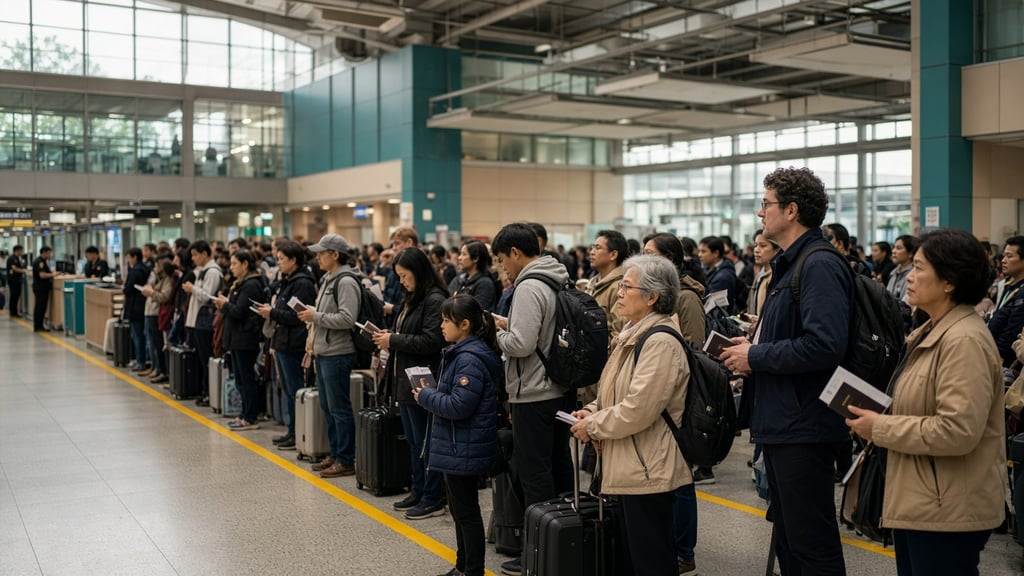
Thailand's hotel groups, travel agents, and destination retailers have told the government they can accept a planned 450 baht charge on eligible foreign visitors, but only if payment stays simple, the Tourism Promotion Fund publishes its books, and a blanket insurance policy does not swallow the money. The charge is still a draft. Cabinet has not approved it, and nobody is collecting it at the gate.
That line was set on 6 October 2026, when Tourism and Sports Minister Surasak Phancharoenworakul chaired a consultation with Public Health Minister Pattana Promphat. THA, ATTA, the Tourism Council of Thailand, airports, airlines, GrabTaxi (Thailand), and retailers including Central Group, Siam Piwat, and King Power were in the room.
Still a plan, not a law
The ministry treats 450 baht as a proposed announcement, not a gazette. An online hearing from 24 August to 28 September 2026 drew 5,954 responses. About 80.5 percent backed the draft, and 78.3 percent backed the 450 baht rate. Those figures are a consultation result. They are not a Cabinet decision.
The draft still needs the National Tourism Policy Committee, chaired by Deputy Prime Minister Suphajee Suthumpun, then Cabinet. If Cabinet later approves an announcement and it appears in the Royal Gazette, collection would start only after a 180-day transition. Permanent Secretary Natthriya Thaweevong has said the ministry still aims to begin with eligible air arrivals in the first quarter of 2027. That is a target. It is not a confirmed start date.
Who would pay, and how
Eligible air arrivals would pay first. Land and sea collection would wait about a year, partly because busy crossings such as Sadao in Songkhla already run close to capacity. A single payment would cover multiple entries inside 30 days, with any bundled insurance running for the same window. Thai nationals would not be charged.
Draft exemptions include royal and government guests, diplomatic and official passport holders, work-permit holders, border-pass travellers, transit passengers who do not change airline or flight, crew, and children under two. Traders asked for frequent-cross-border relief. Payment could sit in the airline ticket, on a website or app, at a kiosk, or via another fund-committee channel. Ticket-based collection was the most popular option in the online hearing, at 36.26 percent, because it keeps extra queues off the immigration hall.
Insurance terms are the real fight
Officials want part of the fee to buy death and medical cover, citing about 7.021 billion baht unpaid among 1.12 million foreign-patient cases billed at 16.957 billion baht. Hotels and agents say those cases mix migrant workers and cross-border patients from Myanmar, Cambodia, and Laos with holidaymakers, and that the first-phase fee would hit air arrivals, not the land borders where much of that medical debt sits.
THA and ATTA therefore back the fee in principle while rejecting a compulsory policy for every visitor. They put 80 to 90 percent of higher-spending tourists already insured. They want uninsured arrivals to show proof or buy extra cover at immigration, a 3 to 5 percent ceiling if any tourism-fund money is spent on healthcare, and a crisis pot for floods and accidents that private policies miss. They also query a 30-day policy when many holidays last seven to 10 days.
Open accounts, or no trust
Revenue estimates sit between about 8 billion baht a year left for sites after insurance costs, on the ministry's figures, and more than 10 billion baht if more than 30 million arrivals each pay 450 baht. Trade groups want the fund to publish inflows, payouts, premiums, and what actually gets built. The fund has said it will look at disclosure rules. The ministry's 6 October statement lists destination repair, conservation, and visitor safety as the intended uses, and notes that more than 80 countries already charge some form of visitor tax or fee.
What This Means for Expats and Travelers in Thailand
Do not budget this as a charge at Suvarnabhumi tomorrow. Work-permit holders sit outside the draft. Air tourists are first in line, but only after Cabinet, the Gazette, and 180 days. Keep your own travel insurance. Industry groups have warned that a thin state policy could leave people underinsured if they drop private cover. Land and sea arrivals should not assume the same start date. Watch the committee and Cabinet for the legal switch.
If you already file TDAC and hold a retirement, DTV, or work visa, read the exemption list when the announcement is actually gazetted. Draft lists change. A work permit is named today. A retirement stamp is not. Families should note that children under two are carved out, while a family of four on a two-week holiday would be looking at 1,800 baht if all other members are eligible air arrivals. Put the fee on the ticket. Avoid the kiosk.



Comment verification
Step 1 of 3
Verify your email once to publish your comment. Your email is never shown publicly.
Enter the 6-digit code sent to .
Choose the display name shown next to your comments.