A Tourist, a Viral Clip, and a Language Mix-Up: What Happened with Ann Berdin in Thailand
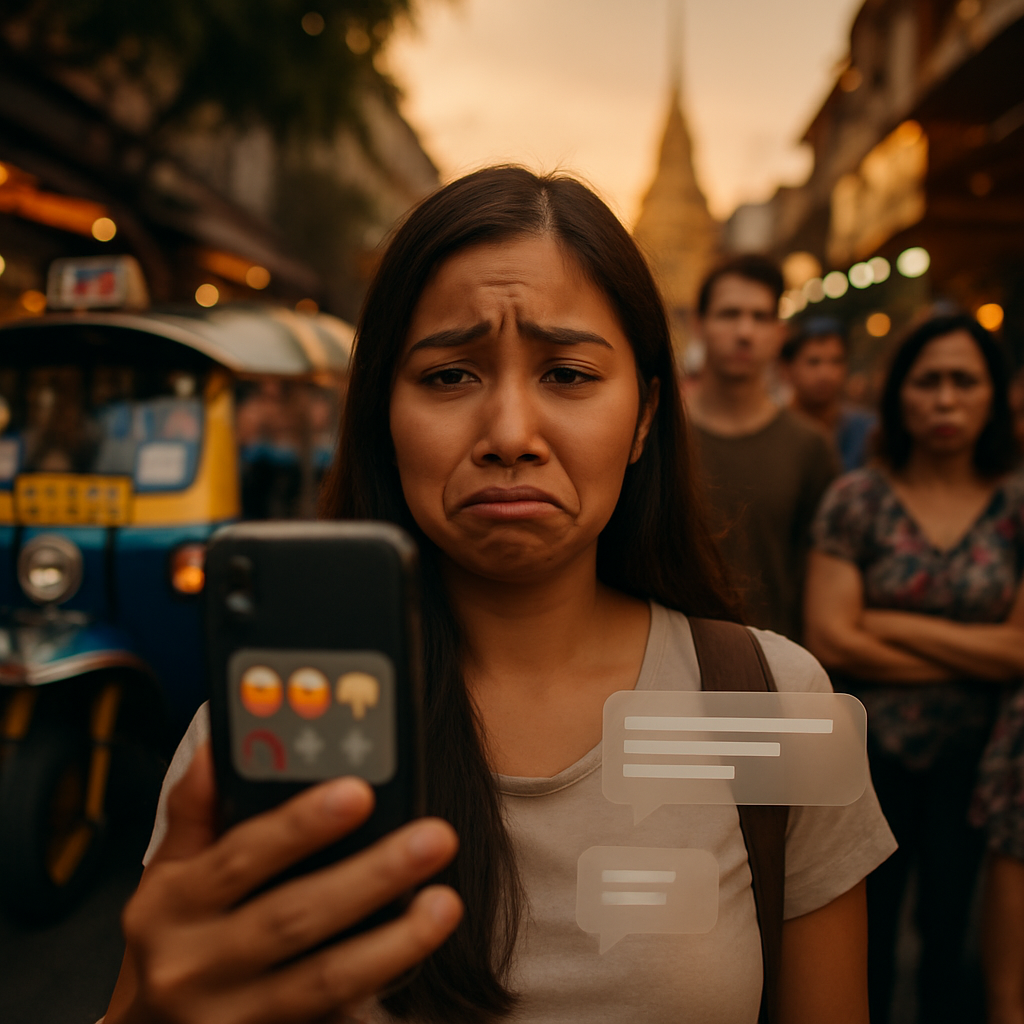
When a short video clip goes viral, it can do more than rack up views — it can reshape a conversation. That’s exactly what happened to Filipina tourist Ann Berdin, who found herself at the center of an online firestorm after a now-deleted clip in which she complained that “English is useless” in Thailand. What began as a frustrated travel rant turned into a lesson about tone, context, and the sticky business of cross-cultural communication.
The Original Clip: Frustration, Not Malice (or So She Says)
In the original video, Berdin voiced annoyance that many locals — including Grab drivers — didn’t seem to understand English, a problem she said made navigating Thailand “difficult.” The clip quickly spread across social media, attracting criticism from Thai netizens and comments from public figures, including popular Thai influencer Crispy Froid, who urged travelers to practice cultural sensitivity and respect.
Within hours, the internet had formed its verdict: some saw a weary traveler airing a genuine gripe; others saw arrogance and mockery. Regardless of intention, the wording and tone sparked backlash.
The Apology: Clarifying Intent and Choosing Words
On January 13, Berdin returned to Facebook with a follow-up video to clear the air. She said she never meant to insult Thailand or its people, insisting her original post was an honest recounting of the language barriers she experienced, not a condemnation of an entire country.
“I didn’t mean anything hateful about Thailand,” she said. “When I said I needed a translator, I wasn’t trying to mock anyone.”
She admitted her English isn’t flawless and that she may have chosen the wrong words. “I was just explaining what my experience is,” she said, adding that she uses translation apps herself and has friends who also struggle with English. Toward the end of the clip she apologized for any offense caused: “If you see it and you find it not good, I’m gonna say I’m sorry. Wrong words.”
Mixed Reactions: Sympathy, Scolding, and Everything In Between
Predictably, responses to Berdin’s apology were mixed. A portion of viewers urged more cultural humility from travelers, reminding her — and everyone watching — that when you travel internationally, you don’t just represent yourself; you represent your home country.
Other commenters offered empathy: mistakes happen, especially in a second language, and people often jump to judge before asking for clarification. Still, many remained critical of her tone in the original video, arguing that the delivery came off as mocking rather than merely frustrated.
One blunt take summed up the divide: “Your feelings may be valid, but your behaviour is not acceptable.” Another more forgiving voice advised patience: “It is easy to make the wrong statement in a second language… People tend not to ask for clarification before responding negatively.”
Why This Matters: Travel, Language, and Respect
This episode is a small but instructive reminder of how travel can highlight the gap between intent and impact. A traveler’s struggle to communicate is real — lost directions, mixed-up orders, and a baffling app interface are part of the experience — but how you describe that struggle matters.
Some quick takeaways:
- Tone over content: The same complaint can be heard as a plea for help or an insult depending on tone and phrasing.
- Language is local: English is widely used in many tourist areas, but it’s not universal. A little effort to learn basic phrases goes a long way.
- Tools help, but don’t replace respect: Translation apps are fantastic — and Berdin herself uses them — but relying solely on tech can’t substitute for politeness and patience.
- Travelers represent more than themselves: Public posts can reflect on your country and community, especially when they go viral.
Not an Isolated Case
The Berdin incident isn’t unique. Social media has seen other episodes where tourists’ remarks about locals ignite backlash — like the recent video of an Italian man criticizing a Thai taxi driver for eating from a plastic bag. Each instance stokes the same debate: How should visitors air grievances without crossing a line?
Parting Thought: How to Travel Better
If there’s a silver lining, it’s that controversies like this spark conversations about cultural sensitivity. Want to avoid a similar scenario? Try learning a few local phrases, smile more than you sigh, and choose your words with curiosity rather than judgment. When language barriers frustrate you, framing your story with humility and humor makes it easier for listeners to empathize rather than snap back.
After all, travel is a two-way exchange. When we pack our suitcases, we should also pack patience — and perhaps a polite “khop khun ka” (thank you) — just in case.


















Tone matters more than you think, and this case proves it. Saying “English is useless” hits as a blanket insult even if you mean the experience was frustrating. Travelers should be honest but also careful with sweeping statements.
I think people are overreacting, she was tired and lost and vented like anyone would. Social media turns small rants into grand crimes now.
I appreciate the chance to clarify — I truly didn’t mean to offend anyone in Thailand. My words came out wrong in a moment of frustration and I’m sorry for the hurt they caused.
This episode is an instructive example of linguistic prescriptivism meeting global mobility. The framing of ‘usefulness’ of a language is not merely a communicative judgment but a power-laden statement about cultural capital.
Thanks for clarifying, Ann. Apologies help, but actions afterward — like learning a few phrases or showing humility — will matter more to locals.
Cancel culture gone too far. She made a stupid comment and apologized, why do people still want to destroy her life? Let it go.
Let it go? Public figures tweeting ignorance affect how entire communities are perceived. Accountability isn’t the same as wrecking a life.
As a Thai person, I felt insulted at first, but her apology seemed sincere. The real problem is tourists who never try to learn or respect basics.
I get that, Somsak, but people are human and make mistakes. We should teach, not only shame.
Influencers have a responsibility to model cultural sensitivity. A quick edit or context would have prevented this from blowing up. It’s about respect, not policing language.
Sometimes influencers are also just human and stressed. I don’t think one clip makes someone a bad person, but it does show ignorance.
As someone born in Thailand, I felt dismissed when I first watched the clip. Saying ‘English is useless’ undermines our daily efforts to interact with tourists respectfully.
I never said cancel, I said reflect. If you’re broadcasting, you owe a minute to think about context and tone.
Language barriers are real and annoying, but dumping on an entire country is lazy and colonial. Call out the issue without weaponizing nationality.
That’s fair, Larry. But it also feels like some critiques of travelers are performative virtue signaling. Both sides are messy.
Messy or not, basic decency should be the floor, not the ceiling. Being a tourist doesn’t give you permission to generalize.
This is a chance for a wider conversation about linguistic imperialism. English isn’t the only benchmark of competence and calling it ‘useless’ reveals bias.
From a sociolinguistic standpoint, travelers often conflate access to a lingua franca with cultural respect. Critiques should examine structural reasons why locals may not use English in certain contexts.
Exactly — and tourists should be aware of that context before making blanket statements that reinforce stereotypes.
I feel for her — traveling is exhausting and we all snap sometimes. But public posts need a little more thought, especially when they can hurt communities.
Empathy is two-sided: locals dealing with rude tourists also get exhausted. Media should promote mutual understanding rather than choosing a side.
Mutual understanding would be great, but accountability helps teach people what mutual respect looks like.
I find the reaction sometimes disproportionate. She apologized and admitted poor word choice; isn’t that the end of it?
Not necessarily. Words leave traces on social perception, and if tourists keep saying the same things, it affects how locals are treated. The reaction is a response to patterns.
I agree patterns matter, but a viral pile-on rarely reforms habits. It mostly humiliates.
Short clip, big consequences. Social media compresses nuance into a soundbite and then everyone judges without context.
As someone who grew up bilingual, I know how hard second-language slips can be. Still, public figures should know their words travel farther than they think.
Bilingualism helps but not everyone has it. The real ask is basic human kindness. If you can’t be patient, at least don’t generalize whole countries.
Ben nails it. Also, travelers have privilege — a local can’t easily say the same thing without consequences. Power dynamics matter.
True, Claire. Privilege colors what is considered acceptable speech, and that imbalance should make travelers more careful.
This is partly on the platforms — quick deletion and apology cycles keep people from learning. Let videos sit with context so discussions can be deeper.
Platforms benefit from virality; deeper context doesn’t monetize as well. So they won’t help unless users demand it.
Users do have power though. We can call for better moderation practices and demand nuance when things go viral.
I keep seeing folks defend her like she committed a felony. People need space to speak and make mistakes, especially in another language.
From a teaching perspective, many Thais learn English in school but don’t practice it enough for confidence. Frustration is mutual, but mockery stings.
Short take: apologize, learn, move on. If you keep repeating the pattern, then we have a problem. Otherwise, it’s a teachable moment.