DSI and Interior Trace Kantor Relatives, Land, and 19 Companies After Citizenship Revocation
After Prime Minister Anutin Charnvirakul revoked Yosef Chaim Kantor's Thai citizenship, Interior and DSI are identifying relatives who obtained nationality through him, dating land plots, and reviewing 19 linked companies. No criminal charges against named relatives or firms have been announced.
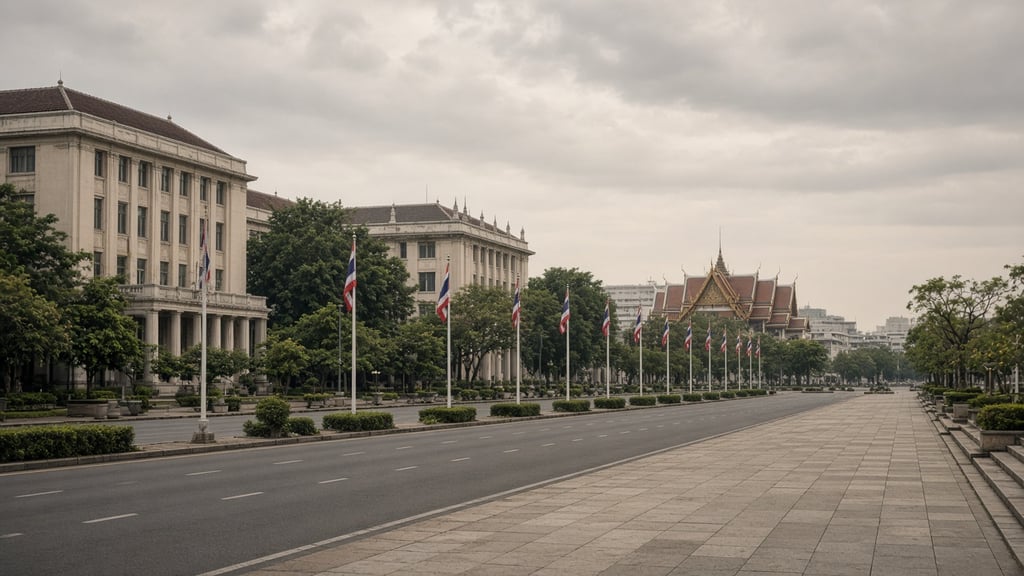
Thailand's Interior Ministry and the Department of Special Investigation are tracing relatives of Yosef Chaim Kantor, land plots acquired while he held Thai nationality, and 19 companies tied to him, after Prime Minister Anutin Charnvirakul revoked the Chabad network leader's Thai citizenship.
Deputy Interior Minister Polapee Suwanchavee told reporters at Wing 6 military airport in Don Mueang on 30 October 2026 that the prime minister had signed the revocation order on a DSI case file sent to the Department of Provincial Administration. Officials had established that Kantor continued to use American nationality after he was naturalised.
Kantor, originally a US national, has headed Chabad operations in Thailand since arriving in Bangkok in 1993. The citizenship decision is a completed administrative order. The company, land, and family reviews described on Friday remain investigations. Authorities have not announced criminal charges against named relatives or against the 19 firms.
What the Interior Ministry order actually says
The Ministry of Interior announcement, signed on 28 October 2026 and published through the Royal Gazette the next day, states that Kantor obtained Thai nationality by naturalisation under Section 10 of the Nationality Act B.E. 2508 (1965). The grant was published in the Gazette on 11 April 2013. His first Thai identity card was issued on 2 May 2013.
DSI material cited in that announcement records that he used American nationality to travel into and out of Australia on 16 occasions, most recently on 26 January 2026. Interior treated that pattern as continued use of a former nationality, a ground for revocation under Section 19(2) of the Nationality Act. On 29 October, Anutin, who also holds the Interior portfolio, told Radio Thailand that the order followed the law.
Relatives, land titles, and 19 companies
Provincial Administration is now identifying descendants and other people who later obtained Thai nationality through Kantor. Relatives who live in Thailand and hold Thai citizenship will be checked for possible offences. Polapee said similar action would follow if any are found. That is a screening step, not a public list of accused persons.
The Department of Lands is examining when each plot associated with Kantor was acquired. If land was taken while he was a Thai citizen and the holding is later found to have broken Thai law, Lands can require a forced sale. Foreigners generally cannot hold freehold land in Thailand. A naturalised citizen who later loses that status can also lose the legal basis for keeping title.
Provincial Administration has so far identified 19 companies linked to Kantor. Lands and the Department of Business Development at the Ministry of Commerce are combining records to close the file. If foreign shareholdings exceed the ratios allowed by law, Polapee said, the companies will be treated as nominee businesses. DSI and Lands are also checking whether those 19 firms hold stakes in other companies. If offences are confirmed, officials said they would pursue seizures, freezes, and compulsory sales under existing statutes.
Those remedies sit in the Foreign Business Act B.E. 2542 (1999) and the Land Code. Section 36 already penalises Thai nationals or companies that hold shares as nominees so a foreigner can run a restricted business. A 49 percent foreign, 51 percent Thai split on paper is not automatically illegal. It becomes a problem when the Thai names are fronts and the foreigner is the true controller. As of the Friday briefing, no seizures had been announced.
What This Means for Expats and Travelers in Thailand
Naturalisation is not a second passport kept in a drawer. Section 19(2) lets the interior minister revoke citizenship obtained by naturalisation if there is evidence the person still uses a former nationality. Using the old passport for routine travel can be treated as that evidence. Anyone who naturalised, or who is applying, should treat the conditions they signed as live rules, not ceremony.
Family members who later received Thai nationality through a naturalised relative are now inside the same administrative net. That does not mean they have been charged. It does mean Interior and DSI can ask how they obtained the status and whether they hold land or company shares that would be illegal for a foreigner.
Company structures sold as a standard 51/49 split should be reviewed by a Thai lawyer who will look at who paid for the shares, who actually controls the board, and whether the firm holds land. Lands and DBD are already running a wider nominee campaign this year. Tourists and short-stay visitors are not the target of this file. Residents who hold land through Thai friends, spouses on paper, or stacked companies are.
Wait for named charges, title actions, or DBD orders before treating rumours as fact. The public record so far is a completed nationality order and an open land-and-company review.


Comment verification
Step 1 of 3
Verify your email once to publish your comment. Your email is never shown publicly.
Enter the 6-digit code sent to .
Choose the display name shown next to your comments.