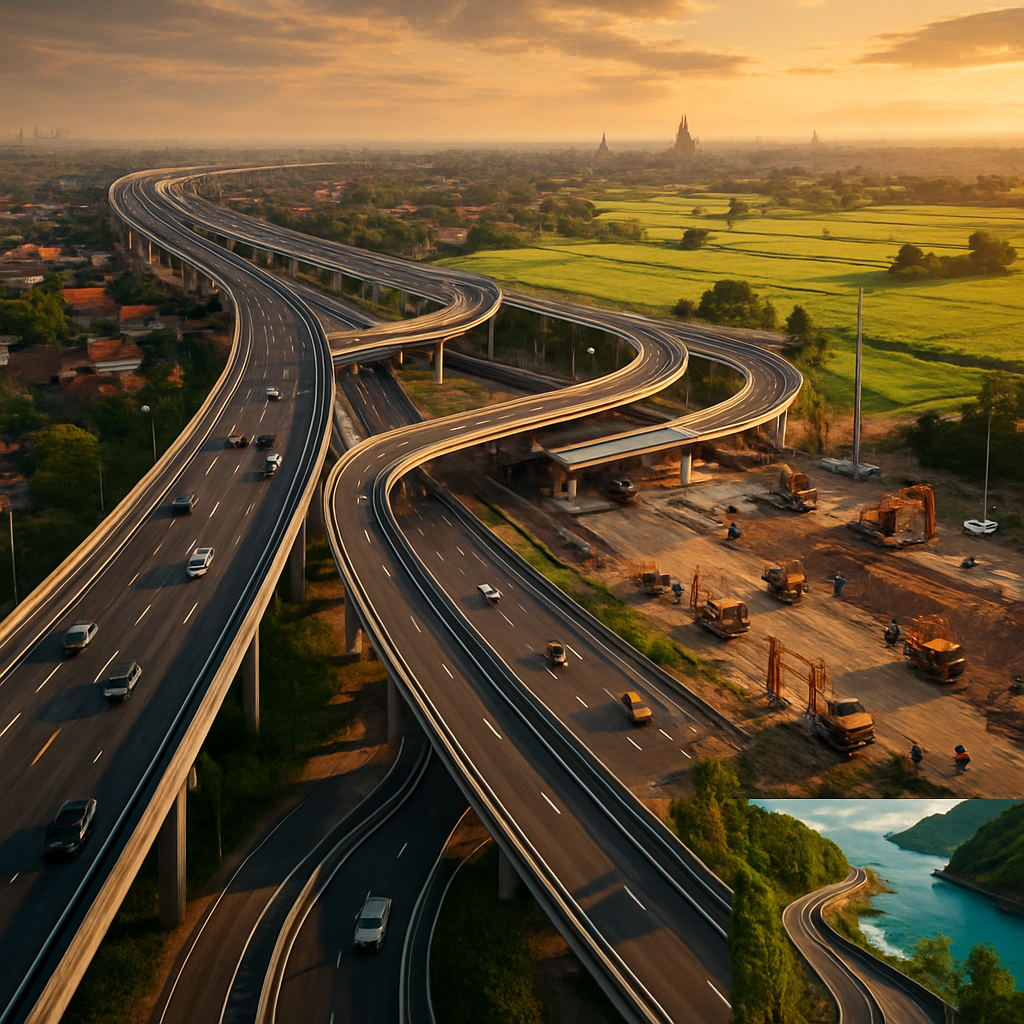
Bangkok’s New M9: A 15.8 Billion-Baht Lifeline for Western Commutes
If you’ve ever been stuck in the tangle of traffic on Bangkok’s western flank, here’s a headline that might finally make you sigh with relief: on January 7, 2026, the Thai Cabinet gave in-principle approval to a 15.8 billion-baht expressway—dubbed the M9—that will link Bang Bua Thong in Nonthaburi to Bang Pa-in in Ayutthaya. Think of it as a new beltway stitch, intended to ease the daily congestion that has long plagued commuters heading in and out of western Bangkok.
The M9 isn’t a random flash of infrastructure inspiration. It’s part of a larger plan to shape a western belt that threads through Nonthaburi, Pathum Thani and Ayutthaya. For drivers who’ve grown weary of stop-and-go traffic, the promise of continuous travel across those provinces sounds almost revolutionary—especially during rush hour.
How It Will Be Funded (And Why Future Governments Won’t Be on the Hook)
Money matters are often the make-or-break for projects of this scale. The Cabinet and the Department of Highways have mapped out a funding model that leans on toll revenue and the department’s existing budget. Crucially, the Council of State has signed off on the plan as part of the 2026 fiscal budget, and officials insist the project will not create new financial obligations for whichever administration follows the current one.
Transport Minister Phiphat Ratchakitprakarn emphasized that the M9 has been under review for some time and that the Department of Highways will oversee its implementation. In short: this is a budgeted, pre-planned project—already poked, prodded and penciled into Thailand’s infrastructure ledger—rather than a last-minute political flourish.
The Timing Question: Politics, Parliament, and Perception
Given that Parliament was recently dissolved, some critics raised questions about the timing of the M9’s approval. Transport Minister Phiphat addressed those concerns directly: the Ministry of Transport consulted the Council of State and confirmed the project could be submitted to the Cabinet despite the dissolution. He reiterated that the motorway predates the current political developments and is not connected to election campaigning.
That distinction matters. According to Phiphat, projects built into the annual budget and planned before the campaign period don’t breach electoral regulations. He did, however, caution that new projects seeking approval amid a campaign—and outside normal budgetary processes—could provoke regulatory headaches. In other words, old plans stay on track; brand-new “surprise” projects during campaigns are a different story.
Down South: Phuket Gets Its Own Expressway Boost
It’s not all western Bangkok upgrades. The Expressway Authority of Thailand (EXAT) is forging partnerships with private investors to deliver two expressways in Phuket. Together, the Phuket projects will span roughly 34.6 kilometres and carry a price tag of about 27 billion baht. Construction is expected to take four years, with the target of bringing the road network into service by 2030.
Toll prices for the Phuket routes are projected to range between 15 and 125 baht, depending on distance and vehicle class. That kind of public-private cooperation aims to speed delivery and spread the cost—while hopefully keeping the islands’ scenic beauty intact and traffic moving smoothly, especially during peak tourist seasons.
Why This Matters—For Commuters, Businesses and Beyond
- Commuters: Shorter travel times and less congestion on routes between Nonthaburi and Ayutthaya could translate into better quality of life and lower fuel costs.
- Logistics and Commerce: Smoother transport links mean faster supply chains—something manufacturers and retailers will welcome.
- Tourism and Local Economies: Phuket’s expressways aim to improve intra-island connectivity, potentially boosting tourism management and local business access.
Of course, big infrastructure projects also come with the usual caveats: environmental assessments, land acquisition, and careful construction management will all need to proceed smoothly if these roads are to realize their promise without unwanted side effects.
Looking Ahead
Between the new M9 and the Phuket expressways, Thailand is visibly doubling down on major transport investments. The next few years will reveal whether the funding assumptions hold, whether construction stays on schedule, and—most importantly—whether traffic-snarled commuters finally get the relief they’ve been waiting for. If all goes according to plan, drivers on Bangkok’s western corridor and island visitors in Phuket could be enjoying a faster, less frustrating ride well before the end of the decade.
And if you’re a trivia fan or feeling competitive, feel free to test your knowledge with the little quiz that originally accompanied the news—the answers are handily embedded throughout this piece.















Finally, some serious money going into real traffic relief instead of band-aid fixes. The M9 could actually save commuters hours each week and boost productivity. I just hope construction doesn’t drag on forever.
Saving time is great, but if tolls are high the poorest commuters will still be stuck on old roads. Public projects should protect equity, not just speed for those who can pay.
Good point — maybe toll discounts for local residents or low-income groups could be part of the plan. Otherwise we risk widening inequality even as we ease congestion.
Discount schemes exist elsewhere but need strict rules, audits, and caps to avoid gaming. The Department of Highways should publish the toll model early so citizens can judge fairness.
This smells like another budget rubber-stamped to look good before whatever comes next. Fifteen point eight billion could be used for hospitals or schools in my opinion.
I don’t want my grandma stuck in traffic when she goes to the clinic. Roads help people get help faster, right?
Infrastructure and social services aren’t binary choices; both are needed. Cost-benefit and distributional analyses could justify the motorway if it materially reduces aggregate travel time and logistics costs.
I’m not against roads outright, but transparency matters. Publish the environmental assessments and expected toll schedules before ground is broken.
Exactly — the Council of State’s sign-off is legalese, not public accountability. Citizens need accessible documents and timelines.
Toll revenue funding sounds nice until the tolls make daily commuting unaffordable. Who benefits, really—the 1% or the everyday factory worker?
Tolls tie usage to costs; that can be efficient. But you need dynamic pricing, caps for locals, and transparent revenue reinvestment to avoid exploitation.
Dynamic pricing usually means peak-hour gouging. If the Department of Highways says no future governments are on the hook, that could mean less oversight, not more protection.
If tolls finance construction and maintenance, private users pay directly instead of taxpayers indirectly subsidizing low-use corridors. The distributional question remains central.
What worries me most is land acquisition. Families and small businesses along the route could be displaced with inadequate compensation. That’s a human cost rarely well addressed.
Thai law requires fair compensation, but enforcement and valuation methods vary. Independent valuation committees and legal aid for affected residents are necessary to prevent abuses.
Exactly, and there should be public meetings with binding minutes. People must see clear timelines and legal support.
Phuket getting expressways could be a double-edged sword: improved movement but more tourism pressure on fragile ecosystems. We need strict environmental limits.
As someone who visits Phuket, smoother travel sounds great. But I agree we shouldn’t just pave over the island and call it progress.
Then investors and EXAT must commit to conservation offsets and limit new beachfront development tied to the roads.
Why was approval timed now if Parliament’s dissolved? It feels political even with the Council of State consult. Timing matters in optics and trust.
Legally permissible or not, approvals during dissolutions always carry political risk. Opponents will paint it as campaigning through infrastructure.
Exactly — even if all legal boxes are checked, perception could erode trust in the next administration and stall future projects.
Or maybe it was genuinely scheduled long ago. Not every policy move has a secret motive, people.
From an economic perspective, improved logistics between Nonthaburi and Ayutthaya could lower supply chain costs and attract investment. It might pay for itself over time.
Reduced travel time can cut inventory costs and delivery windows, but only if supporting infrastructure like interchanges and freight hubs are well planned.
Agree — integration with rail and port logistics will multiply benefits, otherwise traffic relief may be localized and temporary.
I hate traffic. If this road makes my mom home faster, yay! But what if they cut trees where birds live?
Good observation — kids notice these things. Decision-makers should balance human convenience with wildlife preservation and plant trees elsewhere.
Yes, plant lots of trees! And make a playground near the road so people can enjoy it safely.
Technically this corridor could relieve a lot of choke points, but only with smart design: grade separations, proper drainage, and resilient materials for heat and flooding.
Would love to see the traffic modeling and climate resilience studies. Too many projects ignore future flood risk and then pay for repairs later.
As a small farmer near Pathum Thani, I’m worried about losing land and irrigation access. Roads sound good but not at the expense of livelihoods.
Compensation and resettlement plans are part of the law. Please attend the public hearings and register your concerns so the planners can’t ignore you.
I will go to the hearings, but many elders can’t read complex notices. Officials must do outreach in villages, not just online.
How soon can this be built without shortcuts?
Large road projects lock us into car dependency and higher emissions. Investing in public transit and rail might be a smarter long-term climate choice.
We need an integrated transport strategy that prioritizes low-carbon modes. Expressways can fit into that but shouldn’t crowd out rail funding.
Exactly — let’s push for simultaneous rail upgrades and strict EIA conditions before any trees are cut.
Who audits public-private deals for Phuket? Private investors may cut corners to recoup 27 billion quickly. There must be penalties for environmental damage.
Phuket has sensitive coastal ecosystems; bonds or escrow funds for restoration should be mandatory in contracts.
Good idea — use environmental bonds that are released only after independent audits confirm mitigation.
I see both pros and cons. Infrastructure boosts economies but also invites speculation and congestion if not planned holistically. Debate should stay evidence-based.
Agreed — publish the models, show assumptions on demand growth, toll elasticity, and maintenance costs so debate isn’t about feelings.
Transparency would defuse a lot of cynicism and allow constructive critique rather than knee-jerk reactions.
If M9 shortens my routes I can do more fares and support my family better. Tolls cut into profit but less congestion could mean more clients overall.
But if commuters switch to private cars because the road is faster, congestion might come back and taxi incomes could fall again. Behavior matters.
True, but if planners include bus lanes or HOV incentives, shared rides could still thrive.
They built roads before and forgot local markets. New expressways can bypass towns and kill small shops. We should learn from history.
Mitigation is possible: design interchanges to support local access, create service roads, and include small-business compensation programs.
That would help, but only if implemented with local input rather than top-down dictation.