Thai Tuna Industry Commits 3bn Baht Price Floor
Thai tuna processors will sign a one-year, 3-billion-baht skipjack price-guarantee deal with the Department of Fisheries on 1 December, as an 18 percent US tariff is set to replace the current 12.5 percent duty.
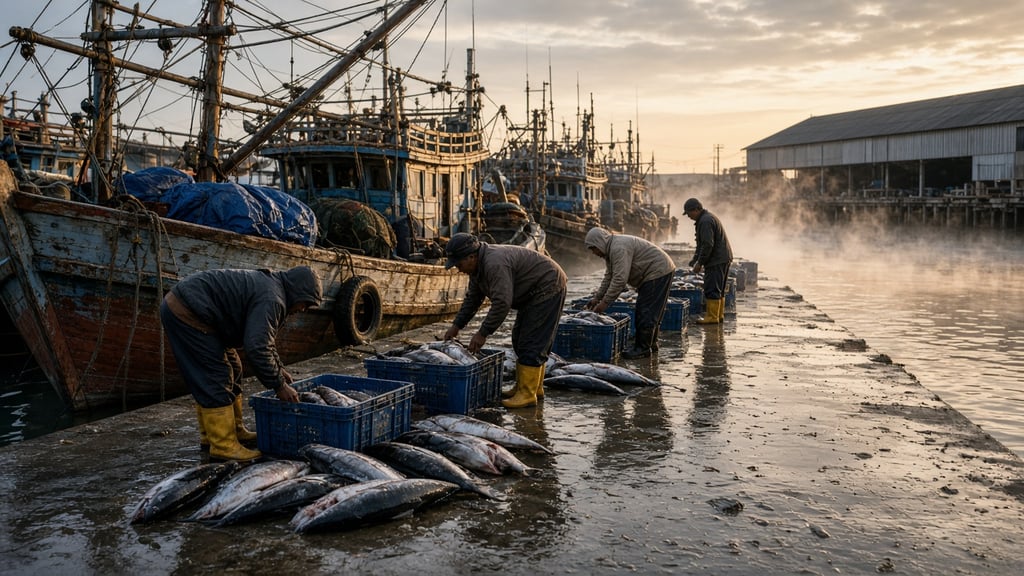
Thailand's canned-tuna processors will put more than 3 billion baht behind a one-year skipjack and bonito (pla o) price-guarantee scheme, with a memorandum of understanding due on 1 December. The Thai Tuna Industry Association will sign with the Department of Fisheries and the Purse Seine Fisheries Association of Thailand as Washington's proposed 18 percent tariff moves toward a March 2027 decision.
A one-year floor for Thai-caught pla o
The money is industry procurement, not a ministry budget injection. Association members will buy when landed prices sink below a guaranteed floor. Fishers remain free to sell elsewhere when the market is stronger. The Department of Fisheries keeps both sides inside a documented price-setting system.
The envelope is sized to take in about 60,000 to 70,000 tonnes of Thai-caught pla o a year, roughly 60 million kilograms from domestic purse-seine landings. That is a step up from the 50,000-tonne, 2-billion-baht round signed for 2025, which followed a 20,000-tonne, 800-million-baht trial in the second half of 2024.
At that volume, the 3-billion-baht commitment implies an average support level near 43 to 50 baht a kilogram, in line with earlier skipjack floor bands of 45 to 50 baht for pla o dam. The 2024 memorandum also posted 35 to 40 baht for pla o lai and 30 to 35 baht for pla o luat. The 2026 text has not yet published a single posted baht-per-kilogram rate.
Earlier rounds required Thai-flagged purse-seine association boats and Marine Catch Purchasing Documents plus other legal-catch paperwork. The new pledge is framed as covering Thai-caught landings more broadly, still at factory quality and size specs.
Over the past three to four months, when bunker fuel jumped on Iran-linked oil risk, processors already lifted purchase prices by 15 to 20 percent. Thai-caught pla o is landed fresh rather than frozen, which canneries say yields a better pack than ocean-caught frozen skipjack.
Why 18 percent is rewriting the canning math
Canned tuna still pays a 12.5 percent US duty. Washington's proposed 18 percent Section 301 ceiling, expected around March 2027, would replace rather than stack on that rate. The 18 percent figure matches preliminary rates for Indonesia, Malaysia and Cambodia. Vietnam faces 20 to 35 percent. Without a mid-November reciprocal-trade joint statement, Thai officials say the proposed ceiling could have been 25 percent.
The rate is not yet law. Written comments to the US trade representative close on 5 January 2027, with a public hearing on 25 January and measures flagged for around 11 March 2027. Bangkok is asking Washington to add fish, seafood, shrimp, rice, pet food and rubber gloves to more than 2,100 already-exempt lines. Processed tuna and skipjack, worth about 545.5 million dollars, sits on that exemption-request list. Thailand already supplies nearly 30 percent of US tuna import value, about 574 million dollars.
Origin rules and a factory that still runs on imports
About 97 percent of the frozen tuna Thailand cans still arrives from foreign fleets, mainly skipjack from Taiwan, Micronesia, South Korea and Pacific island waters. Customs data for 2024 put those imports at 861,292 tonnes, worth 50.4 billion baht, with skipjack about 80 percent of the mix.
Domestic landings cannot replace that import pipeline. They can, however, thicken the paper trail that US customs and origin rules now demand: Thai-flagged boats, Marine Catch Purchasing Documents, and fish that was actually caught in Thai waters. US investigators have treated excess capacity and transshipment as one problem: factories that import raw material, do limited processing, and ship the result as Thai.
Preferential free-trade origin rules already trip Thai canned tuna when the fish was caught in the Pacific by non-party vessels rather than on Indian Ocean Tuna Commission registers. Buying more local pla o does not solve the import math. It does give exporters a cleaner origin story for the share that can be documented as Thai-caught, and it gives Bangkok a political argument that any US tariff cut would flow upstream to Thai boats.
What This Means for Expats and Travelers in Thailand
For expats and short-stay visitors, the immediate effect is not at 7-Eleven. It is in the US grocery aisle, in pet-food prices, and in how long Samut Sakhon's canneries keep night shifts. Thai-packed brands that fill American and European tins will price in the tariff until an exemption lands. In Thailand, supermarket tuna is unlikely to jump overnight because the domestic catch is a small slice of a global raw-material market.
What may move is factory labour around Maha Chai and southern landing ports if US orders pause while buyers wait for the calendar. European Union officials are due in Thailand on 8 and 9 December, a separate track from the US fight but the same catch-document story. For anyone sending canned tuna or pet food home, the practical watch is March 2027, not this week's signing ceremony.

No comments yet. Be the first to join the conversation.