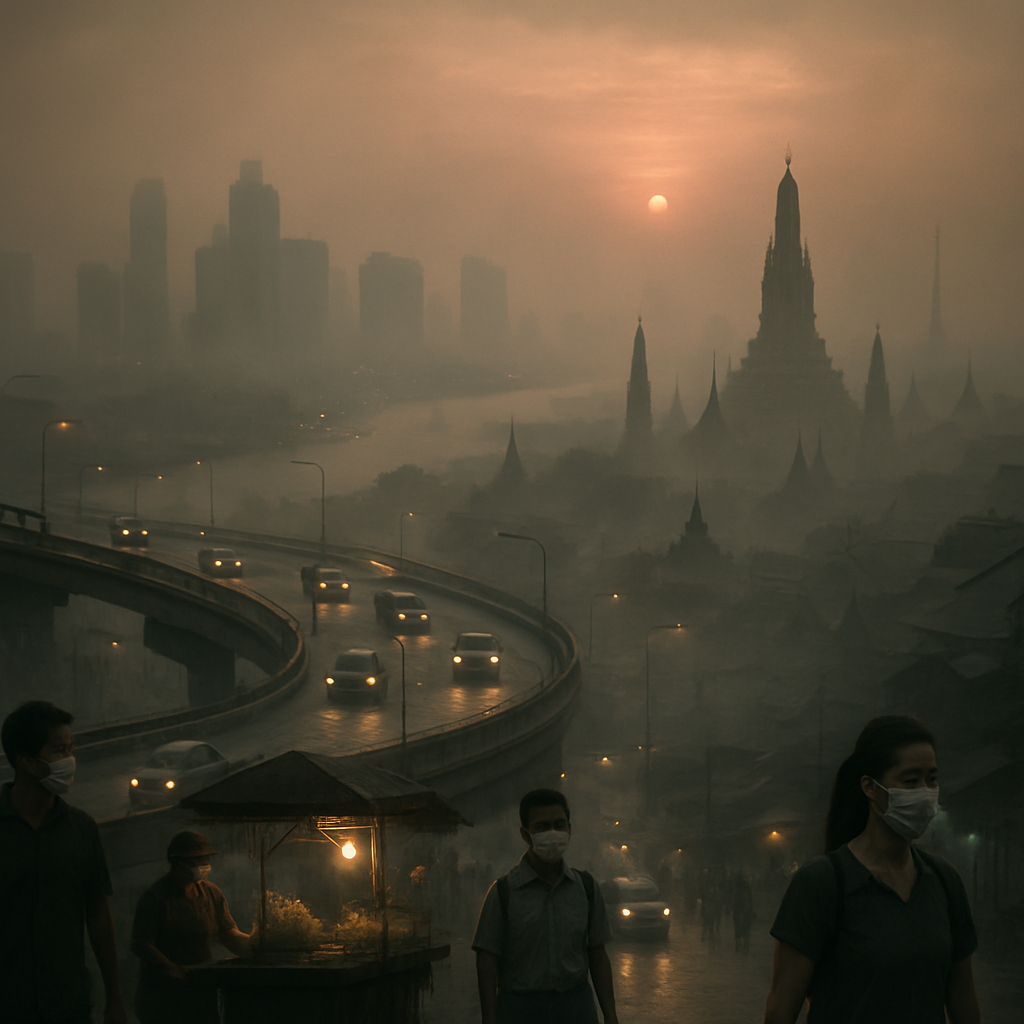
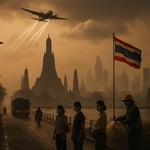
Bangkok woke up under a gray blanket this morning. The Bangkok Air Quality Information Centre’s 07:00 update on December 3 shows a sharp slip in air quality — the city’s average PM2.5 is 47.1 μg/m³, comfortably above the national safety threshold of 37.5 μg/m³. In plain terms: the air is cranky, and it’s asking for special treatment.
Some pockets of the city are worse off than others. Twelve districts are ringing particularly loud alarm bells with readings that move from “unpleasant” toward “concerning”:
- Bang Rak: 59.4 μg/m³
- Sathorn: 58.8 μg/m³
- Lat Krabang: 56.2 μg/m³
- Min Buri: 53.5 μg/m³
- Bang Kho Laem: 53.5 μg/m³
- Nong Khaem: 53.4 μg/m³
- Khlong Sam Wa: 53.3 μg/m³
- Prawet: 53.1 μg/m³
- Pathum Wan: 52.4 μg/m³
- Bang Khen: 52.1 μg/m³
- Bang Na: 51.4 μg/m³
- Khlong San: 50.5 μg/m³
Southern Bangkok — and especially Bang Rak and Sathorn — tops the list with the highest numbers, so residents there should take extra care today.
Zone-by-zone snapshot: orange across the map
The Centre’s zone-by-zone assessment left no corner of the capital untouched: every zone sits in the “beginning to impact health” category, commonly shown as the orange level. Here are the reported ranges:
- Northern Bangkok: 43.7 – 52.1 μg/m³ — Status: Beginning to impact health
- Eastern Bangkok: 37.9 – 56.2 μg/m³ — Status: Beginning to impact health
- Central Bangkok: 37 – 48.8 μg/m³ — Status: Beginning to impact health
- Southern Bangkok: 36.2 – 59.4 μg/m³ — Status: Beginning to impact health
- Northern Thonburi: 43 – 50.5 μg/m³ — Status: Beginning to impact health
- Southern Thonburi: 41.8 – 53.4 μg/m³ — Status: Beginning to impact health
Put simply: the whole city should be alert. For many people the air will feel itchy in the throat and eyes, and prolonged exposure could aggravate existing conditions.
What the health advice actually means for your day
Authorities have issued practical guidance. It’s not dramatic — just sensible precautions to keep you and your family out of trouble until the sky decides to clear up. Here’s the quick, actionable version:
- General public:
- Wear a PM2.5-rated protective mask whenever you go outdoors. Cloth masks won’t cut it for fine particulate.
- Avoid strenuous outdoor activities — slow down your jogs and save heavy yard work for a cleaner day.
- Be alert for coughing, shortness of breath, or eye irritation. If symptoms start, reduce exposure and monitor closely.
- Vulnerable groups (children, the elderly, pregnant women, and people with respiratory or heart conditions):
- Always wear a PM2.5 protective mask outdoors.
- Postpone heavy outdoor exertion and follow any prescribed medical guidance.
- If any concerning symptoms appear, seek medical attention without delay.
For everyone: keep an eye on real-time updates from the Bangkok Air Quality Information Centre. Conditions can change quickly with wind and weather, and staying informed lets you plan the safest times to be outdoors.
Simple steps to protect yourself at home and on the go
- If you have an indoor air purifier, now is the time to use it (and ensure filters are clean).
- Close windows and doors when possible, especially during peak high-PM times.
- If you must drive, keep the cabin vents on recirculate — it reduces the amount of outside air coming in.
- Consider rescheduling non-essential outdoor plans and choose indoor alternatives when possible.
The orange alert isn’t a cause for panic, but it does ask for a little common-sense caution. Treat today as a temporary mood swing from Mother Nature: respectful, prepared, and a little less outdoorsy. Stay safe, Bangkok — and keep those masks handy.













Woke up to the centre’s 07:00 update — average PM2.5 at 47.1 μg/m³ and a clear orange alert across the city. Southern districts like Bang Rak and Sathorn are worst hit, so please take the usual precautions today. I’ll try to keep posting updates as the day progresses.
This happens every year and the city’s response is always too slow. Why can’t they control the sources properly instead of telling us to wear masks?
I hear you, Somsak — agencies say transboundary smoke, traffic and local burning all contribute, but enforcement is uneven.
My little one woke up coughing and I feel nervous about sending him to school. Are cloth masks really useless for kids, or is that overkill?
Cloth masks block larger droplets but not fine PM2.5 particles effectively; certified PM2.5 masks or N95s provide much better protection, especially for children with asthma. If a child has breathing trouble, keep them indoors and consult a doctor.
To add: the national threshold is 37.5 μg/m³, and at 47 μg/m³ population-level health effects rise measurably. Short-term exposure increases symptoms in sensitive groups and slightly raises hospital visits overall.
Farmers burn fields in the provinces and nobody stops them until it’s too late; always the same story.
I get health is important but shutting down outdoor markets or forcing everyone to buy expensive masks damages small vendors. There’s got to be a balance between economy and safety.
Small vendors can use simple measures — work under cover, use fans and sell less per day — but long-term we need better city planning to reduce exposure.
Balance is fine until your grandma has a stroke because of polluted air; prevention costs less than emergency care and lost productivity.
My throat is itchy already and my eyes are watering, this orange level feels real. I hate feeling stuck indoors but it’s safer today.
Traffic fumes plus some burning yesterday made it awful; car exhaust should be targeted too with stricter inspections.
If symptoms worsen (wheezing, chest tightness), people should seek care early and not self-medicate at home.
Check the wind — sometimes smoke from nearby provinces funnels into the city and makes everything worse.
Honestly, we’ve been told to wear masks for everything lately and I think it’s being overused — isn’t a little discomfort normal? People panic over a bit of dust.
Dust and PM2.5 are not the same; fine particulates enter the lungs and bloodstream and have real long-term effects, especially for children and elders.
My school moved PE indoors and I still have to wear a mask on short walks.
Air purifiers work but they’re expensive and filters wear out quickly when pollution spikes. Not everyone can afford constant replacement filters.
You can build a cheap box fan purifier with a HEPA filter and it helps a lot for a fraction of the cost.
We need stronger regulatory action on open burning and incentives for cleaner transport, not just daily advisories. Public policy should be proactive, not reactive.
Easier said than done — politics and money always slow environmental reforms. Look at weak enforcement records.
Exactly — that’s why citizens must keep pressure on local councils and vote for candidates who commit to visible action.
From an epidemiological perspective, repeated days in the orange range increase population-level respiratory issues and can exacerbate cardiovascular events. Monitoring and rapid public health messaging matter to reduce acute events.
How quickly can air quality shifts change hospital admissions? Is there a lag?
There’s often a short lag of 24–72 hours for some outcomes, though sensitive individuals can react the same day; trends matter more than single readings.
If I have to travel across town, is it better to keep windows open in the taxi for fresh air or use recirculate and close them?
I care for my elderly mom and we’re worried; can care homes impose stricter outdoor limits for residents on days like this? They seem slow to act.
Many facilities do limit outdoor time and adopt masks for residents and staff; families should confirm policies and bring certified masks for visits.
I’m visiting Bangkok today — should I cancel my sightseeing? I booked a pricey trip and don’t want to sit in a hotel all day.
For short urban sightseeing, consider indoor alternatives like museums with good ventilation and avoid riverside or rooftop walks during peak hours. Keep an N95-style mask handy and check updates before you venture out.