Heavy Rain Triggers Severe Floods Across Koh Samui
Torrential monsoon rain triggered flash floods across Koh Samui, submerging tourist cars and prompting emergency water pumping in Bo Phut.
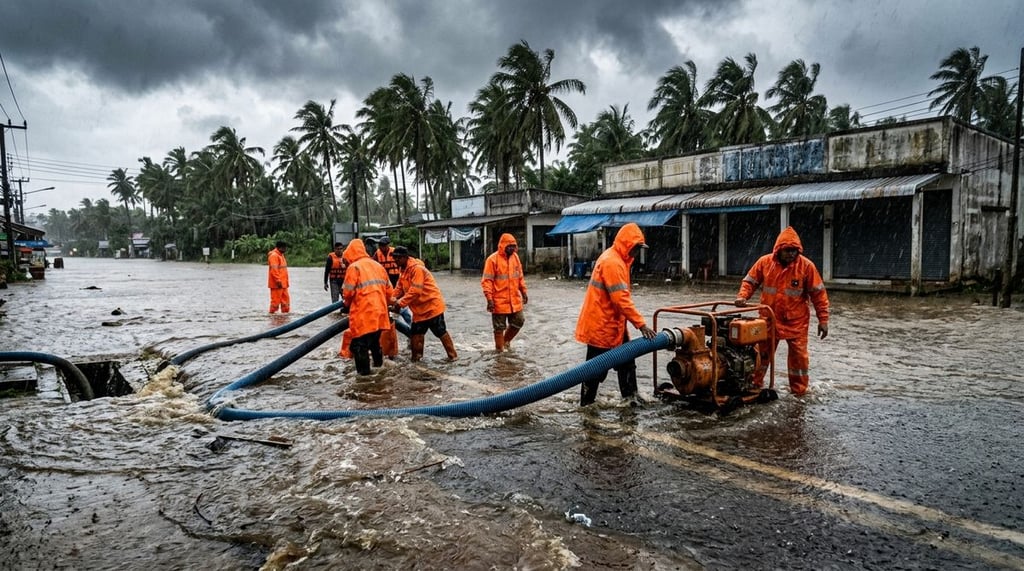
Torrential monsoon downpours swept across Koh Samui on Sunday, November 29, 2026, triggering flash flooding that submerged major road corridors, inundated residential districts, and trapped motorists in fast-rising currents. The deluge overwhelmed drainage systems throughout the northeastern quadrant of the island, turning thoroughfares between Rom Khao market and the Phru Chaweng intersection into impassable waterways. Disaster response squads from the Department of Disaster Prevention and Mitigation and municipal teams mobilized industrial pumps to siphon standing water toward coastal outlets as high tides in the Gulf of Thailand slowed natural runoff.
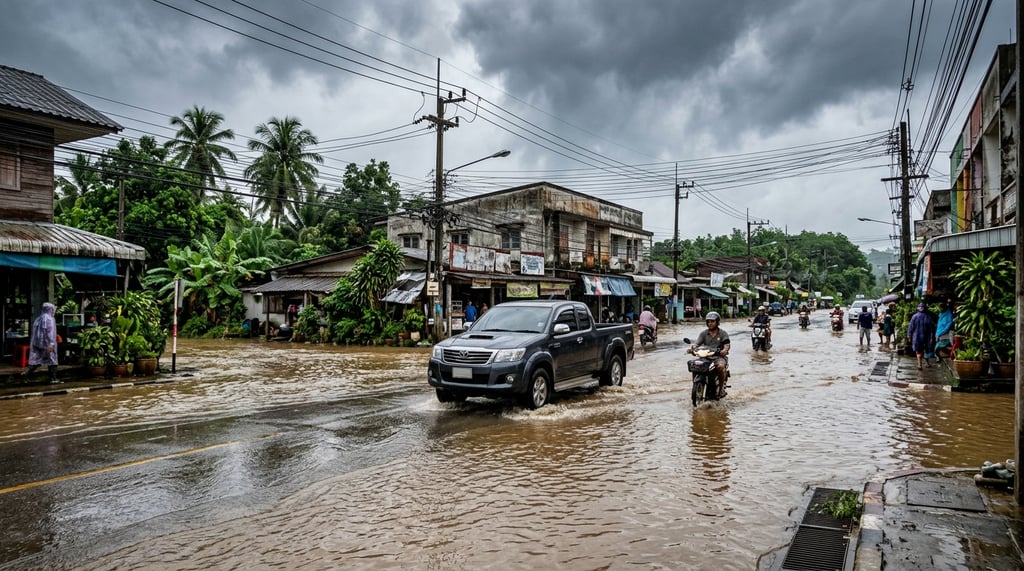
The severity of the flooding peaked in Ban Choeng Mon within Bo Phut subdistrict, where water reached vehicle rooftops outside a local resort. A foreign motorist driving a white sport utility vehicle found himself trapped as rising water swamped the cabin. Forced to scramble through a side window onto the hood, the traveler was guided through chest-deep water to dry ground by residents and municipal rescuers moments before the vehicle submerged almost completely. The incident prompted municipal warnings directing travelers to stay off flooded roadways.
Flash Floods Overwhelm Northeast Ring Corridors
Koh Samui operates under a challenging geography where steep granite ridges rise directly from narrow coastal plains. When heavy rain falls over the central highlands, gravity drives immense runoff down natural gorges within minutes. This water discharges directly into coastal lowlands hosting the densest concentrations of hotels, commercial establishments, and transport corridors in Bo Phut and Chaweng.
The route connecting Rom Khao market to the Phru Chaweng intersection sits within a shallow topographical bowl that collects overflow from Chaweng Lake. Urban expansion and commercial paving have reduced natural soil absorption across the basin. As runoff overwhelmed curbside drains on Sunday, standing water reached depths of 40 to 60 centimeters, stranding motorbikes and forcing transport vans onto elevated central lanes.
Drainage Infrastructure and Coastal Pumping Operations
Koh Samui City Municipality activated its emergency drainage contingency plan as waters rose. Engineering teams coordinated with Bo Phut Police to close flooded roadway segments and reroute traffic toward higher ground. Heavy-duty diesel pumps were positioned at strategic drainage chokepoints around Chaweng Lake and coastal outlets to force stormwater past built-up sediment.
The municipal operation faced resistance from coastal tides in the Gulf of Thailand. Elevated high-tide cycles pushed seawater against coastal drainage sluices, preventing gravity discharge and creating backflow into storm sewers. Officials from Department of Disaster Prevention and Mitigation Regional Centre 11 in Surat Thani monitored mechanical pumping stations along the coast to keep retention basins from exceeding spillway limits.
Monsoon Dynamics and Southern Island Vulnerabilities
The climatic forces driving the Samui deluge reflect the distinct rhythm of the southern maritime calendar. Unlike the Andaman Sea coast, where the southwest monsoon peaks between July and October, the lower Gulf of Thailand experiences its wettest conditions late in the year. Strong northeast monsoon winds pushing across the Gulf gather oceanic moisture before encountering the highland ridges of Surat Thani province.
Weather bulletins highlighted an active monsoon trough lingering over the lower south, accompanied by low-pressure cells. These atmospheric conditions regularly trigger localized rainfall exceeding 150 millimeters within twenty-four hours. Combined with wave heights approaching three meters offshore, maritime ferry links between mainland Donsak piers and Samui terminals face operational holds, complicating island logistics.
Tourism Resilience and Island Transit Logistical Risks
The vulnerability of transport arteries during monsoon bursts poses acute logistical hurdles for Koh Samui tourism sector. The road network connecting Samui International Airport with major resort strips in Chaweng and Choeng Mon traverses precisely the low-elevation zones most prone to inundation. Road closures cause severe airport transfer delays, leaving visitors struggling to catch scheduled departures.
Vehicle rental operations face parallel risks. Tourists unaccustomed to tropical driving frequently misjudge the depth of moving water across submerged dips. Modern rental cars and compact SUVs house engine air intakes low in the chassis, leaving them vulnerable to hydraulic lock when driven into flood currents. Stalled cars block single-lane thoroughfares, delaying emergency rescue vehicles.
What This Means for Expats in Thailand
For foreign residents, property owners, and holidaymakers situated on Koh Samui or traveling through southern coastal hubs, the flooding offers practical operational lessons:
- Never Drive Through Standing Water: Avoid driving through water exceeding curb depth. Air intakes on standard rental cars ingest water at depths as low as thirty centimeters, resulting in engine destruction and immediate insurance invalidation.
- Verify Comprehensive Flood Coverage: Review local car rental contracts carefully. Basic third-party insurance policies exclude damage caused by water ingress, leaving drivers personally liable for vehicle replacement costs.
- Plan Generous Airport Transit Windows: When heavy rain coincides with high tides, airport access roads flood quickly. Allow an additional two hours for transfers between beach resorts and the terminal.
- Secure Low-Elevation Villa Groundworks: Expat homeowners in Chaweng and Choeng Mon should inspect perimeter drainage channels and install backflow check valves on ground-floor sanitation lines.
- Track Official Early Warnings: Monitor emergency notices from disaster authorities and provincial weather bulletins rather than relying on social media rumors for ferry and road conditions.
Comment verification
Step 1 of 3
Verify your email once to publish your comment. Your email is never shown publicly.
Enter the 6-digit code sent to .
Choose the display name shown next to your comments.