Thai Customs Intercepts 14 Toxic Waste Containers
Thai Customs detained 70 containers at Laem Chabang, seizing 14 for illegal waste violations following intelligence from the Basel Action Network.
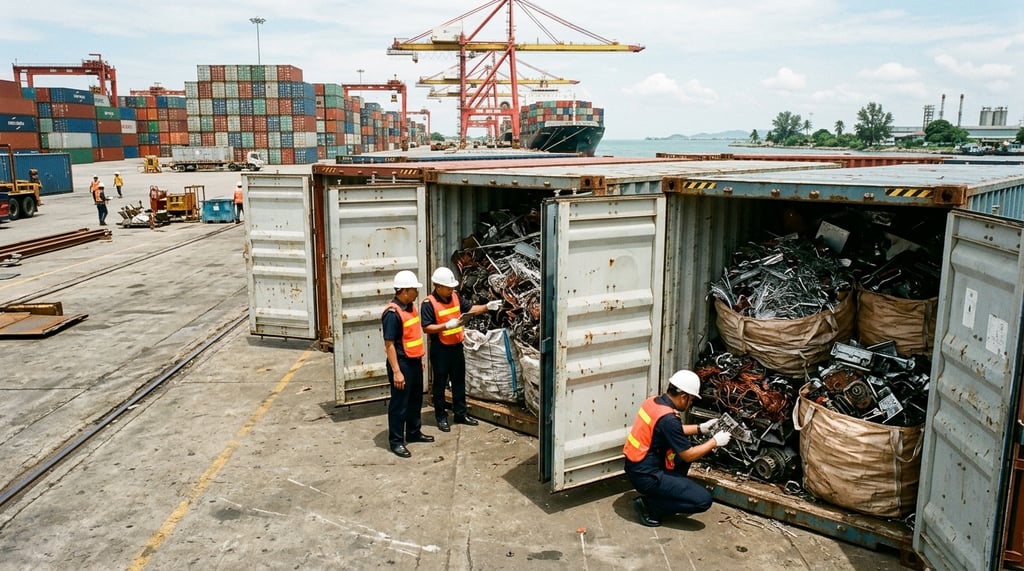
Thai border authorities have intensified maritime cargo inspections along the Eastern Seaboard, uncovering 14 shipping containers carrying illicit waste materials at Laem Chabang Port. The targeted interdictions follow intelligence dossiers transmitted by the Basel Action Network, an international environmental watchdog tracking transnational waste movements. Port officials confirmed that the intercepted units formed part of a prioritized cluster of 113 suspicious shipments flagged for potential violations of international environmental covenants.
The port operation highlights an escalating enforcement battle across Southeast Asian maritime gateways. Since major regional economies restricted plastic and electronic scrap imports, illicit syndicates have repeatedly attempted to misdeclare hazardous electronic waste and contaminated industrial residues as standard recyclable metal. In response, customs inspectors have frozen container clearances, increased physical verification quotas, and adjusted statutory penalties to deter unauthorized import networks.
The Anatomy of Maritime Waste Interception
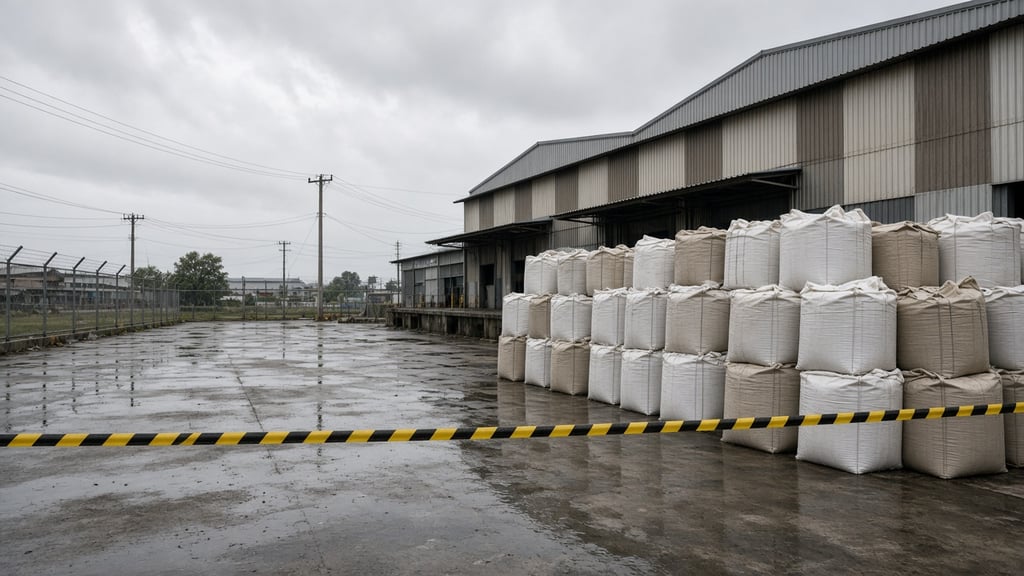
The operational manifest at Laem Chabang Port illustrates both the precision and the logistical complexity of modern customs interdiction. Out of the prioritized batch of 113 containers identified in late October, seven never made landfall in Thailand. For the remaining cargo, border control officers issued formal detention notices covering 70 units. Physical examinations confirmed that four shipments adhered to declared manifests, whereas 14 shipments breached environmental and customs statutes. Another 52 containers remain sequestered within terminal holding zones, strictly barred from entering domestic supply chains pending multi-agency forensic evaluation.
The broader multi-month surveillance effort demonstrates an even wider operational net. Thai Customs coordinated on 861 container advisories supplied by the Basel Action Network, resolving to 833 verified units after removing duplicate records. Among those, 447 vessels never discharged their cargo onto Thai docks, having been rerouted or turned back prior to customs clearance. For the 386 containers that arrived, inspectors cleared 190 compliant shipments and established infractions across 108 units. Authorities have repatriated 85 of those non-compliant containers to their foreign ports of origin, while 23 shipments remain entangled in criminal and civil litigation.
Maritime trade analysts observe that cross-border waste routing exploits the sheer volume of container traffic handled by the Eastern Seaboard terminal. With Laem Chabang managing more than eight million twenty-foot equivalent units annually, criminal syndicates rely on commercial freight forwarders to file misleading paperwork under Harmonized System tariff codes designated for harmless scrap iron or unprocessed copper. The alert system orchestrated with international monitoring bodies has forced shipping lines to scrutinize booking manifests earlier in the logistics chain, prompting carriers to cancel suspicious transshipments before vessels navigate into the Gulf of Thailand.
Tighter Thresholds and New Penalty Frameworks
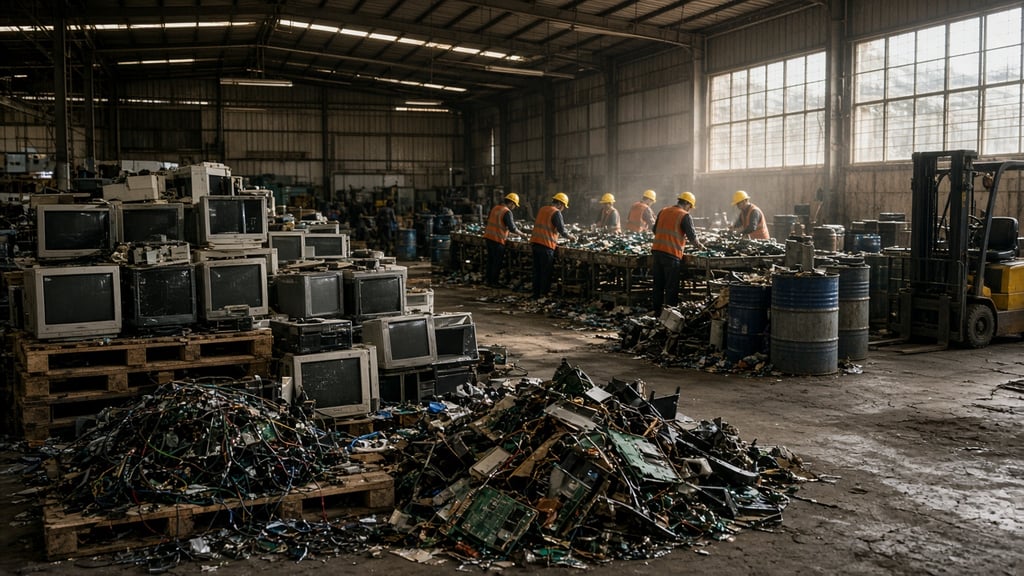
To close statutory loopholes exploited by commercial freight forwarders, the government implemented a substantial administrative overhaul in early November. Foremost among the operational changes is a mandatory 100 percent physical inspection policy for all incoming shipments declared as scrap metal, abandoning the previous 30 percent sampling protocol. Because electronic circuit boards and hazardous components are frequently commingled beneath dense scrap iron, customs agents now conduct secondary inspections directly at destination processing plants using specialized sorting equipment and portable spectroscopic analyzers.
Fiscal penalties have undergone corresponding structural revisions. Effective November 4, customs authorities abolished the previous mitigation sliding scale, which calculated fines at 20 percent of cargo duty value up to a 500,000 baht ceiling. In its place, the department instituted an immediate, flat 500,000 baht penalty per non-compliant shipment, accompanied by mandatory seizure or compulsory overseas repatriation funded entirely by the commercial offender. Stricter quality criteria set by a prime ministerial task force also limit non-ferrous impurities to 2 percent and restrict hazardous chemical waste to roughly 0.1 percent, matching the technical guidelines of the Basel Convention.
The economic incentive underpinning illicit waste trafficking stems from massive regulatory cost arbitrage. Processing high-grade electronic circuit boards and battery scrap in Western jurisdictions carries overheads exceeding 1,500 dollars per metric ton due to strict air scrubbers and hazardous residue treatment mandates. In contrast, unregulated smelting workshops in Southeast Asia cut operating costs by burning circuit boards in primitive furnaces and leaching precious metals in unlined chemical pools. Raising the financial liability to an unavoidable 500,000 baht baseline and enforcing cargo return shifts the financial risk profile back onto freight operators.
Regional Supply Chains and Industrial Licensing
The tightened import architecture extends deep into domestic manufacturing channels. Under ministerial directives, scrap metal and industrial feedstocks can no longer be imported for commercial resale or intermediate merchant trading. Only industrial facilities officially certified under factory licenses 59, 60, or 106 and registered with the Department of Industrial Works are eligible to import raw scrap for direct plant consumption. Furthermore, overseas consignors must submit pre-shipment inspection certificates issued by accredited international verification agencies before vessels depart foreign harbors.
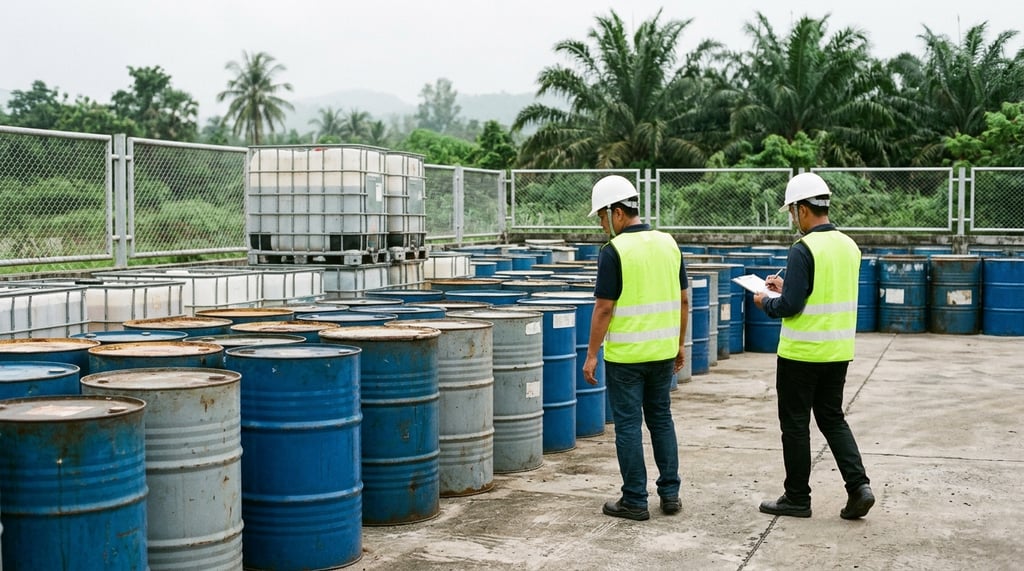
These structural hurdles arrive amid acute regional scrutiny over informal recycling zones in Chonburi, Rayong, and Chachoengsao. Following China's comprehensive prohibition on foreign solid waste in 2018, processing syndicates migrated operations into the Eastern Economic Corridor, establishing rudimentary smelting works that sparked persistent water contamination and air pollution complaints. Heavy metals including cadmium, lead, and mercury, alongside carcinogenic dioxins from plastic combustion, have repeatedly entered local irrigation canals and contaminated agricultural topsoil. By restricting import licenses exclusively to accredited, modern industrial operators, policymakers aim to dismantle the economic viability of unpermitted downstream backyard processors.
What This Means for Expats in Thailand
The port interdictions and regulatory recalibration carry practical implications for foreign residents, industrial executives, and regional business operators:
- Air and Soil Quality Protection: Stricter interception of toxic lead, cadmium, and printed circuit boards prevents open-air burning and hazardous acid leaching in agricultural and residential belts surrounding Pattaya, Sriracha, and Rayong.
- Longer Port Clearance Windows: The shift to 100 percent physical inspections for scrap and raw metal consignments will introduce processing queues at Laem Chabang, extending freight release schedules for manufacturing supply chains.
- Heightened Corporate Liability: Foreign directors and logistics managers operating in recycling, automotive assembly, and metal fabrication must audit suppliers to ensure all import licenses hold factory category 59, 60, or 106 accreditation.
- Zero Tolerance for Commercial Intermediaries: Third-party trading entities can no longer import secondary metal for wholesale distribution, compelling manufacturers to establish direct, verified supply contracts.
Comment verification
Step 1 of 3
Verify your email once to publish your comment. Your email is never shown publicly.
Enter the 6-digit code sent to .
Choose the display name shown next to your comments.