Thailand Launches 90-Day Eastern Toxic Waste Crackdown
Thailand has ordered a 90-day sweep across eight eastern provinces to dismantle illegal industrial waste networks, trace factory polluters, and seize illicit assets.
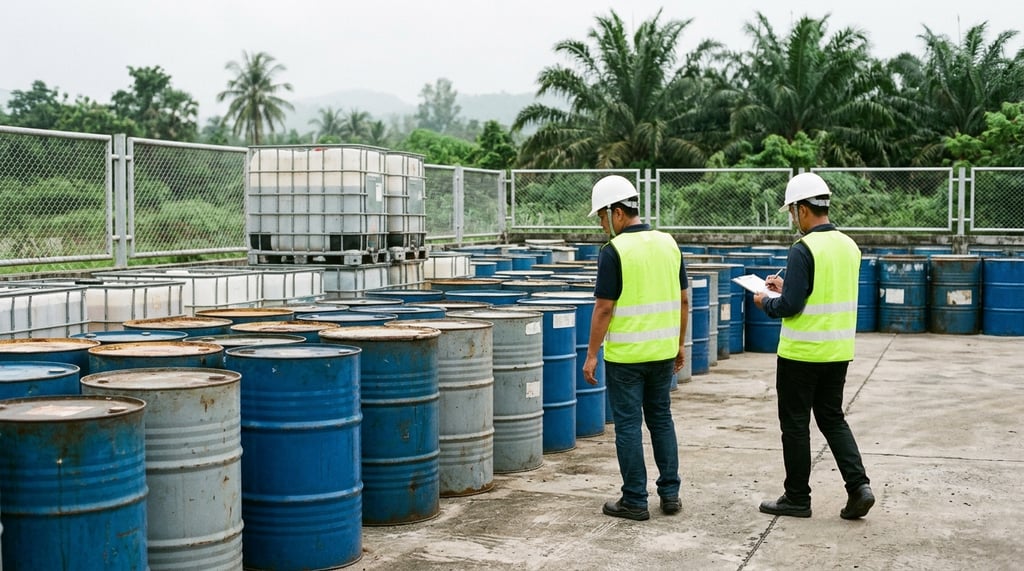
An inter-agency offensive has been launched across Eastern Thailand to dismantle industrial waste syndicates and halt illegal toxic dumping. Convening an emergency regional summit at Prachin Buri Provincial Hall on November 29, 2026, Natural Resources and Environment Minister Suchart Chomklin placed provincial governors and enforcement agencies on a 90-day timetable. The directive establishes two high-level subcommittees designed to combine field interdiction with judicial prosecution, replacing bureaucratic disputes with criminal indictments, corporate veil-piercing, and financial asset seizures.
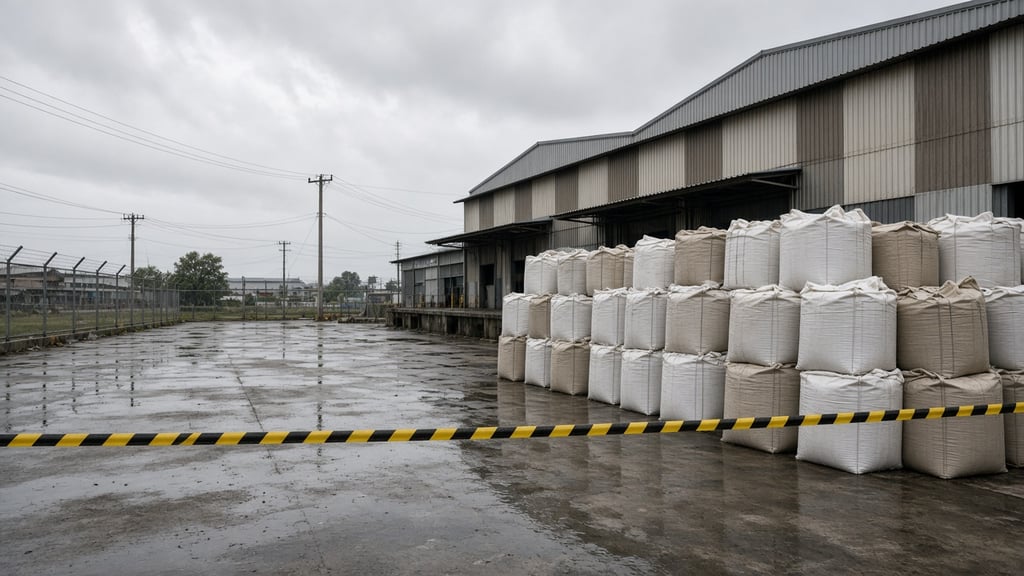
The sweep covers eight provinces: Prachin Buri, Chonburi, Rayong, Chachoengsao, Nakhon Nayok, Sa Kaeo, Chanthaburi, and Trat. The region anchors the Eastern Economic Corridor while supporting prime agricultural basins supplying rice, cassava, and fruit. Recent autumn flooding in Prachin Buri stripped away regulatory evasion, breaching retention bunds at industrial sorting yards and washing chemical runoff, solvents, and heavy metals into waterways and farmland. The visible contamination prompted Prime Minister Anutin Charnvirakul to order a structural response holding polluters, hauliers, and corporate beneficiaries criminally liable.
The Anatomy of an Eastern Seaboard Dumping Corridor
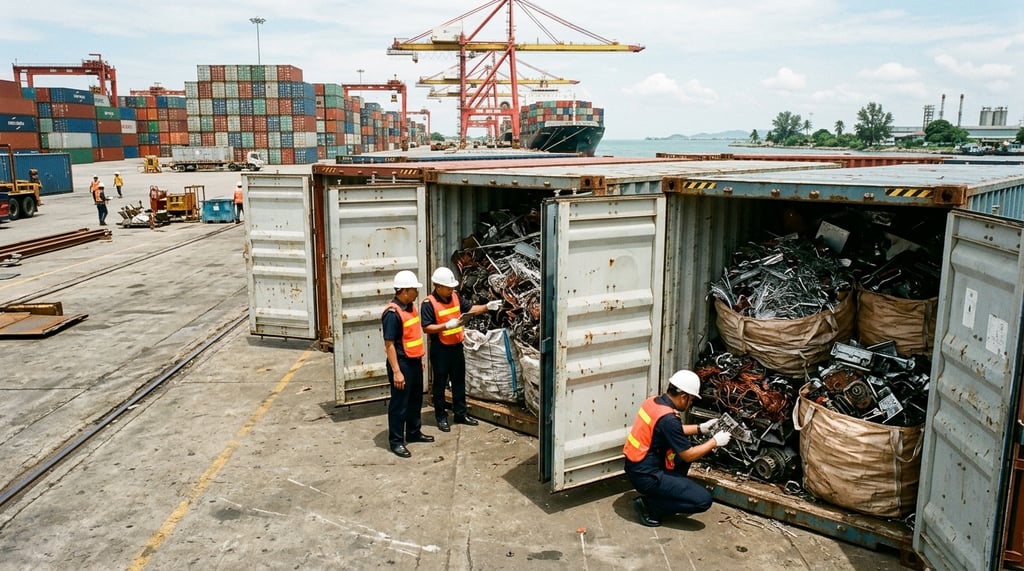
Thailand's eastern seaboard has expanded rapidly over the past decade under the Eastern Economic Corridor framework. Chonburi, Rayong, and Chachoengsao evolved into major manufacturing hubs for automotive assembly, petrochemical processing, and electronics. However, hazardous waste oversight lagged behind production volumes. Pressure mounted after China's 2018 solid waste import ban redirected hundreds of thousands of tonnes of foreign electronic scrap and industrial residues toward Southeast Asia.
A shadow logistics network emerged in bordering rural districts such as Sri Maha Phot in Prachin Buri and Plaeng Yao in Chachoengsao. Operators leased farmland, abandoned quarries, and disused brick factories under the guise of recycling depots. Holding Factory Act Type 105 sorting or Type 106 recycling permits, rogue facilities bypassed thermal destruction and lined landfill rules. Hazardous materials were mixed into soil, buried in unlined pits, or stored in deteriorating drums. When floods inundated Prachin Buri, containment failures caused acute chemical leaching into regional rivers, transforming chronic regulatory lapses into an immediate crisis.
A Two-Pronged Enforcement Architecture
The campaign marks an institutional shift in how Thailand tackles environmental crime. Enforcement previously suffered from inter-agency fragmentation. The Department of Industrial Works within the Ministry of Industry oversees factory licensing, while the Pollution Control Department within the Ministry of Natural Resources and Environment monitors damage. Rogue hauliers exploited this division, closing during local audits only to reopen under nominee registrations in adjacent provinces.
To eliminate jurisdictional voids, the ministry established two dedicated subcommittees for the 90-day campaign. The first panel coordinates frontline interdiction, pairing technical teams with provincial governors, district chiefs, and local leaders for unannounced forensic raids on high-risk warehouses and rural plots. The second panel oversees judicial enforcement, integrating the Department of Special Investigation and the Anti-Money Laundering Office. Rather than treating dumping as a minor administrative infraction, investigators trace financial ledgers from transport hauliers back to source factories and ultimate beneficial owners.
The Limits of the Factory Act and the Polluter Pays Doctrine
A core element of the mandate tests the reach of Thai environmental statutes. For decades, the Factory Act B.E. 2535 imposed modest fines that syndicates easily absorbed as routine business overhead. Temporary suspensions failed to prevent nighttime dumping on public forests or rented fields once inspectors left.
Under the current directive, state prosecutors are applying Section 96 of the Enhancement and Conservation of National Environmental Quality Act B.E. 2535. The statute establishes strict civil liability under the Polluter Pays principle, holding facility owners strictly liable for environmental clean-up and ecological restoration costs, irrespective of criminal intent. Coupling strict liability with AMLO asset freezes and corporate fraud charges aims to render illegal disposal economically ruinous. Complicit local officials also face immediate disciplinary action.
Groundwater Security and Agricultural Spillover
The environmental risks of illicit dumping extend deep into regional water systems. Hydrology tests on flooded farmlands in Prachin Buri revealed elevated concentrations of heavy metals, chlorinated solvents, and petroleum hydrocarbons. Chemical plumes now threaten aquifers that sustain communal irrigation canals and private agricultural wells.
The intervention reflects pressing economic stakes. Thailand's agricultural exports, notably fragrant rice, fruit, and cassava, rely on international phytosanitary trust. If foreign buyers detect industrial chemical residues in eastern harvest shipments, trade sanctions would inflict billions of baht in losses. The 90-day initiative focuses on sealing illegal disposal boreholes, establishing baseline water monitoring, and securing buffer zones between manufacturing corridors and food-producing land.
What This Means for Expats in Thailand
For foreign residents, property buyers, and businesses along the eastern seaboard, the heightened enforcement brings four practical imperatives:
- Residential Water Security: Residents in rural and semi-industrial areas of Chonburi, Rayong, and Prachin Buri should test private bore wells. Shallow groundwater near industrial clusters faces contamination from historical leachate migration. Households should rely on municipal piped supplies or certified bottled water, adding reverse-osmosis filtration for domestic use.
- Property Due Diligence: Foreign investors securing long-term leaseholds for villas, warehouses, or commercial plots in the eastern provinces must conduct environmental audits. Title checks should verify whether adjacent sites ever held Factory Type 101, 105, or 106 licenses. Soil testing is essential before signing agreements in lowland drainage basins.
- Corporate ESG Compliance: Executives managing enterprises in the EEC must audit third-party waste hauliers. With authorities tracing illicit waste back to points of origin, manufacturers cannot delegate liability to transport contractors. Consigning hazardous waste to unlicensed handlers risks permit revocations, corporate blacklisting, and severe ESG compliance penalties.
- Produce Sourcing: Restaurant operators and consumers buying produce from eastern farming belts should follow increased testing schedules on irrigation canals. Stricter PCD monitoring will help isolate contaminated zones while reinforcing consumer confidence in certified organic suppliers.

Comment verification
Step 1 of 3
Verify your email once to publish your comment. Your email is never shown publicly.
Enter the 6-digit code sent to .
Choose the display name shown next to your comments.