Mekong Arsenic Fears Idle Boats, Hit Pomelo Sales
Arsenic fears in the Mekong leave Chiang Rai fishing boats moored and hit prices for Wiang Kaen pomelos despite orchards using groundwater.
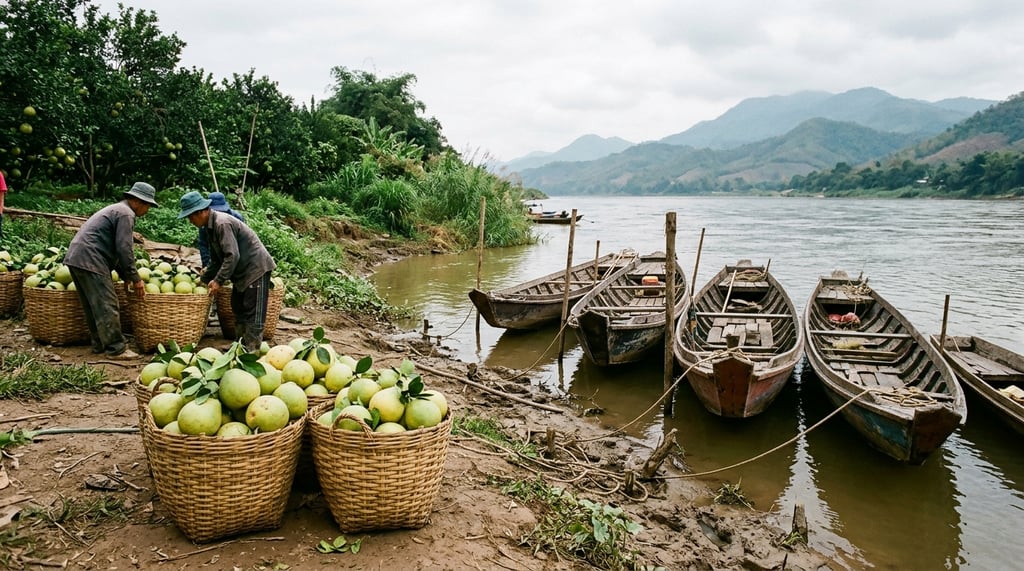
At Ban Huai Luek in Chiang Rai province, where the Mekong traces its final frontier before winding into Laos, riverside life has stopped. Long-tail boats sit tied to muddy banks, engines silent. For nearly a month, fishmongers have boycotted local catches, alarmed by alerts over arsenic down northern tributaries. Inland, the chill has reached the orchards. Growers of the Wiang Kaen pomelo, Chiang Rai's ninth Geographical Indication crop, report canceled orders and plummeting bids. The downturn strikes despite growers irrigating exclusively from deep artesian wells rather than river water.
Riparian Fleets Paralyzed by Tainted Waters
In Ban Huai Luek, within Wiang Kaen's Muang Yai subdistrict, small-scale fishing is an economic lifeline alongside fruit farming. Running a daily boat requires fuel, net repairs, and labor. With regional buyers refusing Mekong catches, every trip yields net losses. Fishermen compare the sudden halt in trade to a disruption severer than pandemic restrictions. Catches that once supplied northern wet markets and riverside restaurants remain unharvested or discarded.
The daily math for boatmen has broken down. Fuel costs run between 300 and 500 baht per outing, yet catches cannot be sold at any price. Experienced fishermen have abandoned their boats to seek day-wage construction work in larger towns. The standoff has stripped cash flow from dozens of riparian households lacking alternative dry-season income.
Geographical Indication Under Collateral Siege
The damage has rolled into the district's agricultural crown jewel: the Wiang Kaen pomelo. Registered by the Department of Intellectual Property as Chiang Rai's ninth Geographical Indication, the citrus crop spans four subdistricts: Muang Yai, Lai Ngao, Po, and Tha Kham. Across these valley slopes, microclimates and alluvial soil yield Khao Yai, Thong Dee, and Seller varieties celebrated for their balanced sweetness. The sector generates over 400 million baht annually, sustaining thousands of farming families.
Proximity to the river has turned into a commercial handicap. While orchardists rely entirely on deep artesian wells rather than river runoff, wholesale traders and shoppers view the district with suspicion. Farm-gate bids have slumped as buyers exploit consumer worry to demand steep markdowns. Orchard owners warn that delayed harvesting risks fruit spoiling on trees, destroying margins needed to finance upcoming planting cycles.
Cross-Border Mining Runoff and Regulatory Limbo
The pollution source sits upstream beyond Thai borders. In eastern Shan State, Myanmar, rapid expansion of unregulated gold and rare-earth mines has turned mountain streams into channels for toxic waste. Leaching sites use heavy chemicals without settling reservoirs or tailings containment, releasing contaminated runoff directly into creeks feeding the Kok, Sai, and Ruak rivers.
Testing by the Pollution Control Department documented arsenic levels reaching 28 times the statutory ceiling of 0.01 milligrams per liter in border reaches. Heavy metal residues settle into riverbed sediment, threatening aquatic food webs down to Sop Ruak and the Mekong confluence. In response, Bangkok has engaged regional diplomacy while implementing domestic trade curbs. Beginning November 30, Thailand will prohibit the export of mineral refining chemicals, aiming to cut off processing reagents fueling border extraction sites.
The Path to Market Rehabilitation
Export curbs target future supply but do not resolve the immediate crisis facing Chiang Rai producers. Community leaders in Wiang Kaen and Ban Huai Luek want swift, visible testing from the Ministry of Agriculture and Cooperatives. Restoring consumer confidence requires public proof. Cooperatives are asking for independent lab audits certifying that deep aquifers remain uncontaminated, alongside chemical residue screenings on harvested fruit.
Without official verification seals, growers warn that rumors will continue to depress prices. Transparent batch certification would protect compliant farmers from guilt by geographic association while water agencies monitor river intakes. For fishing households, local representatives are urging temporary livelihood relief while bilateral diplomatic talks address upstream sources.
What This Means for Expats in Thailand
For expatriates living in Northern Thailand, long-stay retirees in Chiang Rai and Chiang Mai, and regional travelers, the situation warrants clear precautions:
- Raw River Fish Consumption: Avoid eating raw or undercooked river fish, snails, and freshwater shellfish in Mekong border districts until health authorities issue formal clearance.
- Commercial Pomelo Safety: Market and grocery Wiang Kaen pomelos remain safe. Orchards rely on deep groundwater, and thick citrus rinds protect inner pulp from aerial dust.
- River Tourism Precautions: Long-tail boat excursions around the Golden Triangle operate normally, but visitors should avoid direct contact with muddy riverbed silt in tributary zones.
- Agricultural Land and Leases: Expats leasing orchard land in northern river valleys should request certified well-water testing for heavy metals before signing agreements.
- Border Trade and Crossings: Tighter chemical scrutiny at northern checkpoints may cause brief customs clearance delays along overland trade routes to Laos and Myanmar.
Comment verification
Step 1 of 3
Verify your email once to publish your comment. Your email is never shown publicly.
Enter the 6-digit code sent to .
Choose the display name shown next to your comments.