Thailand Targets 2027 for First Cargo Drone Airline
A Thai company applies for the nation's first cargo drone airline, targeting 2027 operations as regulators prepare rules for the low-altitude economy.
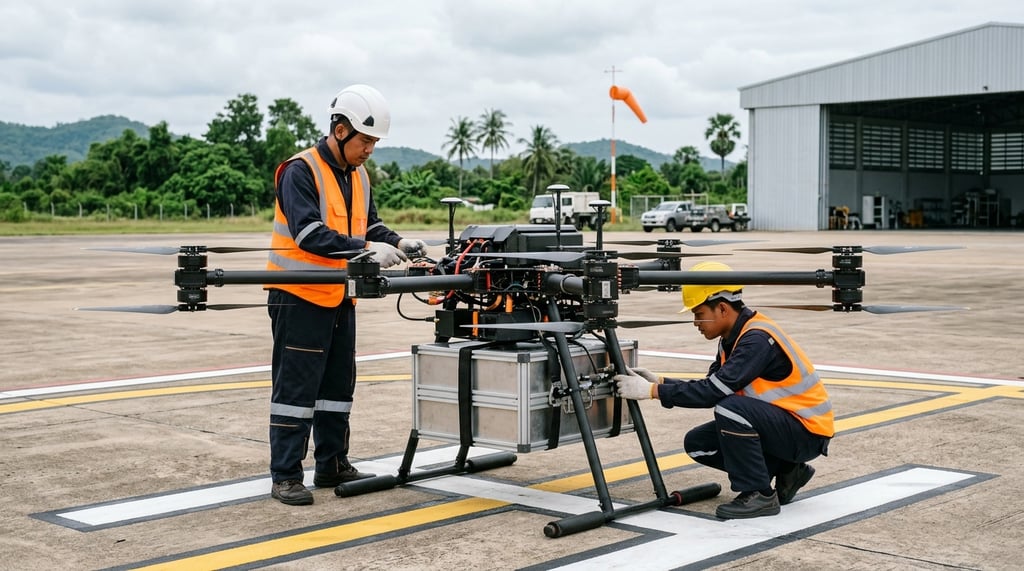
Thailand is preparing for its first commercial cargo drone airline to take flight by 2027. The Civil Aviation Authority of Thailand received a formal application from a domestic operator to launch scheduled freight operations using unmanned aerial systems. Two additional transport firms are assembling regulatory dossiers. The initiative marks a concerted state strategy to commercialize low-altitude airspace across the kingdom, using autonomous aviation to bypass geographic bottlenecks in mountain and island logistics.
Aviation and communications regulators are drafting rules to govern commercial unmanned freight. The Civil Aviation Authority of Thailand is coordinating with the National Broadcasting and Telecommunications Commission to allocate protected spectrum for beyond visual line of sight telemetry links. Flight paths will interface directly with civilian air traffic management networks directed by Aeronautical Radio of Thailand. Early routes will prioritize urgent medical supplies, relief dispatches to flood-isolated valleys, and cargo shuttles between mainland transport hubs and offshore resort islands.
Regulatory Architecture and Air Operator Certification
Establishing certified commercial cargo operations requires an overhaul of Thailand's civil aviation framework. The kingdom logs more than 73,000 registered drones and 128,000 certified remote operators through its centralized portal. Almost all of these aircraft represent hobbyist photography units or agricultural crop sprayers operating under visual line of sight limits. Heavy-lift freight carriage introduces distinct airworthiness and operational risks that demand a dedicated category of air operator certification.
Regulators are structuring standards across three core pillars: aircraft airworthiness, ground facilities, and operator competency. Commercial cargo drones will face evaluations comparable to small regional transports. Airframes, propulsion systems, and autonomous navigation architectures must complete rigorous physical and computational assessments. Ground control centers will require redundant power systems and encrypted data links. Regulators plan to pilot test operations within designated low-altitude air corridors in Chonburi and Rayong before approving cross-country routes.
Economics of the Low-Altitude Supply Chain
Market figures underscore the commercial momentum behind low-altitude freight modernization. Aviation analysts estimate Thailand's domestic low-altitude economy at 213 million dollars, representing roughly 7.5 billion baht, with an annual expansion rate of 10.3 percent. Globally, commercial unmanned aviation spending is forecast to jump from 27.9 billion dollars in 2025 to 52.1 billion dollars over the next decade. For transport planners, cargo drones offer a leapfrog technology that circumvents costly maritime and mountainous transport barriers.
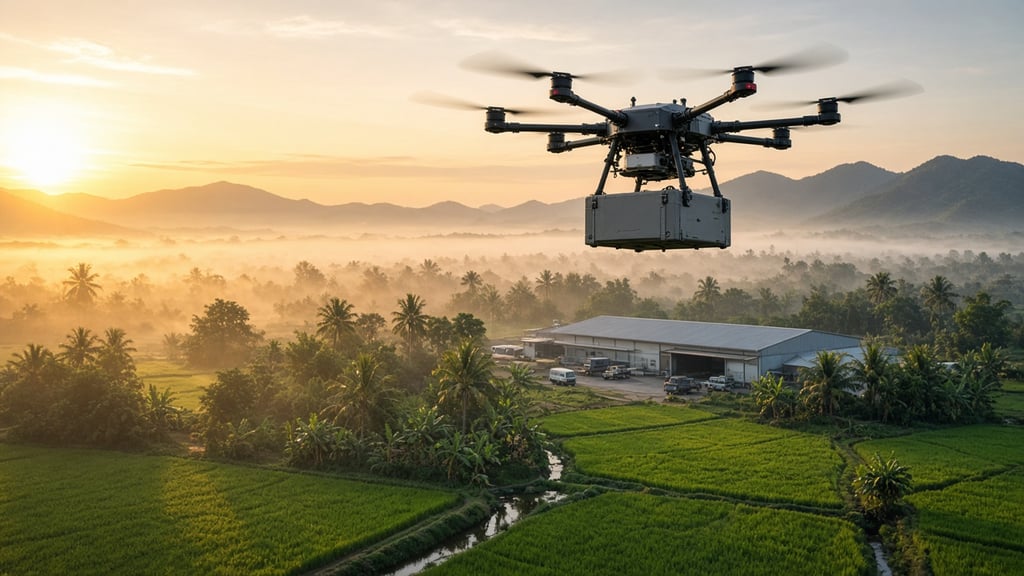
Island logistics represent the most immediate commercial application. Delivering urgent cargo, high-value components, and fresh provisions to destinations like Koh Samui, Koh Phangan, or Koh Kood currently depends on ferries that face monsoon cancellations and harbor backlogs. Cargo drones capable of transporting 100 to 120 kilograms over automated 100-kilometer routes can reduce delivery transit times from six hours to under forty-five minutes. In rugged northern terrain, including remote valleys in Nan and Chiang Mai, autonomous air shuttles can supply life-saving pharmaceuticals when seasonal downpours submerge highways.
Airspace Management and Infrastructure Deficits
Scaling commercial unmanned air transport requires infrastructure that remains largely unbuilt. Vertical takeoff and landing sites, known as vertiports, require automated battery swapping facilities, secured loading aprons, and perimeter monitoring. The Department of Airports and the Civil Aviation Authority of Thailand are surveying regional aerodromes to host dual-use facilities where cargo drones can stage operations alongside conventional airliners.
Air traffic conflict prevention presents the central operational hurdle. Scaling daily autonomous freight flights cannot succeed without automated traffic management software. Aeronautical Radio of Thailand is evaluating dynamic flight-tracking platforms capable of negotiating low-altitude routing below 500 feet while segregating drone corridors from visual flight rules helicopter tracks and emergency medical evacuation routes. While initial commercial flights will depend on imported heavy-lift airframes, policymakers plan to introduce local content requirements to foster domestic aerospace engineering and precision component assembly.
What This Means for Expats in Thailand
Commercial cargo drone networks will create tangible logistical shifts for international residents and businesses across the kingdom:
- Faster Island and Upcountry Deliveries: Expatriates living on resort islands or in remote northern valleys can expect delivery timelines for e-commerce, electronics, and pharmaceuticals to contract significantly, avoiding maritime delays caused by seasonal monsoon weather.
- Emergency Medical Support and Anti-Venom Dispatch: Automated air logistics will speed transit for biological specimens, emergency blood supplies, and temperature-controlled medications between provincial referral hospitals and rural district clinics.
- Strict Separation from Recreational Flying: Commercial cargo airspace corridors will not relax personal drone restrictions. Hobbyists and content creators must continue registering aircraft through the Civil Aviation Authority UAS Portal and the National Broadcasting and Telecommunications Commission, adhering to strict no-fly zones around security installations, royal residences, and border perimeters.
- Aerospace and Engineering Opportunities: The development of regional vertiports and maintenance facilities will create specialized technical roles for foreign aerospace engineers, software developers, and systems integrators partnering with domestic aviation enterprises.
Comment verification
Step 1 of 3
Verify your email once to publish your comment. Your email is never shown publicly.
Enter the 6-digit code sent to .
Choose the display name shown next to your comments.