Thai market leaders back flexible SET uptick rule
Capital market leaders endorse the Stock Exchange of Thailand using the uptick short-selling rule during elevated volatility while advocating a swift return to zero-plus tick rules in normal market conditions.
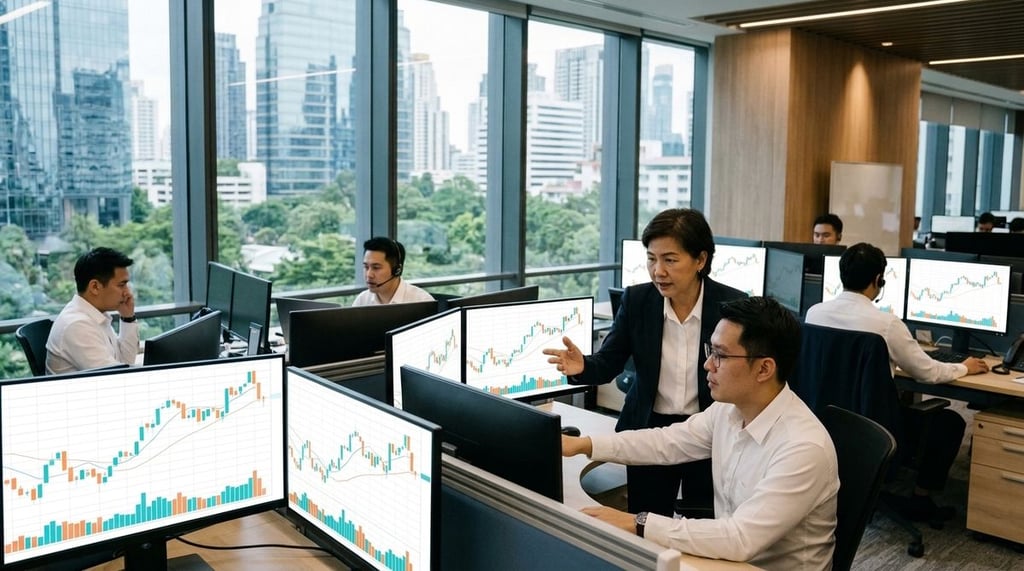
Senior leadership across Thailand's capital markets has thrown its weight behind the Stock Exchange of Thailand's decision to deploy the uptick short-selling rule during periods of acute market instability, while firmly cautioning against making the emergency mechanism a permanent fixture of daily bourse operations. Paiboon Nalinthrangkurn, chairman of the Federation of Thai Capital Market Organizations and chief executive of Tisco Securities, outlined an institutional consensus that frames the uptick rule as a targeted circuit breaker rather than an enduring substitute for standard price discovery mechanisms.
Under baseline global exchange standards, equity bourses typically run on the zero-plus tick framework during normal trading environments. That mechanism permits short positions to execute at either the immediate trade price or a higher tick, guaranteeing sufficient turnover and orderly liquidity for domestic and institutional asset managers. By contrast, the restrictive uptick rule mandates that any short sale must be entered at a price strictly higher than the preceding transaction. The mechanism is designed to prevent aggressive capital pools from cascading bids downward during intense market sell-offs.
The Anatomy of Market Volatility and Short Selling
The regulatory debate comes into sharp focus following the exchange's decision to reinstate the uptick rule across all short-sale eligible shares from November 30 to December 30, 2026. Regulators moved to calm the benchmark SET Index after foreign selling waves and heightened fluctuations in global technology equities spilled over into Bangkok. Prior market data demonstrated that whenever market indices drop abruptly, retail investor anxiety centers immediately on short selling, often attributing downward momentum to automated algorithmic short strategies and foreign hedge fund activity.
Financial leaders emphasize that short selling is an essential and healthy component of mature financial architecture. The facility provides critical portfolio hedging tools for institutional funds, generates underlying transaction liquidity, and creates valuable opportunities for value-oriented buyers to accumulate undervalued assets when short-sellers eventually cover their positions. However, when shorting volume accelerates to abnormal levels during broader macroeconomic panic, unconstrained shorting can distort orderly valuations and exacerbate negative market sentiment far beyond fundamental economic realities.
Balancing Capital Liquidity Against Speculative Pressure
A central pillar of the market leadership perspective is the distinction between speculative short pressure and genuine investor liquidations. Even during severe market pullbacks where short selling captures intense public scrutiny, short transactions rarely exceed ten percent of overall trading value. The remaining ninety percent represents regular long sales by institutional, retail, and corporate shareholders who hold physical stock certificates in depository accounts.
The operational value of the uptick rule lies in establishing queuing priority rather than banning market activity outright. When prices are sliding, an uptick barrier ensures that investors holding physical shares have first priority to liquidate their positions at the prevailing bid. Traders seeking to profit from declining values cannot dump borrowable blocks onto existing bids, forcing them instead to offer shares at a higher tick. This microstructure adjustment insulates actual shareholders from being front-run by aggressive speculative selling without revoking the basic rights of genuine portfolio owners to transact.
Rejection of Arbitrary Sunset Windows
Market executives have raised critical observations regarding the regulatory calendar. While the exchange authority scheduled the current uptick mandate as a one-month temporary decree expiring on December 30, capital market representatives argue that regulatory intervention should not be chained to arbitrary monthly intervals. Instead, market oversight bodies should maintain dynamic supervisory authority that responds directly to quantitative market stress indicators.
If trading metrics continue to display severe dislocation, anomalous volume spikes, or outside shocks after the initial thirty-day period concludes, regulators should retain the flexibility to extend the uptick rule seamlessly. Conversely, if trading patterns normalize and market stability returns ahead of schedule, the exchange should possess the agility to revert to zero-plus tick immediately. Market participants warn that locking trading rules into fixed calendar windows creates unnecessary speculation around policy expiry dates rather than anchoring investor sentiment to fundamental financial data.
What This Means for Expats in Thailand
For international expatriates, foreign retirees, and regional professionals managing investments, corporate pensions, or personal savings across Thailand, the evolving regulatory posture carries immediate financial implications:
- Portfolio Valuation Stability: Reinstating uptick restrictions provides immediate downside cushioning for expat holdings in blue-chip SET50 and SET100 equities, mitigating severe intraday drawdowns caused by aggressive automated shorting runs.
- Turnover and Foreign Fund Flows: Zero-plus tick conditions are vital for foreign institutional funds that require deep liquidity to allocate capital to Bangkok. An eventual return to zero-plus tick will reassure global institutional investors that Thailand remains committed to open, liquid capital market operations.
- Currency and Remittance Correlations: The stability of the SET Index directly impacts foreign exchange sentiment. A disciplined regulatory environment that contains panic sell-offs helps stabilize the Thai baht, reducing volatile swings for expats executing regular foreign income conversions and living expense transfers.
- Retail Brokerage Operations: Expat traders operating margin accounts through local brokerages must ensure their custody agreements and securities borrowing and lending facilities are compliant with updated order validation checks implemented across commercial trading platforms.
Structural Evolution of Bangkok Capital Markets
The consensus championed by industry leaders reflects an increasingly sophisticated approach to securities regulation in Southeast Asia. Rather than adopting blunt instruments such as blanket short-selling bans, which historically damaged foreign investor confidence and triggered index downgrades, Thailand is aligning its regulatory framework with established international playbooks. Developed markets across North America, Europe, and East Asia routinely maintain zero-plus tick as their primary baseline while keeping alternative uptick circuit breakers in reserve.
Looking forward, the Stock Exchange of Thailand continues to study complementary risk management mechanisms, including individual stock volatility bands, dynamic circuit breakers tied to single-day drops of three to five percent, and enhanced disclosure mandates for securities borrowing and lending. By establishing clear operational boundaries between ordinary liquidity provision and crisis mitigation, Thai financial authorities seek to maintain an attractive, transparent destination for long-term domestic and foreign capital.



Comment verification
Step 1 of 3
Verify your email once to publish your comment. Your email is never shown publicly.
Enter the 6-digit code sent to .
Choose the display name shown next to your comments.