Tourist Boat Sinks at Thai Pier With One Crew Missing
A tourist transport boat sank while docked at a pier near Wat Don Wai in Nakhon Pathom, leaving one crew member missing in the Tha Chin River.
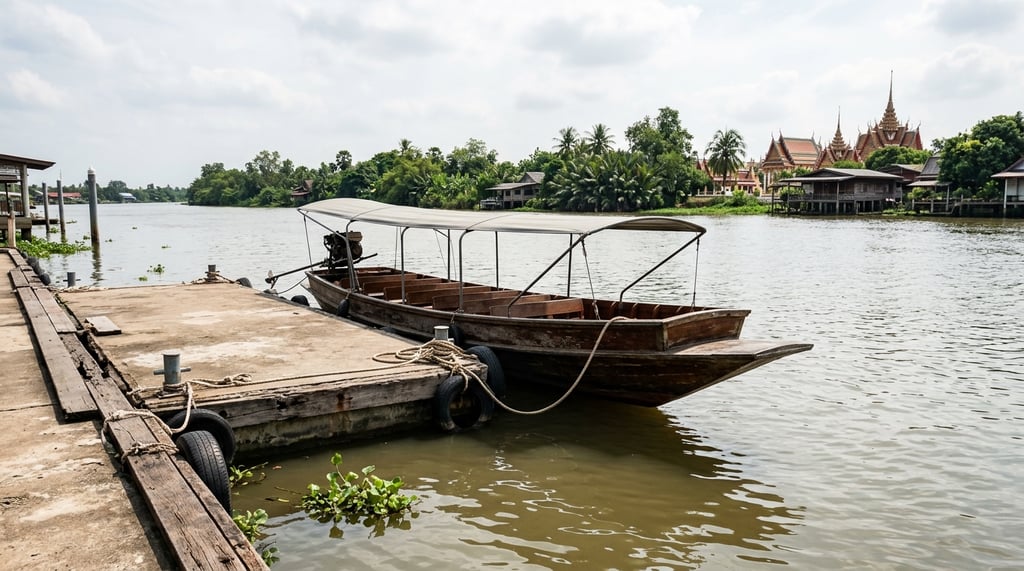
A commercial tourist transport boat sank while moored at Sri Sawat pier on the Tha Chin River in Nakhon Pathom province on Sunday afternoon, leaving one crew member missing beneath the waterline. The vessel operated passenger sightseeing excursions beside Don Wai floating market, a major weekend tourism destination in Sam Phran district. The craft took on water rapidly shortly after 1:20 p.m., slipping below the surface before dockside workers could deploy salvage pumps. Divers from the Ruamkatanyu Foundation mobilized within minutes to search the sunken hull.
First responders arriving at the pier found the passenger craft submerged beside the landing pontoon, with only upper canopy frames remaining visible. Emergency officials confirmed no tourists were aboard when the hull flooded. However, a boat deckhand stationed inside became trapped as the craft tilted and slipped under. Rescue squads cordoned off the riverfront and halted nearby river traffic to keep boat wakes from destabilizing the wreck or endangering rescue divers operating in heavy silt.
Pier-Side Sinking on the Tha Chin River
Sri Sawat pier serves as a primary departure jetty for river excursions connecting Wat Don Wai to Wat Rai Khing. The market dates back to the late nineteenth century and draws large crowds for riverfront dining and temple sightseeing along the Tha Chin River. Passenger vessels operating along this corridor are predominantly modified wooden barges and double-deck launches built for sheltered inland waters.
Vessels sinking while docked point to distinct mechanical or mooring vulnerabilities. Stationary sinkings typically follow automatic bilge pump failures, ruptured cooling intakes, or hull seam splits below the waterline. Mooring line geometry also plays a critical role. When tethers fail to adjust to shifting river currents and tidal fluctuations, a vessel can catch beneath pontoon lips, heel over, and flood open lower deck openings within minutes.
Underwater Rescue Operations and River Conditions
Rescue diving in central Thailand rivers presents acute operational challenges. The Tha Chin River carries dense silt runoff that cuts underwater visibility to zero. Divers searching the submerged craft worked entirely by touch, navigating dislodged seating, loose canopy tarpaulins, and confined interior bulkheads where a victim could be pinned against inverted fittings.
Heavy surface clusters of water hyacinth further complicated operations. Drifting weed mats exert heavy drag against moored hulls, tangle outboard propellers, and snag diver safety lines. Emergency crews deployed upstream boom lines above Sri Sawat pier to redirect floating vegetation away from the dive grid as daylight faded.
Regulatory Oversight of Inland Passenger Vessels
The sinking highlights vessel inspection standards across the central river basin. Under the Navigation in Thai Waters Act, commercial passenger vessels must hold valid operating licenses, undergo annual hull and machinery surveys by Marine Department surveyors, and carry certified lifejackets for every passenger aboard.
Marine Department rules also require functional automatic bilge systems and unblocked emergency exits from enclosed cabins. Investigators are reviewing whether battery-backed bilge pumps operated, whether unapproved cabin alterations compromised watertight integrity, and whether the operator kept up regular maintenance schedules.
Tourism Vessel Safety Across Central Waterways
Inland water transport forms the backbone of weekend tourism throughout Nakhon Pathom, Nonthaburi, and Bangkok. Floating markets and temple cruise operators carry tens of thousands of visitors weekly. Yet maintenance standards across the regional fleet of aging wooden cruisers and modified rivercraft vary widely.
While coastal speedboats draw greater public attention after open-sea accidents, inland rivercraft carry unique structural risks. River vessels lack emergency liferafts and distress beacons, relying instead on immediate proximity to shore. When rapid flooding occurs at a jetty, crew working in low-lying engine bays or forward lockers face lethal entrapment if escape hatches jam or inward-opening doors face water pressure.
What This Means for Expats in Thailand
For expatriates and visiting travelers exploring central floating markets and riverside temples, the incident underscores practical safety habits:
- Observe Hull Freeboard Before Boarding: Inspect the boat before stepping aboard at river piers. Avoid vessels sitting unusually low in the water or showing visible list toward one side.
- Confirm Lifejacket Locations: Marine regulations require lifejackets for all occupants. Ensure jackets are accessible on overhead racks or under seats, not locked away in locked deck boxes.
- Select Upper Open Decks: On multi-deck river cruisers, travel on open upper decks with clear routes to open water. Avoid lingering in enclosed lower dining holds during docking maneuvers.
- Mind Gangway Crowding: Pontoon docks tilt when crowds push forward at once. Maintain space on gangways and watch footing on wet dock timber during river surges.
- Keep Maritime Hotlines Accessible: Report unsafe craft or river emergencies to the Marine Department hotline at 1199 or Tourist Police at 1155.
Comment verification
Step 1 of 3
Verify your email once to publish your comment. Your email is never shown publicly.
Enter the 6-digit code sent to .
Choose the display name shown next to your comments.