Suan Dusit Index Drops to 3.48 as Opposition Gains
Suan Dusit Poll's November political index dropped to 3.48 out of 10, highlighting a widening split between macroeconomic growth and household sentiment.
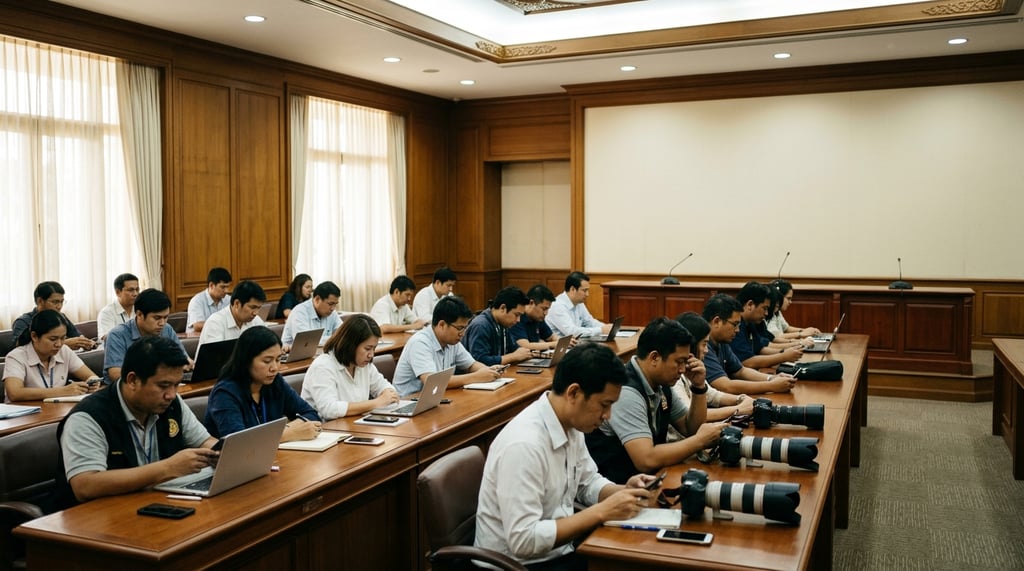
Public confidence in Thailand's political governance slipped further in November, marking the fourth consecutive monthly decline despite third-quarter economic growth. The monthly barometer published by Suan Dusit University fell to 3.48 out of 10 points, dropping from 3.52 in October and 3.63 in August. Conducted between November 24 and 27 across 2,097 respondents, the survey highlights a deepening disconnect between headline economic data and everyday household finances.
The findings illustrate an executive branch facing diminishing returns on consumer subsidies. While targeted year-end tourism incentives and fuel subsidies registered voter approval, they failed to reverse pervasive public anxiety regarding living costs, job security, corruption, and narcotics networks. In contrast, parliamentary scrutiny led by the opposition achieved the highest marks across all 25 governance metrics evaluated.
The Disconnect Between Macro Data and Household Realities
The November survey highlights an analytical paradox confronting Government House. Gross domestic product figures confirmed modest quarterly expansion, supported by export stabilization and resilient tourist arrivals. Yet Suan Dusit Poll researchers noted that household sentiment moved in the opposite direction, with voters questioning whether top-line growth provides any tangible relief to household balance sheets.
Sub-indices confirm this stagnation. Measures tracking economic health and poverty reduction tied at 3.19. Commodity price stability registered 3.15, while unemployment resolution stood at 3.13. For most households, macro gains have failed to filter into take-home wages or offset persistent debt obligations. While energy price caps offered temporary relief, fundamental living costs continue to outpace earnings.
Opposition Scrutiny Outpaces Coalition Delivery
The survey demonstrated a decisive performance advantage for parliamentary critics over executive officeholders. Opposition performance scored 4.26 out of 10, ranking first among all 25 categories for the fourth consecutive month. Conversely, overall government delivery slipped to 3.35, and the prime minister's personal score dropped to 3.18, continuing a decline from 3.57 in August.
This dynamic reflects disciplined legislative tactics. The People's Party has concentrated committee inquiries on procurement transparency, infrastructure allocations, and environmental infractions. Public approval centered on budget auditing at 37.74 percent, corruption inquiries at 31.59 percent, and river pollution investigations at 30.67 percent.
Lawmaker recognition mirrored these institutional marks. Bangkok MP Rukchanok Srinork led all opposition politicians with 32.71 percent recognition, outpacing party leader Natthaphong Ruengpanyawut at 20.98 percent and Rangsiman Rome at 18.94 percent. Her focused interrogations into social security fund governance have given the opposition a prominent populist voice.
Law Enforcement and Governance Deficits Drag Down Scores
The sharpest public dissatisfaction emerged in institutional governance and law enforcement. The lowest score in the survey was recorded for combating illicit narcotics and local influential figures, which fell to 2.86 out of 10. Anti-corruption enforcement scored 3.06, while judicial process credibility managed only 3.24.
Suan Dusit legal analysts noted that recurrent cross-border scam scandals and grey-capital controversies have cemented voter skepticism. Executive crackdowns are widely viewed as reactive and selective. On the governing side, Prime Minister Anutin Charnvirakul led coalition recognition at 29.85 percent, followed by Pheu Thai counterpart Yotchanan Wongsawat at 27.86 percent. Tellingly, 24.77 percent of respondents stated that no government politician stood out.
What This Means for Expats in Thailand
The continued slide in political confidence carries direct operational implications for foreign residents, investors, and business operators:
- Intensified Nominee and Corporate Audits: Authorities face mounting pressure to demonstrate enforcement against dark influence. Foreign companies should anticipate strict scrutiny of corporate shareholding structures and commercial licensing.
- Rigorous Visa and Reporting Compliance: Frontline immigration offices will enforce statutory compliance strictly across 90-day reporting, TM30 filings, and long-term visa renewals, despite executive efforts to promote long-stay tourism.
- Reliance on Short-Term Stimulus: The administration's focus on fast-acting consumption incentives means major structural economic reforms are likely deferred through mid-2027.
Related Coverage
All Thailand →
Revision History (2 versions)JSON API
- Rev 2THAI.NEWS Quality Review
Replaced non-idiomatic tertiary-quarter with third-quarter in opening sentence and tightened phrasing
− Public confidence in Thailand's political governance slipped further in November, marking the fourth consecutive monthly decline despite tertiary-quarter economic growth. The monthly barometer published by Suan Dusit University fell to 3.48 out of 10 points, dropping from 3.52 in October and 3.63 in August. Conducted between November 24 and 27 across 2,097 respondents, the survey highlights a deepening disconnect between headline economic data and everyday household finances.+ Public confidence in Thailand's political governance slipped further in November, marking the fourth consecutive monthly decline despite third-quarter economic growth. The monthly barometer published by Suan Dusit University fell to 3.48 out of 10 points, dropping from 3.52 in October and 3.63 in August. Conducted between November 24 and 27 across 2,097 respondents, the survey highlights a deepening disconnect between headline economic data and everyday household finances. - Rev 1 · OriginalPongsakorn Decha
Original publication
Comment verification
Step 1 of 3
Verify your email once to publish your comment. Your email is never shown publicly.
Enter the 6-digit code sent to .
Choose the display name shown next to your comments.