Paetongtarn Shinawatra Faces Pivotal Censure Debate: Unveiling Thailand's Turbulent Political Future
The atmosphere was electric inside parliament on that fateful February 27th. Prime Minister Paetongtarn Shinawatra, poised beneath the stern expressions of her political peers, was about to face the music—a two-day…
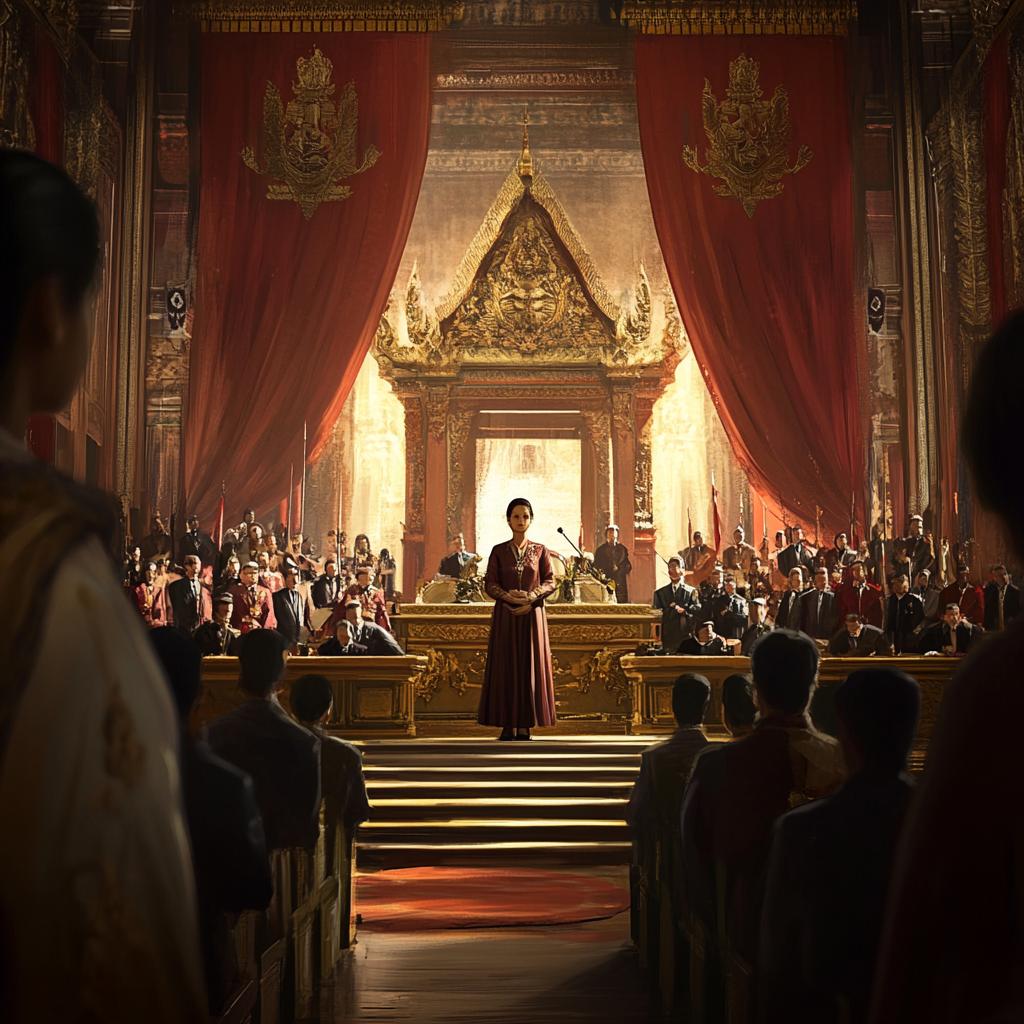
The atmosphere was electric inside parliament on that fateful February 27th. Prime Minister Paetongtarn Shinawatra, poised beneath the stern expressions of her political peers, was about to face the music—a two-day censure debate that promised to be as riveting as it was consequential. Her opponents sharpened their metaphorical swords, ready to lash out with accusations and grievances, while supporters steeled themselves for a face-off meant to test their leader's mettle.
Paiboon Nititawan, the outspoken secretary-general of the Palang Pracharath Party (PPRP), predicted that this debate would be far more than a mere political performance. With a twinkle of intrigue in his eye, he suggested that the session would open Pandora's Box, unraveling a tapestry of legal debates and issues that could become antecedents to significant political upheaval.
The whispers around Parliament House hinted at the hot potatoes on the agenda: the contentious possession of the Alpine golf course and other real estate assets in Pathum Thani, the shadowy influence purportedly wielded by outsiders over the prime minister, and the ever-divisive topic of casino legalization. The air was thick with anticipation, the kind that could be cut with a knife.
"After the censure debate, a cascade of developments is likely," Paiboon voiced with the demeanor of a Nostradamus of sorts. "The issues we touch upon could morph into petitions at the National Anti-Corruption Commission, even reaching the Constitutional Court." His prediction bore the weight of immense political change waiting just beyond the horizon.
Paiboon noted the Election Commission's vigilance, with its ongoing probe into allegations of undue sway over the prime minister and the political bodies at play. He suggested that the debate's revelations could amplify the commission's queries. "Should the EC decide to dispatch a petition to the Constitutional Court, oh, what a spectacle it'll be!" he exclaimed, clearly relishing the dramatic potential.
The political theater promised another twist, as he confirmed that PPRP leader, General Prawit Wongsuwon, was slated to deliver an insightful ten-minute sermon, painting a broad picture before the party's MPs embellished the canvas with their detailed strokes. A choreography of rhetoric and strategy unfolded before the eyes of an audience hungry for political theater.
Beyond the confines of this two-day inquisition, Paiboon hinted at a simmering subtext. There were rumblings of impending legislative dissolution, palpable undercurrents threatening to topple the status quo. For those keeping a close eye on the corridors of power, the debate was just the beginning—a prelude to a transformative saga in the annals of Thailand's political history.
All eyes were fixated on Paetongtarn Shinawatra, each query and retort illuminating the turbulent political landscape of a nation riven by complexities and aspirations. As the clock ticked towards potential reckonings, only time would unravel the outcome of this no-confidence debate. Would it tip the scales? Well, that was anyone's guess. But one thing was certain—this was going to be one for the books, a high-stakes drama watched by a nation breathless with anticipation.



Comment verification
Step 1 of 3
Verify your email once to publish your comment. Your email is never shown publicly.
Enter the 6-digit code sent to .
Choose the display name shown next to your comments.